
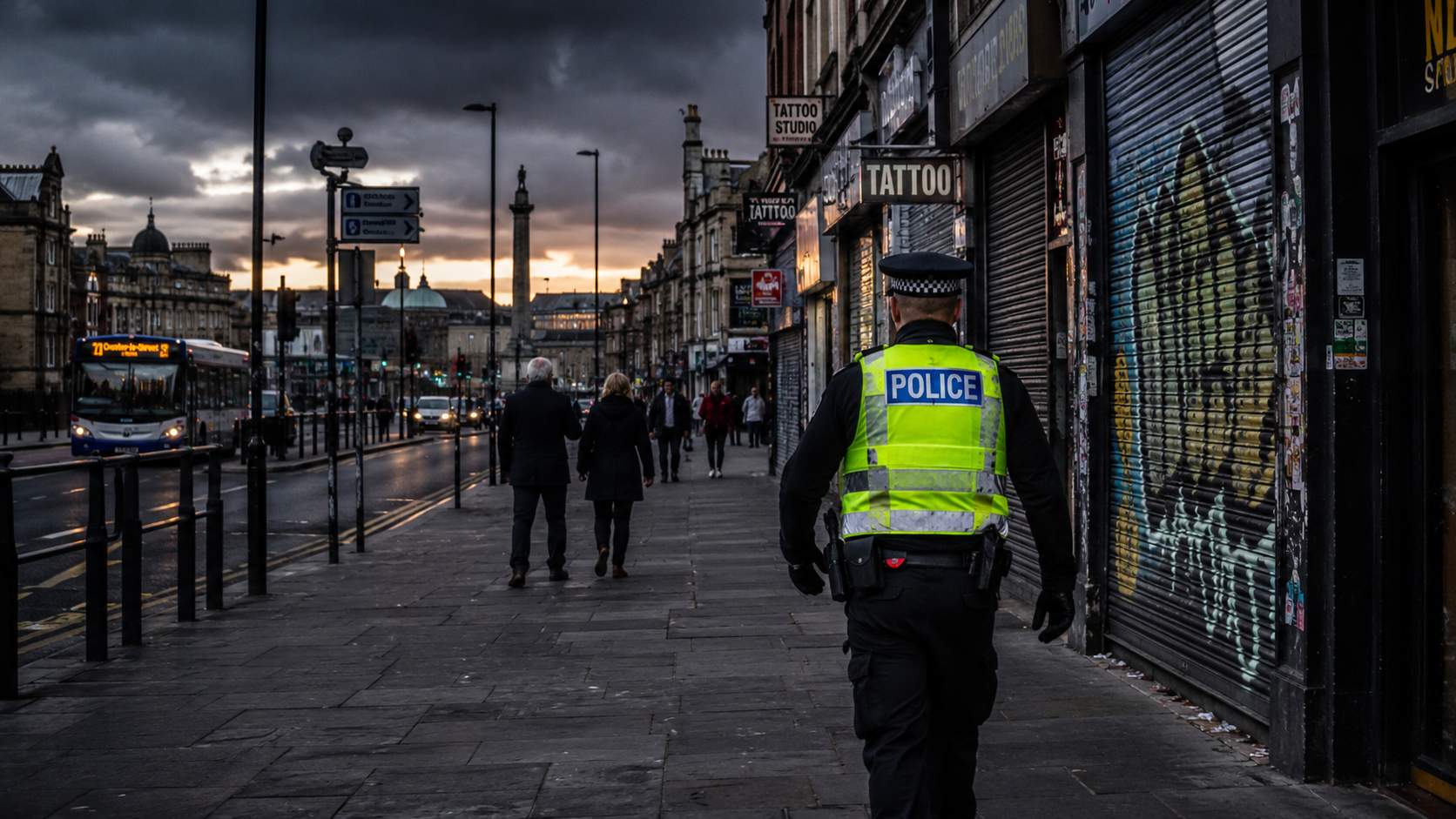
For many people across Newcastle and the wider UK, community policing once meant seeing familiar officers walking local streets, attending neighbourhood meetings and building relationships with residents. Over the last decade, however, the landscape of policing has changed dramatically.
While police forces have experienced periods of recruitment growth in recent years, the legacy of budget reductions and restructuring continues to influence how officers operate. Many communities still report seeing fewer police on patrol, longer response times and reduced engagement with neighbourhood concerns.
The debate surrounding police funding remains one of the most significant public safety issues facing the UK today. Questions continue to be asked about whether years of financial pressure have weakened the ability of police forces to maintain visible community policing while responding to increasingly complex forms of crime.
The impact of police cuts after 2010.
The years following 2010 marked a significant turning point for policing in England and Wales. Police officer numbers fell substantially between 2010 and 2018 as forces adjusted to reduced budgets and government spending constraints.
House of Commons data shows the number of police officers in the UK peaked at around 171,600 in 2010 before falling for several consecutive years. Although recruitment campaigns later boosted numbers, many forces spent years operating with fewer officers than before.
Statistics from the Home Office show that police numbers in England and Wales fell from approximately 142,000 officers in 2010 to around 120,000 by 2018 before recovering through the Police Uplift Programme.
For communities, the reduction was often felt most strongly through the loss of visible neighbourhood policing teams. Residents became accustomed to fewer officers on foot patrol and less direct engagement with local policing priorities.
Why community policing matters.
Community policing has traditionally been one of the most effective ways to build trust between police and the public.
Neighbourhood officers are often the first to identify emerging problems such as anti-social behaviour, youth disorder, drug activity and repeat offenders. They also play a key role in gathering intelligence from local residents and businesses.
His Majesty's Inspectorate of Constabulary has repeatedly highlighted the importance of neighbourhood policing, describing these teams as the primary link between police forces and the communities they serve. Inspectors have noted that neighbourhood policing remains one of the strongest performing areas of modern policing despite ongoing challenges.
However, when budgets come under pressure, neighbourhood teams are often required to support emergency response duties, reducing the time available for proactive community engagement.
Newcastle and the North East experience.
Newcastle and the wider Northumbria region have not been immune to these pressures.
Northumbria Police serves a large and diverse area covering Newcastle, Gateshead, Sunderland, North Tyneside, South Tyneside and Northumberland. Like many forces across England and Wales, it has faced the challenge of balancing public expectations with financial realities.
Residents across Newcastle have frequently raised concerns about anti-social behaviour, retail crime, vehicle theft and visible street disorder in certain areas. While police continue to tackle serious offences, community groups often argue that fewer officers on the streets have reduced opportunities to prevent crime before it occurs.
The issue becomes particularly significant in city centres where businesses rely heavily on visible policing to deter shoplifting, disorder and violence.
Fewer PCSOs have changed local policing.
One of the lesser-known consequences of police funding pressures has been the decline in Police Community Support Officers, commonly known as PCSOs.
PCSOs have traditionally formed the backbone of community policing. They provide a visible presence, gather intelligence and maintain strong relationships with residents.
National figures show the number of PCSOs has fallen dramatically over the last 15 years. Numbers peaked at more than 17,000 in 2010 but had fallen to fewer than 8,000 by late 2024.
Many policing experts argue that while officer recruitment has increased, replacing PCSOs with police officers does not always deliver the same level of community engagement because officers are increasingly tasked with responding to emergencies and investigations.
For residents, the result can feel like a reduced police presence despite headline figures suggesting overall officer numbers have recovered.
Crime has become more complex.
The nature of crime has also changed significantly over the last decade.
Traditional neighbourhood concerns such as burglary and vehicle crime remain important, but police forces are now dealing with growing levels of cybercrime, online fraud, organised crime and safeguarding investigations.
These complex investigations require specialist skills and consume substantial resources.
Recent reports indicate that police workloads have increased significantly since 2015, creating pressure on officers and investigative teams. At the same time, positive outcomes from criminal investigations have fallen from around 25 percent a decade ago to approximately 11 percent in 2024.
Critics argue that stretched resources mean officers spend more time dealing with paperwork, safeguarding responsibilities and digital evidence than maintaining visible patrols.
The public perception problem.
One of the clearest consequences of reduced neighbourhood policing is public confidence.
When residents regularly see police officers in their communities, they often feel safer and more connected to local law enforcement. Visible patrols can reassure the public even when crime levels remain stable.
The absence of that visibility can have the opposite effect.
Recent political debates have highlighted concerns that many people rarely see officers on foot patrol. Government ministers have acknowledged that neighbourhood policing numbers were significantly reduced in previous years and have pledged further investment in local policing teams.
For Newcastle residents, perceptions of safety are often shaped not just by crime statistics but by daily experiences in city centres, residential streets and public transport hubs.
What the crime statistics reveal.
Crime trends across England and Wales present a mixed picture.
Official figures show some serious crimes have fallen in recent years. Homicides reached their lowest level in more than four decades during 2025, while knife crime and firearms offences also recorded declines.
However, other categories continue to rise.
Shoplifting offences exceeded 519,000 incidents in the year to September 2025, while fraud offences reached approximately 2.6 million incidents. Anti-social behaviour also remains a major concern for many communities.
For local businesses in Newcastle, retail crime has become an increasingly visible issue. Many shop owners argue that consistent neighbourhood policing would help deter repeat offenders and improve confidence among customers and staff.
Have police numbers fully recovered?
The answer depends on how the figures are interpreted.
Home Office data shows there were approximately 146,400 full-time equivalent officers in England and Wales by March 2025, close to historic highs.
However, policing leaders point out that numbers alone do not tell the whole story.
A significant proportion of officers now have relatively short service histories, meaning forces face challenges around experience and supervision. More than 30 percent of officers have less than five years of service.
At the same time, many forces continue to face recruitment and retention pressures, with voluntary resignations remaining elevated compared with historical levels.
As a result, some communities still feel the impact of decisions made during earlier periods of budget restraint.
The future of community policing.
The next few years may prove crucial for neighbourhood policing.
The Government has committed additional funding towards neighbourhood policing initiatives, and forces across England and Wales are seeking to rebuild public confidence through greater visibility and engagement.
For Newcastle, success may depend on whether residents begin seeing more officers in local communities rather than simply hearing about increased recruitment figures.
Community policing has always been about more than statistics. It is about relationships, trust and preventing crime before it happens. While officer numbers may have recovered nationally, many residents believe the real test will be whether neighbourhood policing can regain the visibility and influence it once had on streets across the North East.
Do you think Newcastle has enough visible police officers on the streets today, or has community policing changed too much over the last decade?
Local News
A Decade Of Police Cuts: What It Means For Public Safety Today
Advertisement




Comments (0)
You must be logged in to post comments.
Don't have an account? Register here
No comments yet. Be the first to share your thoughts!