
For years, drivers travelling along the A1 through Northumberland have voiced the same concerns. They talk about dangerous overtaking, sudden bottlenecks, heavy goods vehicles building long queues, and the constant fear that one mistake could lead to catastrophe.
Now, after a year in which at least five people have died in major crashes on the Northumberland section of the A1 and many more have suffered serious injuries, residents, campaigners and road users are once again asking a difficult question.
How many deaths are enough before meaningful change finally arrives?
The debate has intensified following the cancellation of long-awaited plans to dual a major section of the A1 in Northumberland. The decision has left many wondering whether financial calculations are being placed ahead of public safety on one of the country's most important roads.
A Road With A Troubling Reputation.
The A1 is one of Britain's most significant transport routes, connecting London with Edinburgh and carrying millions of vehicles every year. Yet unlike many comparable strategic roads, large sections through Northumberland remain single carriageway.
Drivers travelling north from Morpeth often find themselves moving from modern dual carriageway sections into lengthy single carriageway stretches. The result is a road where traffic conditions can change dramatically within a matter of minutes.
Local motorists say this creates frustration, impatience and risk. Long queues frequently develop behind slower moving vehicles, particularly during tourist season and periods of heavy freight traffic. When opportunities to overtake emerge, split-second decisions can have devastating consequences.
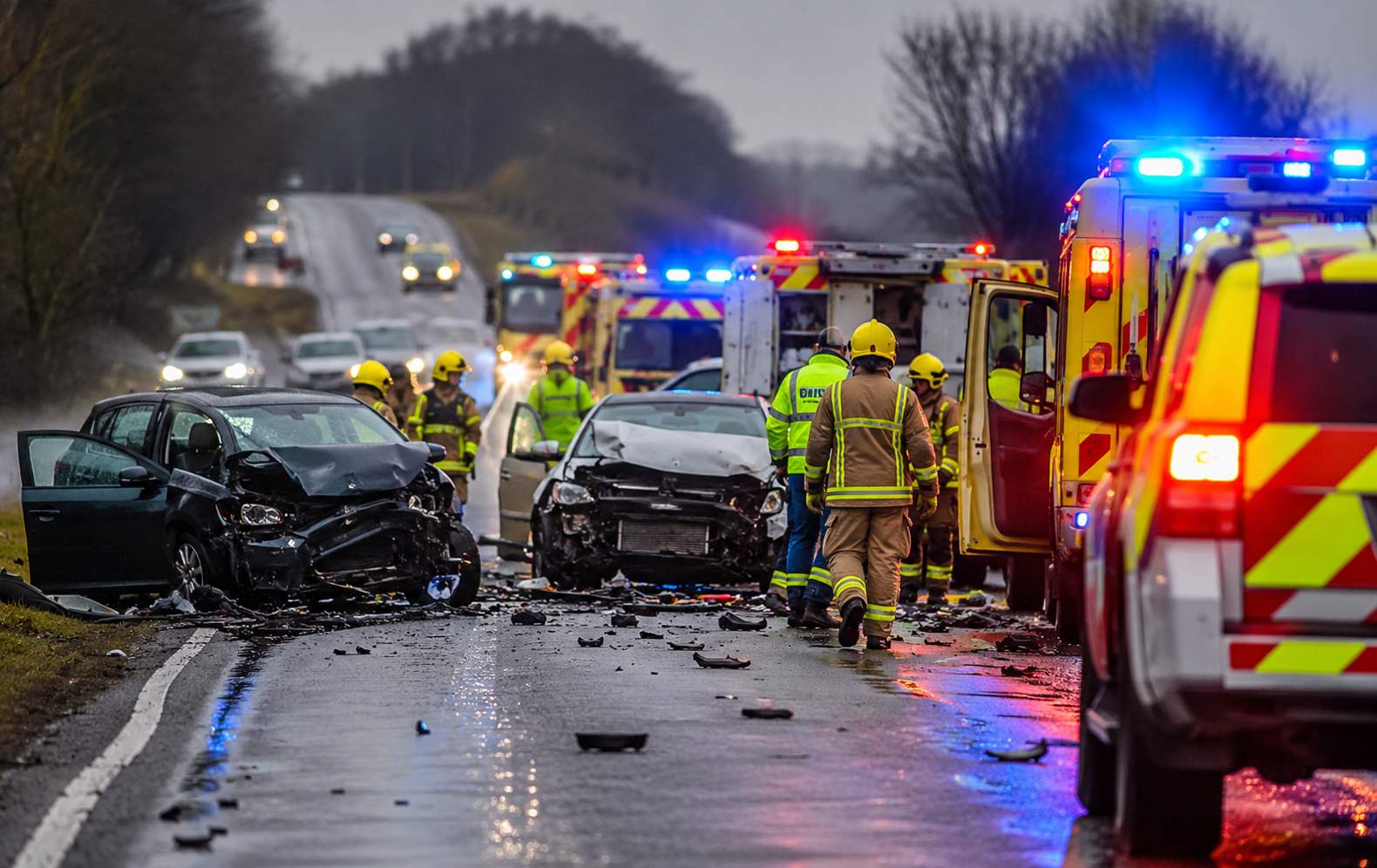
Emergency service callouts along the route have become an all too familiar occurrence for residents. Road closures, air ambulance responses and lengthy traffic delays regularly make headlines, reinforcing the perception that this stretch of road remains one of the most dangerous in the North East.
Fatal Crashes Continue To Leave Communities Grieving.
Every statistic represents a human story.
Behind every collision report is a family receiving a phone call they never expected, friends struggling to process sudden loss and communities left mourning lives cut short.
While exact figures vary depending on how incidents are recorded and which stretch of the road is included, reports suggest that at least five people have lost their lives in major A1 crashes across the Northumberland corridor in the past 12 months alone. In one of the most recent incidents, two people died and three others suffered serious injuries following a head-on collision on the A1 near Ellingham.
Those incidents represent only the fatalities that attracted significant regional and national media coverage. They do not include the many serious injury collisions that have resulted in lengthy road closures, air ambulance deployments and major emergency service responses throughout the year. Campaigners argue the true danger of the A1 cannot be measured solely by deaths, but also by the number of people left with life-changing injuries.
According to reports examining collision trends on the wider Northumberland stretch of the A1, approximately 25 people have died on the route since 2020. That figure has become a key talking point for campaigners who believe the road's safety problems are part of a much larger pattern rather than a series of isolated incidents.
For many residents, the debate has moved beyond economics and entered the realm of public safety.
The question being asked in towns and villages across Northumberland is increasingly direct. If this road continues to claim lives, what level of loss becomes unacceptable?
The Dualling Project That Never Arrived.
For decades, politicians from different parties promised improvements to the A1 in Northumberland.
The most significant proposal involved upgrading 13 miles of road between Morpeth and Ellingham, transforming large stretches of single carriageway into dual carriageway and creating a more consistent route for motorists.
Supporters argued the project would reduce dangerous overtaking opportunities, improve traffic flow, support tourism and strengthen economic links between North East England and Scotland.
After years of planning, consultations and delays, the scheme eventually secured approval through the Development Consent Order process. For many campaigners, it appeared that construction was finally on the horizon.
Then came a dramatic reversal.
Following the Government's budget review, the project was cancelled. National Highways stated the scheme was judged to offer poor value for money and limited economic benefits relative to its cost.
For residents who had spent years campaigning for improvements, the decision felt like a crushing blow.
Why Was The A1 Dualling Scheme Cancelled.
According to government statements, rising costs played a central role in the decision.
Original estimates from previous years suggested the project could be delivered for around £290 million. However, later projections reportedly placed the eventual cost at more than £500 million.
Transport officials argued that difficult choices had to be made amid wider spending pressures and that future infrastructure projects would need to demonstrate stronger economic returns.
Critics, however, argue that the assessment fails to account for the human cost of inaction.
Campaigners question whether financial modelling adequately reflects the impact of fatalities, serious injuries, emergency service deployments, traffic disruption and long-term economic damage caused by major collisions.
Many believe road safety should carry greater weight than spreadsheet calculations.
Hundreds Of Millions Spent Before Cancellation.
Adding to public frustration is the revelation that substantial sums had already been spent before the scheme was scrapped.
Reports indicate that approximately £68 million was spent on planning, surveys, engineering work, land acquisition and project preparation before the cancellation decision was made.
The figure has become a lightning rod for criticism.
Residents have questioned how tens of millions of pounds could be spent without a single mile of new road being built. Others argue that abandoning the project after such significant expenditure represents a waste of public money that leaves taxpayers with little to show for it.
For campaigners, the spending figures make the cancellation even harder to accept.
Would Dualling Actually Save Lives.
This remains the central issue.
Road safety experts have long argued that dual carriageways generally reduce the risk of head-on collisions because opposing traffic flows are physically separated.
Many of the most serious crashes on single carriageway roads occur during overtaking manoeuvres or situations where drivers cross into opposing traffic lanes.
Supporters of dualling believe separating traffic streams would significantly reduce these risks on the A1.
They also point to improvements seen on other major routes where single carriageway bottlenecks were removed.
However, transport officials maintain that infrastructure investment must be balanced against affordability and broader national priorities.
The result is a debate where safety concerns and economic arguments continue to collide.
The Economic Cost Of Every Major Crash.
When discussing road safety, the focus naturally falls on lives lost and families affected.
Yet major collisions also carry enormous economic consequences.
Road closures can last for hours. Freight deliveries are delayed. Businesses lose productivity. Emergency services commit substantial resources. Medical treatment and rehabilitation costs can stretch for years.
For a strategic route like the A1, these impacts ripple far beyond the immediate area.
Northumberland's tourism industry also depends heavily on reliable transport links. Visitors heading towards coastal destinations, historic attractions and Scottish routes frequently use the A1.
Repeated congestion and safety concerns can damage perceptions of accessibility and discourage investment.
Supporters of dualling argue that these wider economic impacts should form part of any calculation about the road's future.
Campaigners Say The Fight Is Not Over.
Despite the cancellation, campaign groups remain determined to keep the issue alive.
Many insist the decision should be reconsidered and that alternative funding models must be explored.
Others want immediate safety improvements even if full dualling remains off the table.
Suggestions include enhanced junction layouts, additional overtaking sections, improved signage, better lighting and increased enforcement measures.
For campaigners, uncertainty is not enough.
They want commitments, timelines and action.
How Many Deaths Are Enough.
It is a question that makes many politicians uncomfortable.
No government sets out to ignore road safety concerns. No council wants to be associated with preventable tragedies.
Yet residents continue to witness serious crashes, read reports of fatalities and hear fresh promises about future reviews.
The longer the debate continues, the louder the question becomes.
How many deaths are enough?
At what point does the cumulative toll outweigh concerns about budgets, economic modelling and political priorities?
For the families who have already lost loved ones, the answer may be simple.
One death is already too many.
For everyone still travelling the route each day, the concern is that without significant intervention, the headlines will continue.
And if that happens, future investigations may once again ask why action took so long to arrive.
The A1 near Morpeth remains more than just a transport corridor. For many people across Northumberland, it has become a symbol of a long-running battle between infrastructure investment, public safety and political decision making.
At least five deaths in the past year, around 25 fatalities since 2020, and countless serious injuries have ensured the issue remains impossible to ignore.
Until a lasting solution is delivered, the debate is unlikely to disappear.
And neither is the question that continues to haunt this stretch of road.
How many more lives will be lost before something finally changes?
Do you believe dualling the A1 would reduce fatalities and serious crashes, or should alternative safety measures be prioritised instead?
Local News
A1 Morpeth Deaths: The Deadly Stretch Of Road That Still Has No Long-Term Fix
Advertisement


Comments (0)
You must be logged in to post comments.
Don't have an account? Register here
No comments yet. Be the first to share your thoughts!