
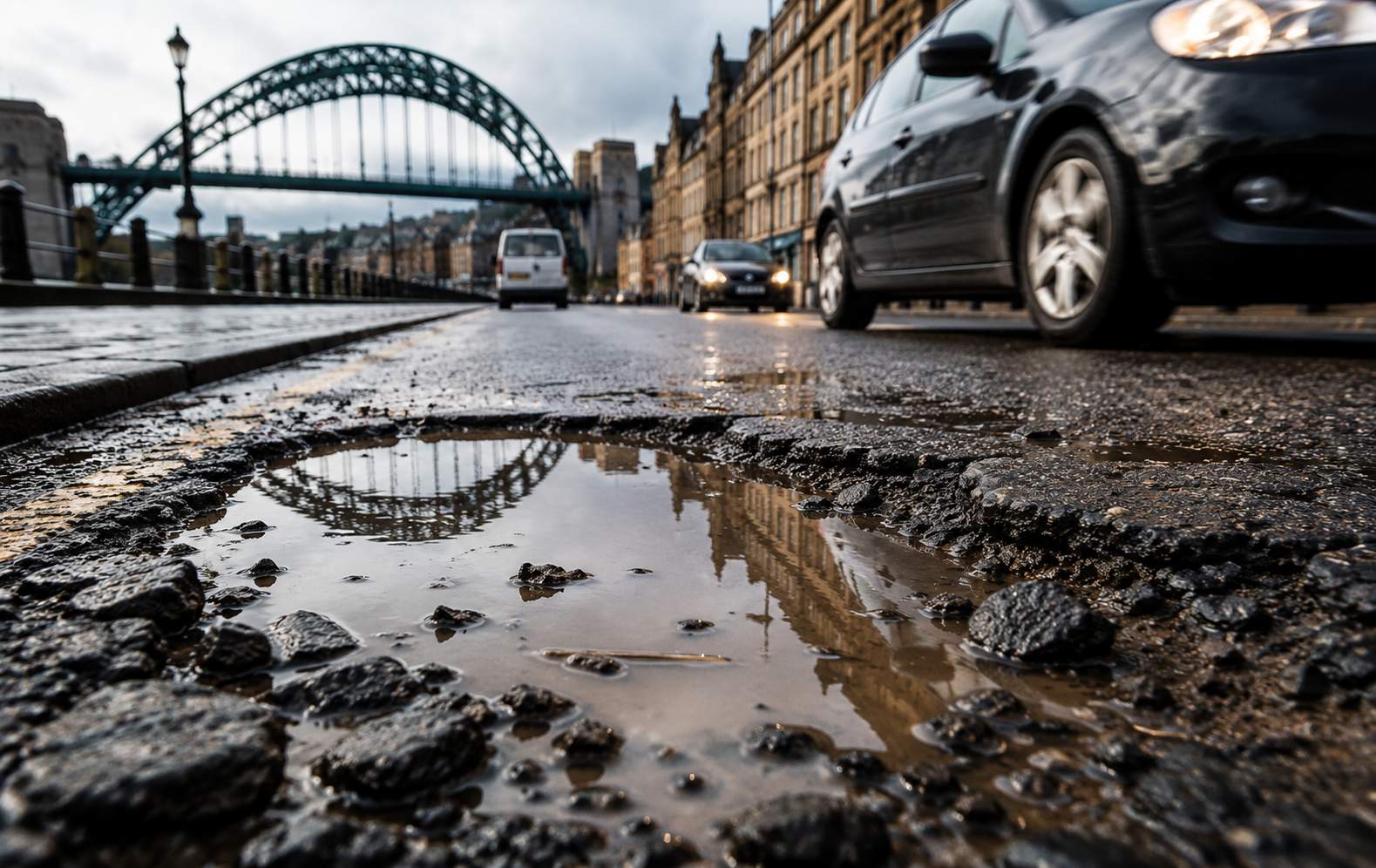
Drivers across Newcastle are becoming increasingly frustrated by the growing number of potholes appearing on roads throughout the city. From residential streets to busy commuter routes, damaged road surfaces are creating headaches for motorists, cyclists and pedestrians alike.
While potholes have long been a common issue across Britain, recent figures suggest the problem is worsening. Experts say a combination of heavy traffic, changing weather patterns and years of underinvestment in road maintenance has created ideal conditions for road surfaces to deteriorate more quickly than ever before.
For Newcastle residents, the result is often the same - damaged vehicles, costly repair bills and growing concerns about road safety.
How Does A Pothole Actually Start.
Many people assume potholes appear overnight, but the process usually begins with something much smaller.
Tiny cracks can form in road surfaces due to age, vehicle pressure and fluctuating temperatures. Water then seeps into these cracks and settles beneath the surface. During colder weather, that water freezes and expands, forcing the road material apart.
When temperatures rise again, the ice melts and leaves gaps underneath the road surface. As vehicles repeatedly drive over the weakened area, the surface eventually collapses, creating a pothole.
Road experts often describe water as the biggest enemy of road infrastructure. The RAC says poor drainage and prolonged wet weather play a major role in accelerating pothole formation across the UK.
Why Newcastle Drivers Are Paying The Price.
Potholes are far more than a nuisance. They can cause significant damage to vehicles, particularly when drivers hit them at speed or during poor visibility.
Common damage includes:
Burst tyres.
Bent alloy wheels.
Broken suspension springs.
Damaged shock absorbers.
Steering alignment issues.
According to RAC data, patrols attended more than 26,000 pothole-related breakdowns during 2025, with damaged suspension systems and distorted wheels among the most common issues reported.
Research also suggests the average repair bill linked to pothole damage can reach around £460, creating unexpected costs for motorists already dealing with rising fuel, insurance and maintenance expenses.
For many Newcastle families, even a single pothole strike can result in repair bills running into hundreds of pounds.
Cyclists And Motorcyclists Face Greater Dangers.
While vehicle damage often dominates headlines, road safety experts warn that potholes can be especially dangerous for cyclists and motorcyclists.
Unlike cars, two-wheeled vehicles have far less protection when hitting a deep pothole. Riders can lose control instantly, particularly during wet weather or at night when defects are harder to spot.
The AA has repeatedly warned that poor road surfaces put cyclists and motorcyclists at serious risk of injury, particularly when councils rely on temporary patch repairs rather than long-term solutions.
Even drivers attempting to avoid potholes can create additional hazards. Sudden swerving, harsh braking and unexpected lane changes increase the risk of collisions with other road users.
The UK's Pothole Problem By The Numbers.
The scale of Britain's pothole crisis continues to grow.
Recent RAC estimates suggest there may now be more than one million potholes across UK roads.
Other industry reports have revealed:
RAC patrols attended more than 24,000 pothole-related breakdowns in a 12-month period.
Pothole compensation claims submitted to councils increased by more than 90 percent between 2021 and 2024.
The estimated pothole repair backlog across England and Wales has reached £18.6 billion.
Nearly half of Britain's road network is believed to be affected by surface deterioration.
These figures highlight why road maintenance has become a major political and public issue across the country.
How Newcastle Residents Can Report Potholes.
One of the most effective ways residents can help tackle the problem is by reporting potholes as soon as they are discovered.
Newcastle City Council allows road defects to be reported online through its official highways reporting system. Residents can usually submit:
The exact location.
Photos of the damage.
Details about road safety concerns.
Information about any incidents caused by the pothole.
The more accurate the report, the easier it becomes for highway teams to prioritise inspections and repairs.
Drivers can also report dangerous defects through national services such as FixMyStreet, which forwards reports directly to local authorities.
Road safety campaigners often encourage residents to report defects immediately rather than assuming somebody else has already done so.
Can Drivers Claim Compensation For Pothole Damage.
In some cases, yes.
If a pothole has caused vehicle damage and the local authority was aware of the defect but failed to repair it within a reasonable timeframe, motorists may be able to submit a compensation claim.
Successful claims often require:
Photographs of the pothole.
Vehicle repair invoices.
Evidence of the location.
Proof that the council had prior knowledge of the defect.
However, compensation is not guaranteed. Councils can defend claims if they can demonstrate that regular inspections and maintenance procedures were carried out.
Despite this, pothole-related compensation claims have risen sharply across the UK in recent years as road conditions continue to deteriorate.
Why Temporary Repairs Often Fail.
One of the biggest frustrations for Newcastle motorists is seeing the same potholes repeatedly repaired.
Road experts say many councils are forced to rely on short-term fixes due to budget pressures. These repairs may temporarily fill a pothole but often fail when exposed to heavy traffic and poor weather.
The AA has criticised the long-standing use of "patch and run" repairs, arguing they often create a cycle where the same roads require repeated maintenance.
Industry groups are increasingly calling for preventative road maintenance and full resurfacing programmes that address underlying structural issues rather than simply covering visible damage.
The Long-Term Impact On Newcastle Roads.
If potholes remain unresolved for extended periods, the damage rarely stays isolated.
Small cracks become larger holes. Surface defects spread into neighbouring sections of road. Water penetration increases. Repair costs rise significantly.
Transport experts warn that roads left untreated eventually require full reconstruction rather than routine maintenance, making repairs substantially more expensive for local authorities.
For Newcastle residents, that means unresolved potholes today can contribute to much bigger infrastructure problems in the future.
Why Residents Want Faster Action.
For many people across Newcastle, potholes are no longer viewed as minor road defects. They are becoming a daily frustration that affects safety, vehicle costs and confidence on local roads.
With repair backlogs growing across the UK and millions being spent each year on emergency maintenance, pressure is mounting on councils and central government to deliver longer-lasting solutions.
Until that happens, residents are likely to continue encountering damaged roads, unexpected repair bills and the ongoing challenge of navigating Newcastle's increasingly worn road network.
Do you think Newcastle's pothole problem is getting worse?
Local News
The Hidden Danger Lurking On Newcastle Roads Right Now
Advertisement




Comments (0)
You must be logged in to post comments.
Don't have an account? Register here
No comments yet. Be the first to share your thoughts!