
From Sunday lunches in Newcastle pubs to takeaway favourites enjoyed across Tyneside, food plays a huge role in everyday life. Yet while many people focus on what they eat, experts increasingly say that how much we eat may be just as important.
Food portion sizes have steadily increased over recent decades, making it harder for people to recognise what a healthy serving actually looks like. As obesity rates continue to rise across the UK, health professionals are encouraging people to understand portion control and make more informed choices about the food on their plates.
For Newcastle residents looking to improve their diet, lose weight, or simply maintain a healthy lifestyle, understanding portion sizes can be one of the simplest and most effective changes to make.
Why Portion Sizes Matter.
A portion is the amount of food you choose to eat at one time. While that sounds straightforward, modern portion sizes often differ significantly from official serving recommendations.
Research shows that larger portions can encourage people to consume more calories without realising it. This phenomenon, often called "portion distortion", means many people underestimate how much food they are actually eating.
The issue is particularly important given current health trends. According to NHS England, 64% of adults in England are overweight or living with obesity, while around 29% are living with obesity alone.
Health experts say controlling portion sizes can help reduce calorie intake without requiring people to eliminate their favourite foods completely.
The Growing Health Challenge In The North East.
The North East has consistently faced some of the UK's highest rates of obesity and weight-related health issues. Studies have shown that obesity remains a major public health concern across the region, contributing to increased risks of type 2 diabetes, heart disease, high blood pressure, and certain cancers.
For Newcastle families, this makes understanding healthy portions especially relevant. Small adjustments made consistently over time can have a meaningful impact on overall health.
Nutritionists often point out that portion control is not about deprivation. Instead, it focuses on eating the right amount of food to meet the body's needs.
What Healthy Portion Sizes Actually Look Like.
One challenge many people face is visualising appropriate portions without constantly weighing food.
Fortunately, there are several easy methods that do not require specialist equipment.
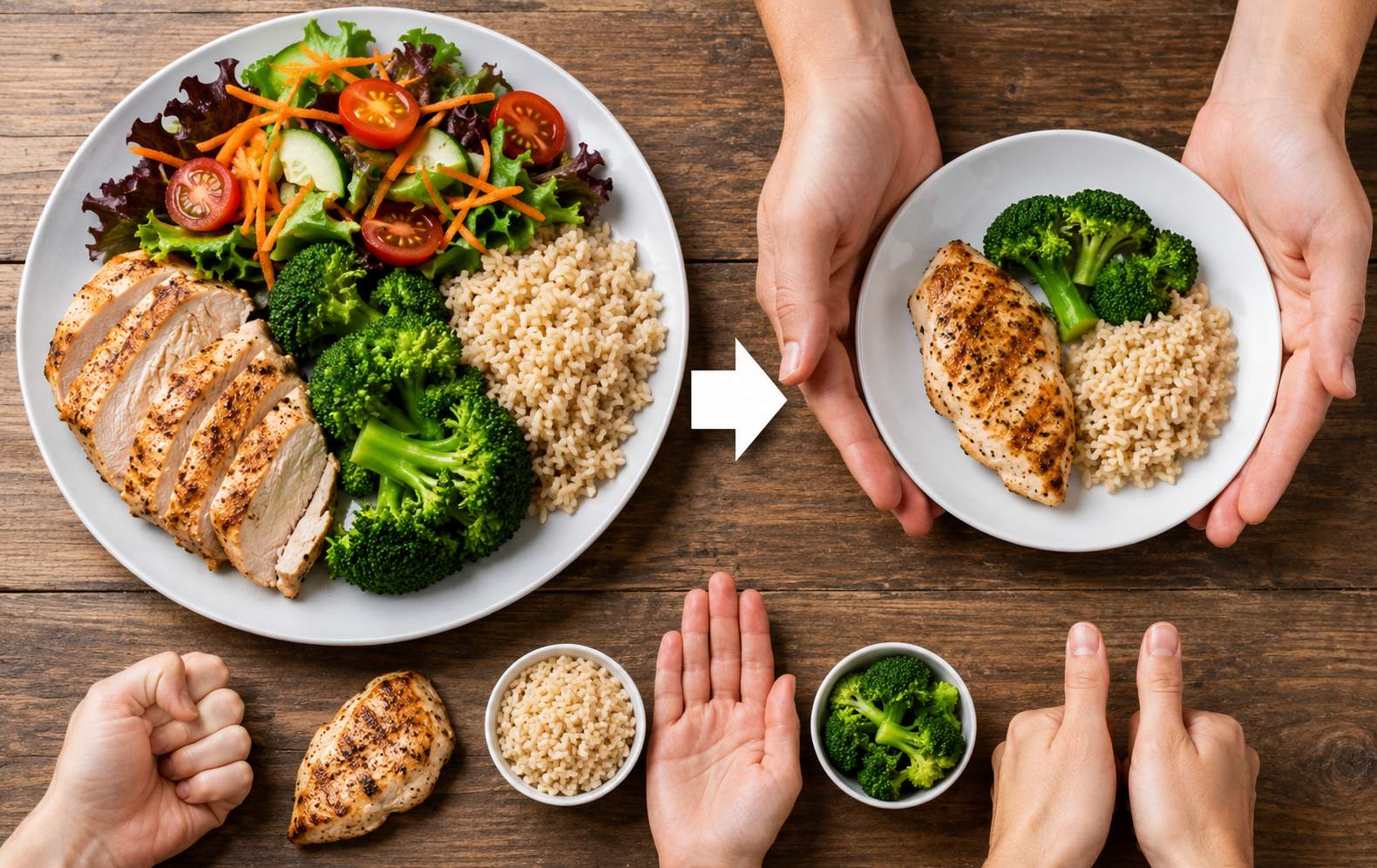
A portion of cooked meat, chicken, or fish should roughly match the size and thickness of the palm of your hand.
A serving of cheese is often compared to the size of two standard dice.
Cooked pasta, rice, or noodles should generally fit into a cupped hand.
A baked potato should be approximately the size of your clenched fist.
Nut portions should be around the amount that fits comfortably into a small handful.
Vegetables are one category where larger portions are actively encouraged. Most nutrition experts recommend filling at least one-third of the plate with vegetables or salad.
These visual comparisons can make healthy eating far easier when dining out in Newcastle restaurants or preparing meals at home.
The Plate Method Is Becoming Increasingly Popular.
Many dietitians now recommend using the plate method to create balanced meals.
Under this approach, half of the plate should consist of vegetables and salad. One quarter should contain lean protein such as chicken, fish, eggs, beans, or tofu. The remaining quarter should contain starchy carbohydrates such as potatoes, rice, pasta, or wholegrain bread.
This simple approach helps people manage portions while ensuring they receive a good balance of nutrients.
For Newcastle residents enjoying traditional meals, this does not mean abandoning local favourites. It simply means adjusting proportions to create a healthier balance.
Restaurant Portions Are Often Much Larger.
One reason portion control has become more challenging is that restaurant and takeaway meals have grown considerably over time.
Many meals served in restaurants contain significantly more calories than people realise. Large portions can encourage overeating because people naturally tend to finish what is placed in front of them.
This is especially relevant in busy city centres like Newcastle, where dining out remains a popular social activity.
Nutrition experts often suggest sharing starters, choosing smaller portion options when available, or saving part of a meal for later rather than feeling pressured to finish everything in one sitting.
Measuring Portions Without Scales.
While kitchen scales can be useful, they are not essential for most people.
The hand method remains one of the easiest approaches because it naturally adjusts for body size.
For example:
Protein portions should generally match the size of the palm.
Carbohydrate portions should fit into a cupped hand.
Healthy fats such as butter or peanut butter should be limited to thumb-sized amounts.
Vegetables should fill at least two handfuls.
This practical approach allows people to estimate portions whether they are eating at home, at work, or out in Newcastle's restaurants and cafés.
Portion Sizes And Weight Management.
Portion control is often one of the most effective strategies for managing weight because it does not require strict dieting.
According to the Health Survey for England, nearly two-thirds of adults are overweight or living with obesity.
Many people assume they need to completely eliminate certain foods to lose weight. In reality, reducing portion sizes can often create a calorie deficit without dramatically changing eating habits.
For example, serving slightly less pasta, reducing sugary snacks, or choosing a smaller takeaway portion can make a significant difference over time.
These small adjustments are often easier to maintain long term than restrictive diets.
Children Need Appropriate Portions Too.
Portion sizes are not only important for adults.
Children require different amounts of food depending on their age, activity levels, and growth needs. Oversized portions can encourage unhealthy eating habits that continue into adulthood.
Recent figures have highlighted ongoing concerns around childhood obesity across England, with health experts stressing the importance of early intervention and healthy eating habits.
Parents are increasingly encouraged to offer age-appropriate portions and allow children to stop eating when they feel full rather than insisting plates are cleared.
Understanding Hunger And Fullness.
Portion control is not just about measuring food. It also involves paying attention to the body's natural hunger signals.
Many people eat while distracted by television, smartphones, or work. This can make it harder to recognise when they are satisfied.
Eating more slowly allows the brain time to register fullness, helping prevent accidental overeating.
Experts often recommend pausing midway through a meal to assess hunger levels before continuing.
This simple habit can be surprisingly effective for reducing calorie intake without creating feelings of restriction.
Small Changes Can Deliver Long-Term Benefits.
Healthy eating does not require perfection. For most people, sustainable improvements come from making manageable changes rather than dramatic lifestyle overhauls.
Understanding portion sizes is one of the simplest tools available. Whether enjoying fish and chips on the coast, grabbing lunch in Newcastle city centre, or cooking dinner at home, being aware of portion sizes can support better health without sacrificing enjoyment.
As awareness grows and more people learn what balanced portions actually look like, portion control may become one of the most valuable skills for maintaining long-term health in Newcastle and beyond.
Building Healthier Habits One Plate At A Time.
Food should be enjoyed, but understanding how much we eat is becoming increasingly important in a world where oversized portions are often the norm.
For Newcastle residents, learning to recognise healthy portion sizes can help support weight management, improve overall wellbeing, and reduce the risk of future health problems. Sometimes the healthiest change is not what is on your plate, but how much of it is there.
What tricks do you use to manage portion sizes at home or when eating out in Newcastle?
Health
Are You Eating Too Much? The Portion Size Mistake Many Make
Advertisement





Comments (0)
You must be logged in to post comments.
Don't have an account? Register here
No comments yet. Be the first to share your thoughts!