
Whenever a major housing development, apartment block or commercial scheme is proposed in Newcastle or elsewhere across the North East, it rarely takes long before objections begin appearing on the council's planning portal.
Residents often raise concerns about increased traffic, parking shortages, loss of privacy, noise, environmental impacts or the effect a development could have on the character of an area. Some applications attract only a handful of comments, while others receive hundreds or even thousands of objections.
That naturally leads many people to ask the same question. Do planning objections actually influence council decisions, or are they simply a formality?
The answer is more complicated than many people realise. Planning officers and councillors do consider objections, but the number of comments alone does not determine whether an application is approved or refused.
It is quality, not quantity, that matters.
One of the biggest misconceptions surrounding the planning process is that hundreds of objections automatically mean a proposal will be rejected.
In reality, planning law requires councils such as Newcastle City Council to assess applications against local planning policies, the National Planning Policy Framework and what are known as "material planning considerations."
That means a single well-supported objection highlighting a genuine planning issue can carry more weight than hundreds of identical comments based on concerns that planning law does not take into account.
Material planning considerations include issues such as highway safety, traffic congestion, flood risk, overlooking, noise, heritage, environmental impact, design quality and effects on neighbouring properties.
On the other hand, concerns about house prices, loss of private views or competition for existing businesses are generally not considered material planning issues and usually carry little or no weight during the decision-making process.
Most planning applications are still approved.
National planning figures help explain why many objectors are surprised by final decisions.
Government statistics show that around 87 to 88 percent of planning applications across England are granted permission, although many receive revised designs or additional conditions before approval.
That does not mean objections are ignored.
Instead, objections often lead developers to alter proposals before decisions are made. Changes can include reducing building heights, improving landscaping, adding extra parking spaces, relocating access roads, protecting trees or introducing restrictions on construction hours.
In many cases, local residents never realise their objections influenced the final development because those changes happen during negotiations between planning officers and developers before approval is granted.
Newcastle has seen several high-profile objections.
Newcastle has experienced numerous planning disputes over recent years involving student accommodation, residential towers, city centre redevelopment and housing proposals on the outskirts of the city.
Applications affecting conservation areas, historic buildings or busy residential neighbourhoods often attract particularly strong public interest.
Areas including Jesmond, Gosforth, Ouseburn and parts of Newcastle city centre regularly generate significant public consultation responses whenever larger developments are proposed.
While some controversial applications have ultimately been refused, others have been approved after substantial amendments following consultation with residents, statutory bodies and planning officers.
This demonstrates that objections can influence developments without necessarily stopping them altogether.
Who actually makes the final decision?
Contrary to popular belief, councillors do not vote on every planning application submitted in Newcastle.
The majority of smaller applications are decided by experienced planning officers under delegated powers.
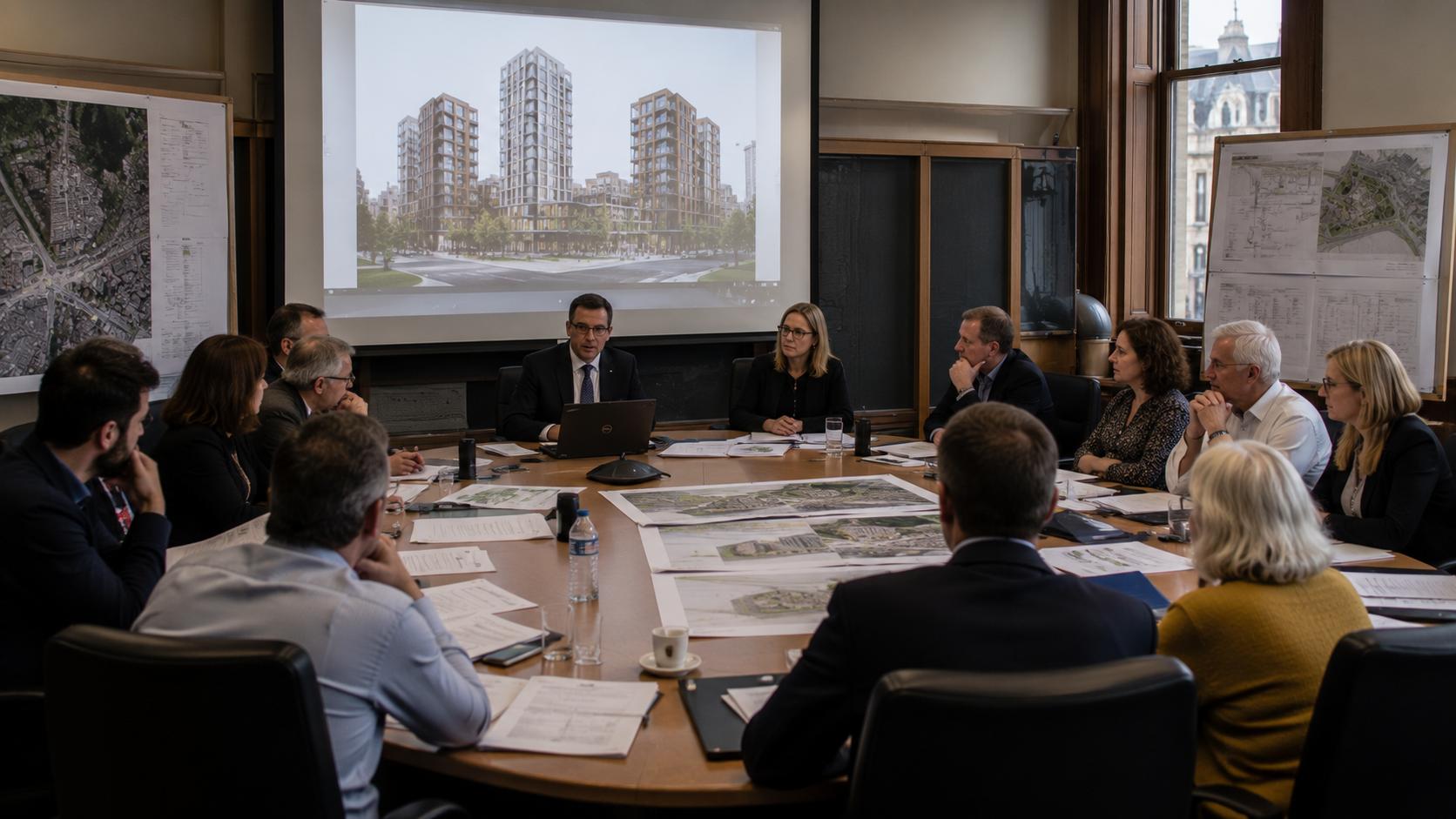
Larger, more controversial or strategically important developments are usually referred to Newcastle City Council's Planning Committee, where elected councillors hear public representations before making the final decision.
Residents are often able to submit written objections and, in some circumstances, speak directly at committee meetings before councillors vote.
Even then, committee members must base their decisions on planning policy rather than public popularity.
Approving or refusing an application for reasons that are not supported by planning law can leave councils vulnerable to costly appeals.
What makes an objection more effective?
Planning professionals generally agree that the strongest objections focus on factual planning issues rather than emotion.
For example, evidence showing an access road has poor visibility, that flooding already affects nearby properties or that a proposal conflicts with an adopted local planning policy is likely to receive considerably more attention than objections simply stating residents dislike the development.
Supporting evidence can also strengthen objections.
Traffic surveys, photographs, environmental reports and references to planning policies often carry more influence than general statements of opposition.
Planning officers are legally required to consider all relevant representations before reaching their recommendation.
Appeals mean councils cannot simply refuse applications.
Even if Newcastle City Council refuses planning permission, developers have the right to appeal.
Planning inspectors appointed by the Government independently review disputed applications and can overturn local decisions if they believe councils have incorrectly applied planning policy.
This is one reason councils carefully assess every application against national and local planning rules rather than relying solely on public opinion.
Government data also shows planning authorities continue processing large numbers of applications efficiently. During April to June 2025, councils across England decided more than 80,000 planning applications, with 91 percent of major applications determined within agreed timescales.
Why community engagement still matters.
Although objections do not automatically stop developments, public consultation remains an important part of the planning process.
Residents frequently identify local issues that developers may have overlooked, including school capacity, dangerous junctions, parking pressures, wildlife habitats or drainage concerns.
Councils also encourage applicants to consult communities before submitting larger developments, allowing concerns to be addressed earlier and reducing conflict later in the process.
Across Newcastle and the wider North East, successful planning applications increasingly involve revised designs that reflect community feedback while still delivering new homes, commercial investment or regeneration.
Planning objections are one part of a much bigger process.
For anyone submitting a planning objection in Newcastle, the key message is that every representation is read, but not every concern carries equal legal weight.
The planning system is designed to balance the needs of existing communities with future housing, employment and regeneration. That often means difficult decisions where some residents remain disappointed regardless of the outcome.
While objections alone rarely determine planning decisions, well-researched comments based on genuine planning issues can influence developments, improve proposals and sometimes even lead to applications being refused.
For Newcastle and the North East, public participation continues to play an important role in shaping how neighbourhoods evolve, even when the final decision does not match everyone's expectations.
Share your experience.
Have you objected to a planning application in Newcastle the North East?
Local News
Can Newcastle Residents Actually Stop New Property Developments?
Advertisement





Comments (0)
You must be logged in to post comments.
Don't have an account? Register here
No comments yet. Be the first to share your thoughts!