
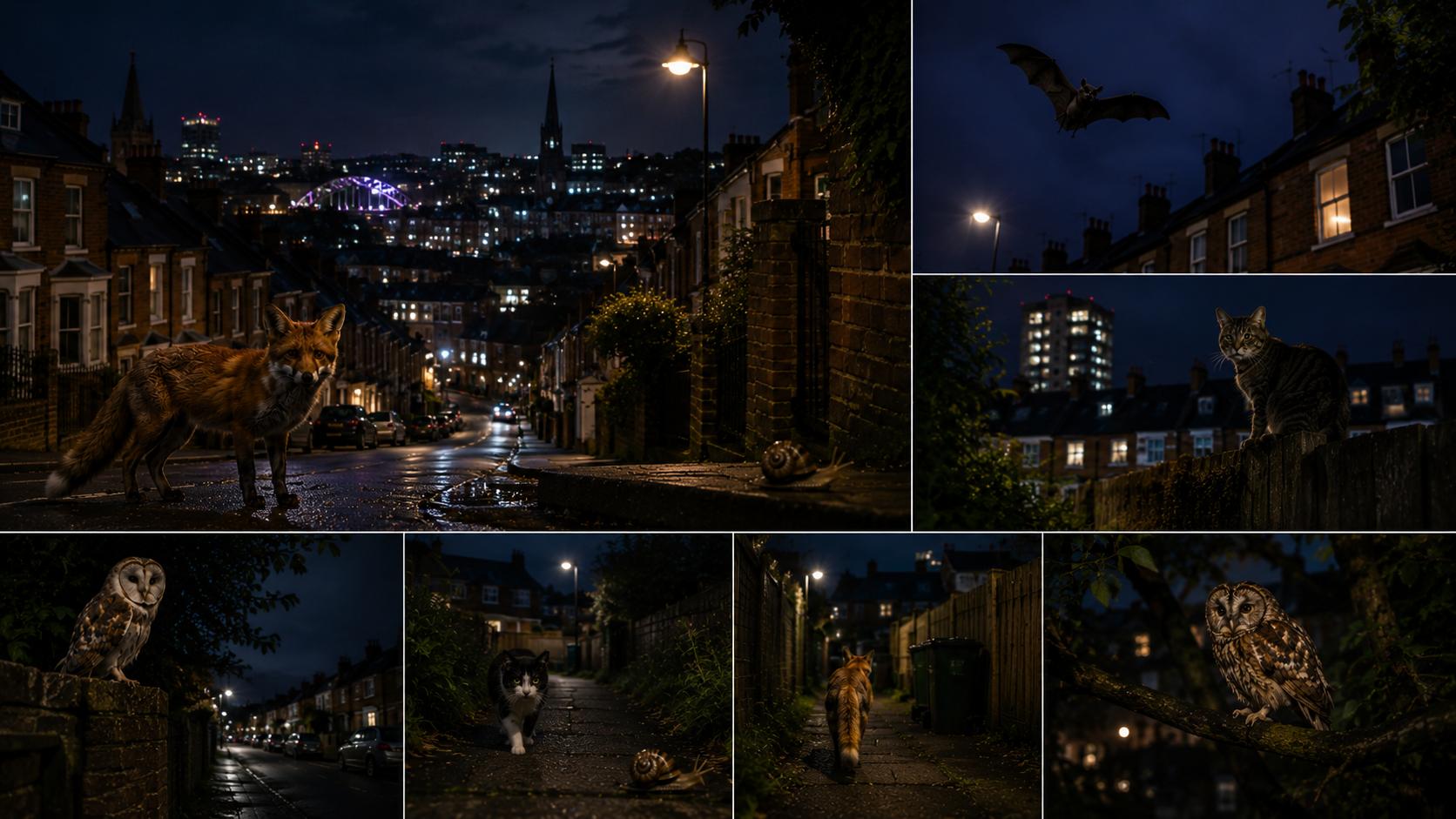
As Newcastle's streets begin to empty and the city lights glow against the night sky, another world quietly comes to life. While most people are settling down for the evening, bats hunt above parks, foxes patrol quiet streets and countless insects emerge to play a vital role in the local ecosystem.
Urban wildlife has become increasingly common across Newcastle and the wider North East, yet much of it remains unnoticed by the thousands of people who pass through the city every day. From riverside habitats to suburban gardens, the region supports an impressive variety of nocturnal creatures that thrive after sunset.
Bats are among Newcastle's busiest night workers.
Many people are surprised to learn that bats are regularly spotted throughout Newcastle, particularly around Jesmond Dene, the Town Moor, the Ouseburn Valley and along the River Tyne.
The UK is home to 18 breeding bat species, with several including the common pipistrelle, soprano pipistrelle and Daubenton's bat recorded across North East England. Bats can consume thousands of insects during a single night, making them one of nature's most effective pest controllers. According to The Wildlife Trusts, an individual small bat may eat around 3,000 insects in one evening during the summer months.
Using echolocation to navigate in complete darkness, these protected mammals often remain completely invisible despite flying only metres above people's heads.
Urban foxes have become familiar neighbours.
Foxes have adapted remarkably well to city life and Newcastle is no exception. Quiet residential streets, parks and green corridors provide ideal habitats for these highly intelligent animals.
Estimates from wildlife organisations suggest there are now more than 150,000 urban foxes living across Britain, with populations continuing to thrive in many towns and cities. They are most active between dusk and dawn, often travelling several miles each night in search of food.
Although sightings have become more common, foxes generally avoid people and rarely cause problems when left undisturbed. Many Newcastle residents may unknowingly share their neighbourhood with several fox families without ever seeing them.
Owls and other birds take over after sunset.
Not every bird disappears at night. Tawny owls and barn owls remain active across parts of the North East, hunting small mammals while most people sleep.
The haunting call of a tawny owl can occasionally be heard from woodland areas including Jesmond Dene and larger green spaces surrounding Newcastle. Along the River Tyne, gulls, herons and cormorants also continue feeding well into the evening, taking advantage of quieter conditions along the water.
Even blackbirds and robins have been observed singing after dark in brightly lit urban environments, where artificial lighting can alter natural behaviour.
Tiny insects keep the city alive.
While bats and foxes attract most attention, insects arguably perform the biggest role in Newcastle's nighttime ecosystem.
Moths, beetles, lacewings and countless other species pollinate plants, recycle organic matter and provide food for birds and mammals throughout the region. However, conservation groups continue to warn about declining insect numbers.
Research published by Buglife has highlighted significant losses in flying insect abundance across parts of the UK over recent decades, raising concerns about the wider impact on biodiversity. Garden planting, reducing pesticide use and leaving small wild areas can all help support local insect populations.
Without these tiny creatures, many of Newcastle's better-known wildlife species would struggle to survive.
Cats become skilled nighttime hunters.
Domestic cats are another familiar part of Newcastle's after-dark wildlife scene. Although beloved pets, studies suggest they remain highly effective predators, even when well fed.
The Mammal Society estimates that millions of mammals, birds and reptiles are brought home by pet cats in Britain every year, although researchers believe the true number of animals caught is considerably higher because many are never returned to owners.
Wildlife charities recommend fitting cats with brightly coloured collars or keeping them indoors during peak hunting periods to reduce impacts on native wildlife.
Why protecting urban nature matters.
Newcastle's growing network of parks, riversides, nature reserves and gardens creates valuable habitats that allow wildlife to survive alongside people.
Organisations including the Northumberland Wildlife Trust encourage residents to take part in wildlife surveys, install bat boxes, create pollinator-friendly gardens and record sightings through citizen science projects. These simple actions help conservationists monitor species while improving habitats across the North East.
Although the city may appear quiet once darkness falls, it is anything but still. Every evening, countless animals begin another busy shift that most residents never witness.
Taking a late evening walk through one of Newcastle's parks or along the riverside might reveal an entirely different side of the city. With a little patience and a keen eye, you may discover that some of Newcastle's most fascinating residents only appear after the sun goes down.
Share your urban wildlife sightings.
Have you ever spotted bats, foxes, owls or other wildlife in Newcastle after dark?
Local News
The Creatures Roaming Newcastle's Neighbourhoods While You Sleep
Advertisement




Comments (0)
You must be logged in to post comments.
Don't have an account? Register here
No comments yet. Be the first to share your thoughts!