
Britain produces a family of soft, yeasted breads cooked on a griddle rather than baked in an oven. Crumpets, muffins and pikelets are the survivors, and they are more distinct from one another than most people assume.
They also come with a good deal of confusion, particularly around the word muffin, which now means two entirely different things depending on which side of the Atlantic you are standing.
Here is what separates them and where they came from.
Griddle cooking predates domestic ovens.
For most of British history, ordinary households did not have ovens. Baking was done at a communal bakehouse, or food was cooked on a griddle, bakestone or girdle over an open fire.
That constraint produced a whole category of breads cooked flat on a hot surface: oatcakes, Welsh cakes, singin' hinnies in Northumberland, scones in Scotland and, in this family, crumpets and muffins.
They are yeasted, cooked from a batter or soft dough, and finished by toasting, which is why they are still eaten toasted today.
Crumpets are made from a batter.
A crumpet batter is loose, pourable and made with plenty of liquid, yeast and, crucially, a raising agent such as bicarbonate of soda added at the end.
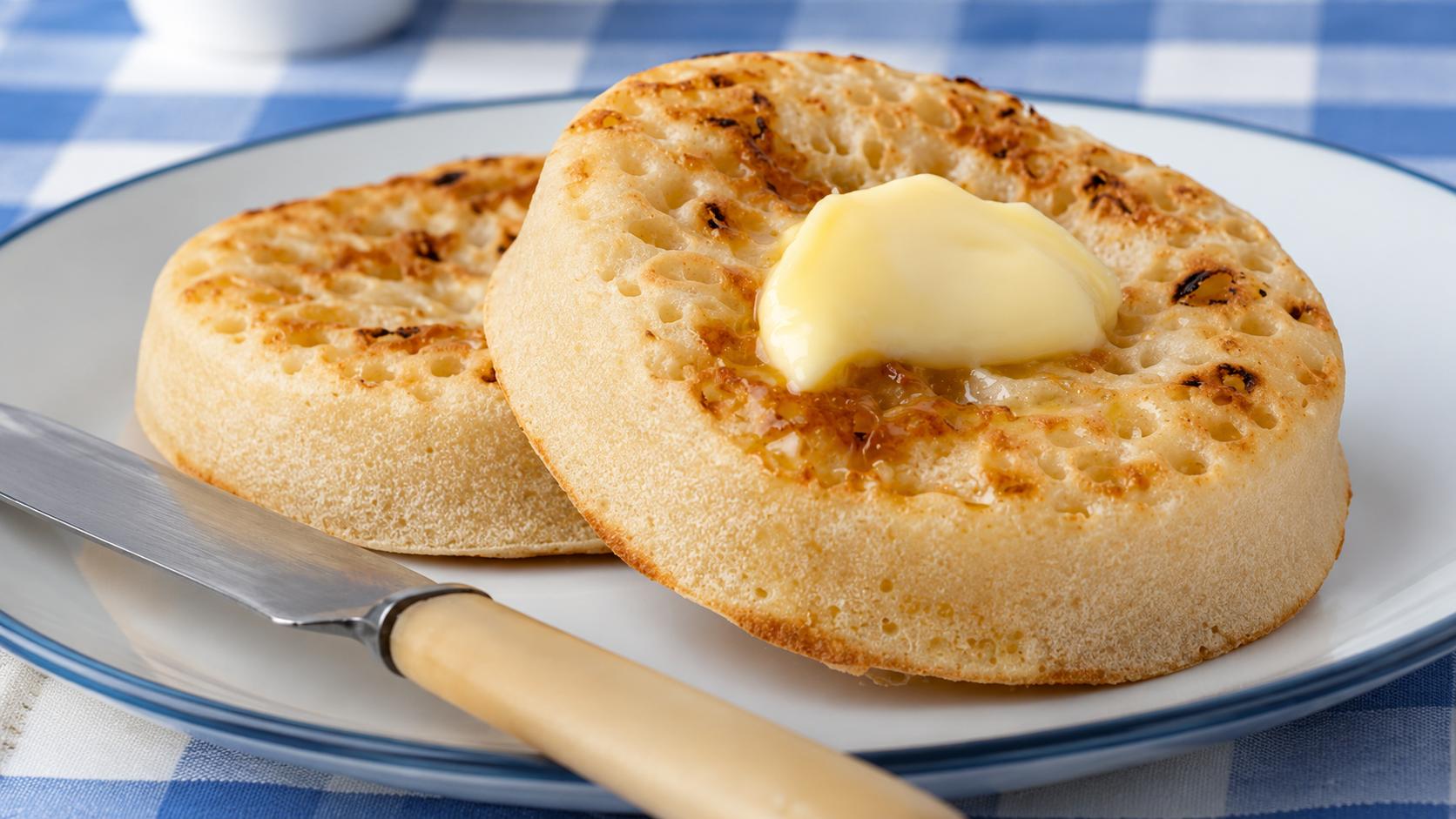
The batter is poured into metal rings on a hot griddle. As it cooks, gas bubbles rise through the wet batter and burst at the surface, creating the characteristic holes.
The base sets into a smooth, browned surface while the top remains pale and open. That structure is entirely functional: the holes exist to hold melted butter.
Crumpets are cooked on one side only. The pale, holey top is not undercooked, it is finished later in the toaster.
Muffins are made from a dough.
An English muffin is quite different. It is made from a soft, kneaded dough rather than a batter, shaped into rounds and cooked on a griddle on both sides.
The result is a light, slightly chewy bread with a flat top and bottom and a distinctive band around the middle where it was turned.
Muffins should be split by pulling apart with the fingers or opening with a fork rather than cut with a knife, which compresses the interior and spoils the rough texture that holds butter.
They are the base for eggs Benedict and a great many other things, and they toast well without becoming hard.
The American muffin is unrelated.
The cake-like muffin baked in a paper case is a separate development, chemically raised rather than yeasted and baked in an oven.
The two share a name and almost nothing else. In Britain, the yeasted griddle bread is often specified as an English muffin to avoid confusion, which is faintly absurd in England itself.
Blueberry muffins, chocolate muffins and their relatives belong entirely to the second family.
Pikelets are a regional distinction.
A pikelet is essentially crumpet batter cooked without a ring, so it spreads out into a thinner, irregular round with holes but far less depth.
The word is used across parts of the North and the Midlands, though usage varies considerably. In some areas pikelet is simply the local word for a crumpet, and in others it specifically means the unringed version.
The name is thought to derive from a Welsh term for a griddle cake, and similar breads exist across the Welsh borders under various names.
The muffin man was a real trade.
The nursery rhyme reflects genuine history. Muffins were sold door to door by street vendors in Victorian towns and cities, carried in a covered tray on the head and announced with a handbell.
Muffins were an afternoon food rather than a breakfast one, associated with the tea table, and the trade was substantial enough to be regulated. Attempts were made at various points to restrict the ringing of muffin men's bells.
The trade declined with the growth of commercial bakeries and shop retailing, and had largely gone by the mid-twentieth century.
Industrial production changed both.
Crumpets in particular are now overwhelmingly a factory product, and a small number of large bakeries account for most of the market.
Commercial production allows for consistent hole formation, which is harder to achieve at home, and a long shelf life. Home-made crumpets are a rewarding project but a demanding one, since batter consistency and griddle temperature both need to be right.
Muffins are somewhat easier to make at home and reward the effort, since a fresh muffin is noticeably better than a packaged one.
Eating them properly.
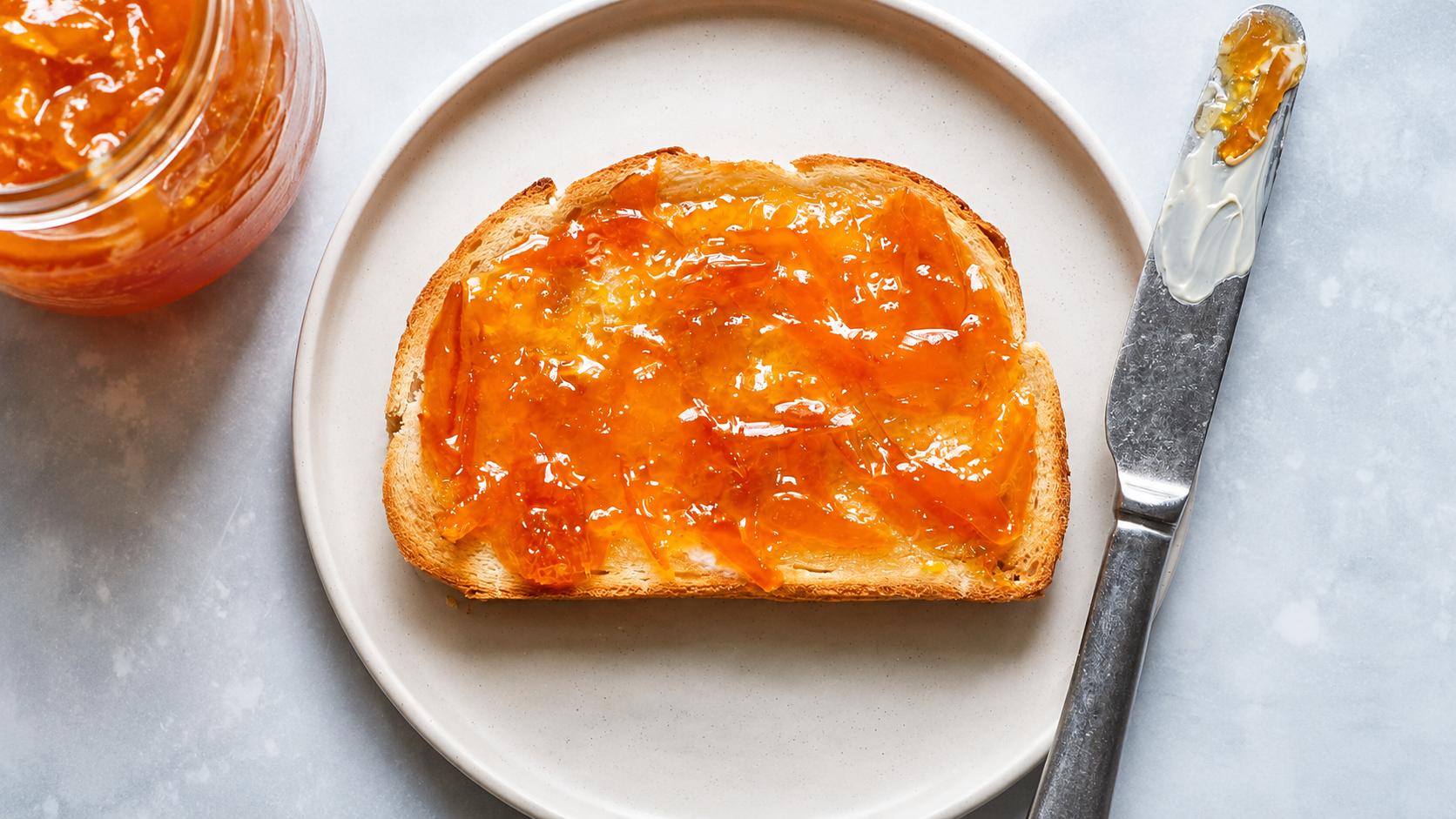
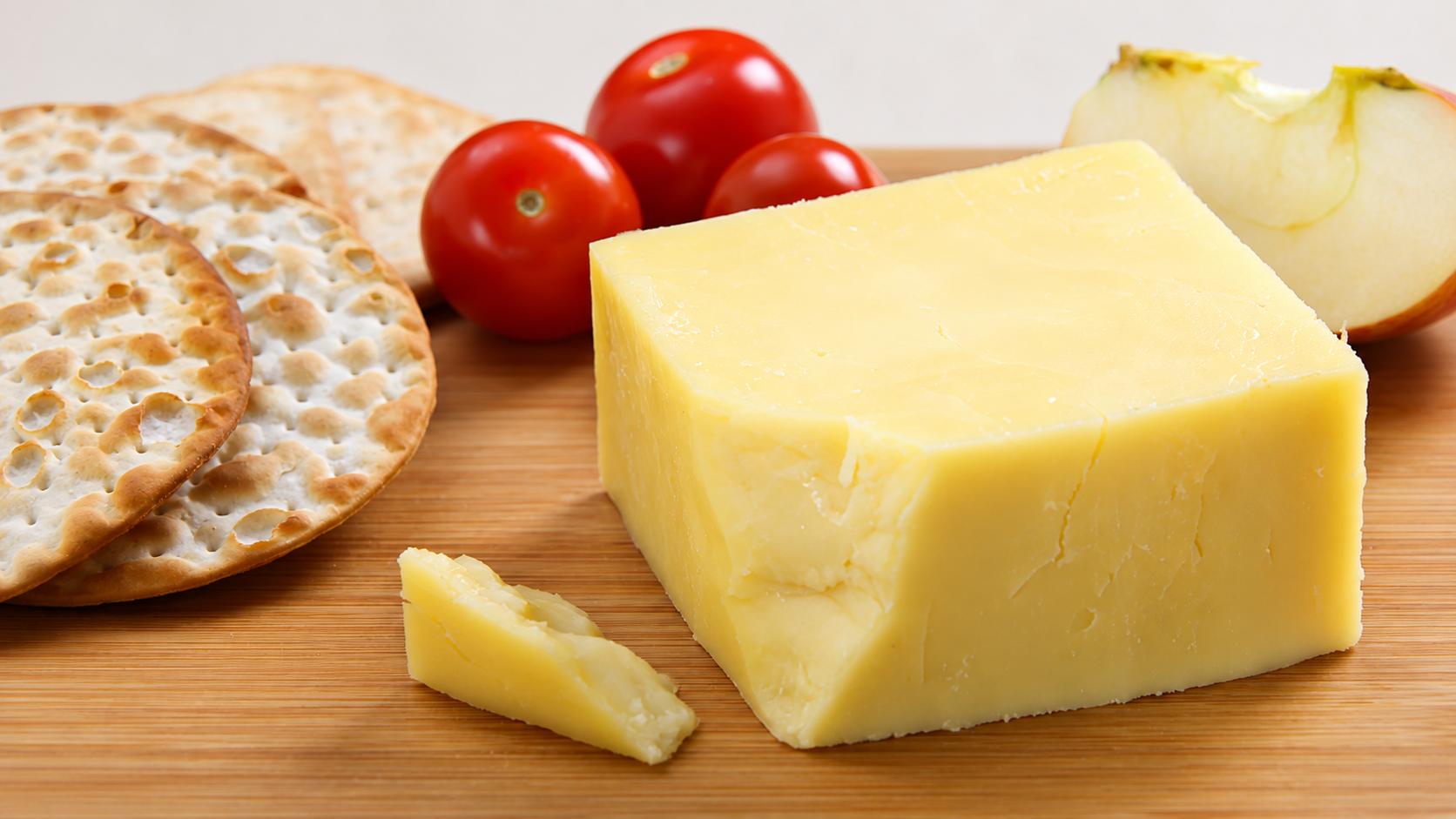
Crumpets should be toasted until the base is crisp, then buttered generously while hot so the butter runs into the holes. Anything beyond butter is a matter for the individual, though honey, jam, marmite and cheese all have their advocates.
Some households insist on toasting crumpets under a grill rather than in a toaster, arguing it crisps the base better.
Muffins toast best after splitting, cut side up, and are the correct base for a poached egg and hollandaise, a bacon sandwich or a straightforward pat of butter.
Both remain a fixture of cold weather in Britain, and sales rise sharply as the temperature falls.
Share your thoughts.
Crumpet or muffin, and how many is a reasonable number in one sitting?
Food & Drink News
Crumpets and Muffins: Britain's Griddle Breads
The holes in a crumpet are not decorative, and the difference between a crumpet, a muffin and a pikelet is more than regional pride.
Advertisement

Comments (0)
You must be logged in to post comments.
Don't have an account? Register here
No comments yet. Be the first to share your thoughts!