
Plans for a potential ban on social media use by under-16s are once again at the centre of national debate, with child safety campaigners warning that a rushed approach could create more problems than it solves.
The discussion comes after reports suggested Prime Minister Keir Starmer is considering restrictions on access to certain social media platforms for children under the age of 16. While the details remain unclear, the proposal has already sparked strong reactions from parents, politicians, safety experts and charities across the country.
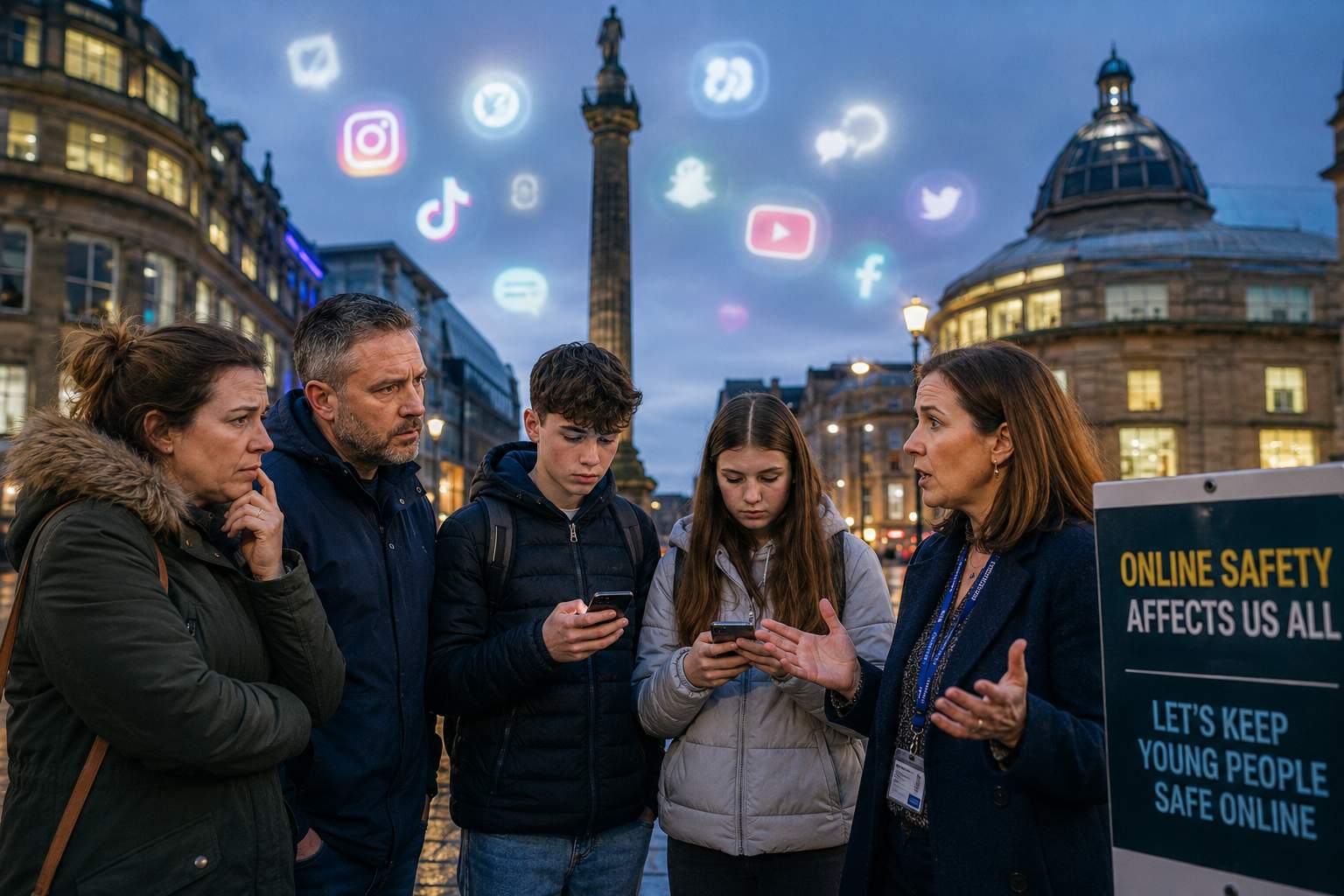
For families in Newcastle and across the North East, the debate touches on a growing concern that many parents face daily. How can children enjoy the benefits of digital technology while being protected from harmful content, online bullying and dangerous algorithms?
Why the government is considering a ban.
Pressure on ministers to take stronger action has been building for years as concerns over children's online experiences continue to grow.
The issue gained national attention following the death of Molly Russell, a British teenager who was exposed to large amounts of self-harm and suicide-related content online before taking her own life. Her case became a turning point in discussions around the responsibility social media companies have for protecting young users.
Reports suggest the government could introduce restrictions on what it considers "harmful" social media platforms. However, questions remain over exactly which apps would be affected and how any ban would be enforced.
The UK has already introduced measures through the Online Safety Act, which places legal responsibilities on technology companies to protect children from harmful content.
Charity warns ban could quickly fail.
The Molly Rose Foundation has emerged as one of the most prominent voices urging caution.
Rather than supporting an immediate blanket ban, the charity argues that restrictions could be easily bypassed by young people and may simply push them towards less regulated online spaces, including gaming platforms and private messaging services.
Andy Burrows, the charity's chief executive, has warned that any rushed policy risks "quickly unravelling" if it is not backed by evidence and practical enforcement measures.
Instead, the organisation wants tougher safety requirements imposed on social media companies. This would include stronger controls on recommendation algorithms that determine what content children see in their feeds. Platforms that fail to meet those standards could then face restrictions or bans.
Supporters of this approach argue that the focus should be on making apps safer rather than simply preventing access.
The scale of children's social media use.
One of the biggest challenges facing policymakers is the sheer number of young people already using online platforms.
According to Ofcom research, 99 per cent of children spend time online and nine in ten own a mobile phone by the age of 11. The regulator also found that three-quarters of social media users aged between eight and 17 have their own profile on at least one major platform.
Despite many social media platforms having minimum age requirements of 13, Ofcom data shows that six in ten children aged eight to 12 who use those services already have their own account.
Additional research indicates that 67 per cent of children aged 13 to 15 actively use social media, with TikTok and Instagram among the most popular platforms.
These figures highlight why any future restrictions would affect millions of families across the UK, including thousands in Newcastle.
Newcastle families face the same concerns.
Parents across Newcastle are already navigating difficult conversations about screen time, online friendships and exposure to harmful content.
Whether children are attending schools in Gosforth, Heaton, Jesmond or Gateshead, many families are dealing with similar questions. At what age should a child be allowed on social media? How much screen time is too much? And who should ultimately be responsible for keeping children safe online?
A complete ban may appeal to some parents who feel overwhelmed by the pace of technological change. Others worry that prohibiting access entirely could simply encourage children to find ways around restrictions.
Experts point out that today's teenagers are often highly skilled at navigating digital platforms, making enforcement a significant challenge.
What the evidence says about online harms.
While there is broad agreement that children need protection online, experts remain divided on the best way to achieve it.
Research has consistently shown that young people can encounter harmful material online, including content linked to self-harm, eating disorders, misinformation and abuse.
Recent reports have also highlighted concerns about recommendation systems that repeatedly push similar content towards vulnerable users. Critics argue these algorithms can create harmful cycles by feeding users increasingly extreme material based on previous viewing habits.
Ofcom has responded with new child safety measures requiring technology companies to strengthen protections for younger users and introduce more effective safeguards.
The regulator says these changes should lead to safer social media feeds, stronger age checks and improved support systems for children.
The challenge of enforcing age restrictions.
Even supporters of a ban acknowledge that enforcement presents major obstacles.
Australia has already moved towards stricter age restrictions for social media users, but the UK would face similar challenges around age verification, privacy and circumvention methods.
Critics argue that children determined to access social media could use alternative accounts, borrowed devices or virtual private networks to bypass restrictions.
Recent research into online safety regulations found significant increases in interest in VPN services following age verification measures introduced in the UK.
That raises concerns that restrictions alone may not eliminate access and could instead shift activity into harder-to-monitor corners of the internet.
Political pressure continues to build.
The debate has also become a political issue.
More than 60 Labour MPs previously called for stronger action on children's social media use, arguing that government intervention is needed to tackle growing concerns around online harms.
At the same time, campaigners such as Baroness Beeban Kidron have argued that ministers should focus more heavily on forcing technology companies to improve safety standards rather than relying on headline-grabbing announcements.
The government has recently taken other steps aimed at improving child safety online, including issuing a deadline to Apple and Google to strengthen protections against explicit images on children's devices.
These measures form part of a broader effort to address online risks facing young people.
Why the debate matters.
The discussion surrounding social media and children is unlikely to disappear any time soon.
Technology has become deeply embedded in everyday life. Young people use digital platforms not only for entertainment but also for communication, education, hobbies and maintaining friendships.
For many Newcastle families, the question is no longer whether children should be online. Instead, it is how to make those online experiences safer.
A ban may ultimately form part of the government's response. Equally, stricter regulation of technology companies, stronger age verification systems and improved digital education could all play important roles.
What remains clear is that there is growing public demand for action.
As ministers consider their next move, families across Newcastle and the wider UK will be watching closely to see whether future policies deliver meaningful protection or simply create new challenges in an already complex digital world.
Have your say, how are you managing your children's social media use at home?
Political News
Experts Warn UK Social Media Ban May Not Work As Intended
Advertisement


Comments (0)
You must be logged in to post comments.
Don't have an account? Register here
No comments yet. Be the first to share your thoughts!