
For years, rumours have circulated online claiming that the British Government is planning to abolish cash and force the public into a fully digital financial system. The theory has gained traction on social media, particularly since the Covid-19 pandemic accelerated the use of contactless payments across the UK.
But is there any truth behind these claims, or is Britain simply following a global trend towards digital transactions?
The answer is more complicated than many people think.
Where The Cash Conspiracy Theory Began.
Concerns about a cashless society are not new. The debate can be traced back more than a decade, when banks, retailers and financial technology companies began encouraging consumers to use debit cards, mobile payments and online banking.
As the number of bank branches and cash machines gradually declined, some campaigners argued that the shift was not happening naturally. Instead, they believed cash was being deliberately phased out to increase financial surveillance and government control.
The theory gained momentum whenever a bank branch closed, a retailer refused cash, or new digital payment technologies emerged.
While these concerns have attracted millions of views online, there remains no evidence that the UK Government has a policy to abolish cash entirely. In fact, recent legislation has focused on protecting access to cash rather than removing it.
What The Government Actually Says.
One of the biggest misconceptions is that businesses are legally required to accept cash. In reality, retailers can generally decide which payment methods they accept.
Parliamentary reports have repeatedly confirmed that the Government's focus has been on maintaining access to cash through banking hubs, Post Offices and ATM networks, rather than forcing businesses to accept cash or banning it altogether.
The Financial Conduct Authority has also introduced measures aimed at ensuring communities continue to have reasonable access to cash withdrawal and deposit facilities.
In short, there is currently no government policy announcing the abolition of cash in Britain.
How Covid Changed The Way Britain Pays.
The Covid-19 pandemic marked a major turning point in consumer behaviour.
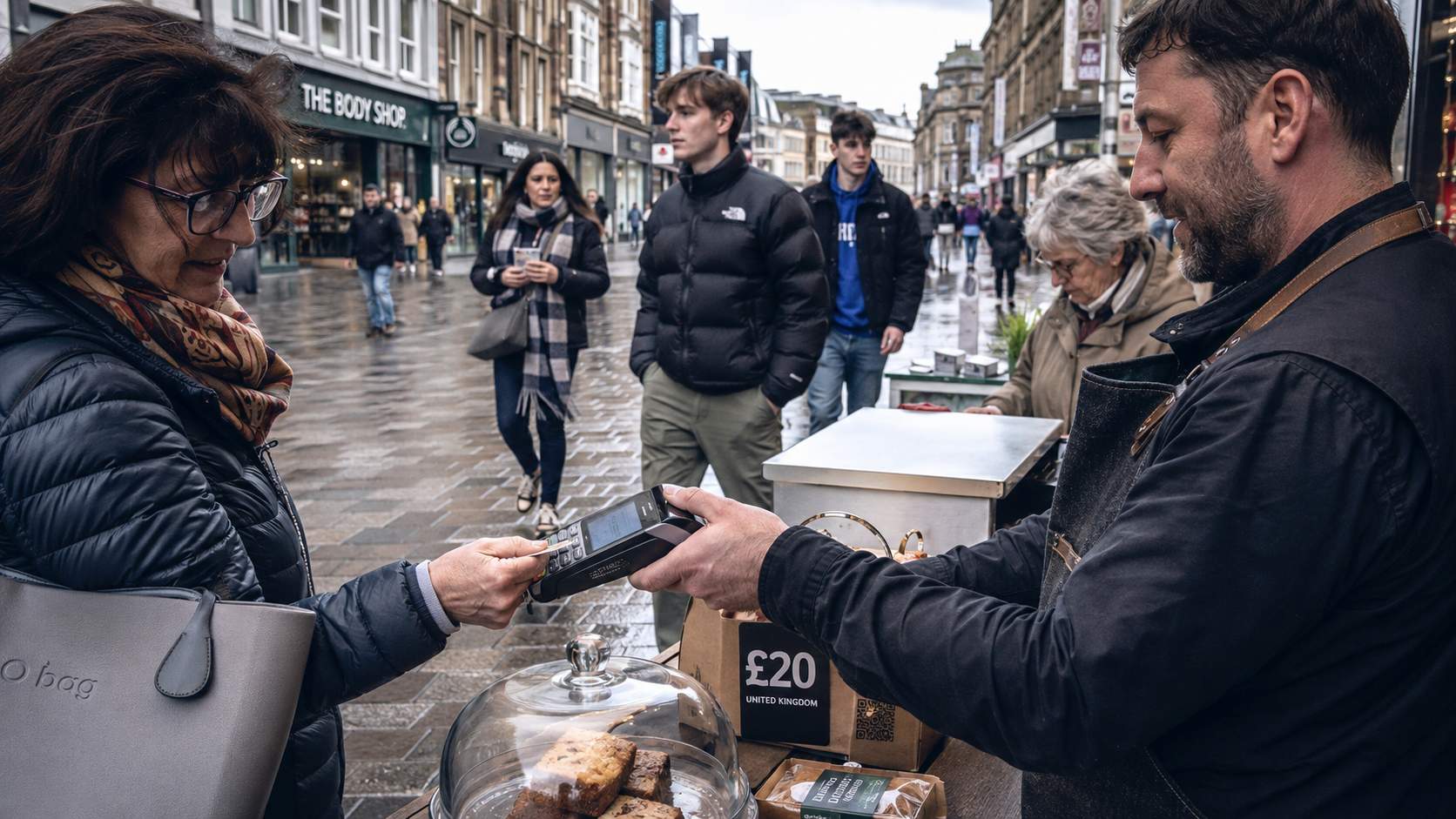
During lockdowns, many businesses encouraged card payments to reduce physical contact. Contactless spending limits were increased and consumers became more comfortable using mobile wallets such as Apple Pay and Google Pay.
Before the pandemic, cash was still a significant part of everyday spending. In 2019, cash accounted for around 23% of UK payments. By 2024, that figure had fallen to just 9%.
Many people who previously used notes and coins every day discovered that digital payments were often quicker and more convenient. Once those habits changed, a large proportion never returned to using cash as frequently.
However, the decline was not universal. Some households later returned to cash as a budgeting tool during the cost of living crisis.
The Numbers Behind Britain's Shift Away From Cash.
The statistics reveal just how dramatically payment habits have changed.
According to UK Finance, cash accounted for nearly half of all UK payments in 2014. By 2024, it represented just 9% of transactions.
Other notable figures include:
Approximately 4.4 billion cash payments were made in the UK during 2024.
Around 91% of UK adults still use cash at least occasionally.
Roughly 13% of people use cash every day.
More than half of UK adults now regularly use mobile payment services.
Cash is forecast to account for just 4% of payments by 2034 if current trends continue.
These figures suggest that while cash is declining, it remains far from extinct.
Why Cash Still Matters In Newcastle And The North East.
The debate around cash remains particularly relevant across Newcastle and the wider North East.
Many local high streets continue to rely on independent traders, market stalls, taxi services and small businesses where cash remains common. Older residents are also statistically more likely to use physical money than younger generations.
The North East has faced significant bank branch closures over the past decade, mirroring a national trend that has seen thousands of branches disappear from town centres. This has raised concerns about financial exclusion, particularly in rural communities and among vulnerable residents.
Community banking hubs have emerged as one solution, helping residents access cash services even after traditional branches close.
For many Newcastle residents, the issue is less about government control and more about convenience. People want the freedom to choose how they pay.
Why Some People Want To Keep Cash.
Supporters of cash argue that physical money offers advantages that digital payments cannot always match.
Cash helps some households budget more effectively by limiting spending to the money physically available. During the cost of living crisis, many families returned to cash-based budgeting methods.
Others value privacy. Unlike card transactions, cash purchases do not create a digital record.
There are also concerns about technology failures. Network outages, cyber attacks and banking system disruptions can temporarily prevent digital transactions from working.
For elderly residents, people with disabilities and those without reliable internet access, cash can remain an essential financial tool.
Could Britain Become Cashless One Day?
A fully cashless Britain is possible in theory, but experts believe it remains some distance away.
Millions of people continue to rely on cash for at least part of their spending. Government agencies, financial regulators and consumer groups have repeatedly highlighted the importance of maintaining access to cash services.
The more realistic scenario is that cash becomes less common rather than disappearing entirely.
Digital payments will likely continue growing, particularly among younger generations, but physical money still serves an important role in society.
The Real Question Facing Britain.
The debate should perhaps move beyond whether cash will disappear and focus instead on whether people will continue to have genuine choice.
The evidence suggests the decline of cash is being driven largely by consumer behaviour, technology and convenience rather than a secret government plan. Yet concerns about privacy, financial inclusion and access to services remain legitimate issues that policymakers must address.
For Newcastle, the North East and the rest of Britain, the challenge will be balancing technological progress with ensuring that nobody is left behind as payment habits continue to evolve.
Have your say.
Is tapping your phone easier for you than having to carry cash everywhere?
Political News
Is Britain Really Planning To Ban Cash Transactions?
Advertisement





Comments (0)
You must be logged in to post comments.
Don't have an account? Register here
No comments yet. Be the first to share your thoughts!