
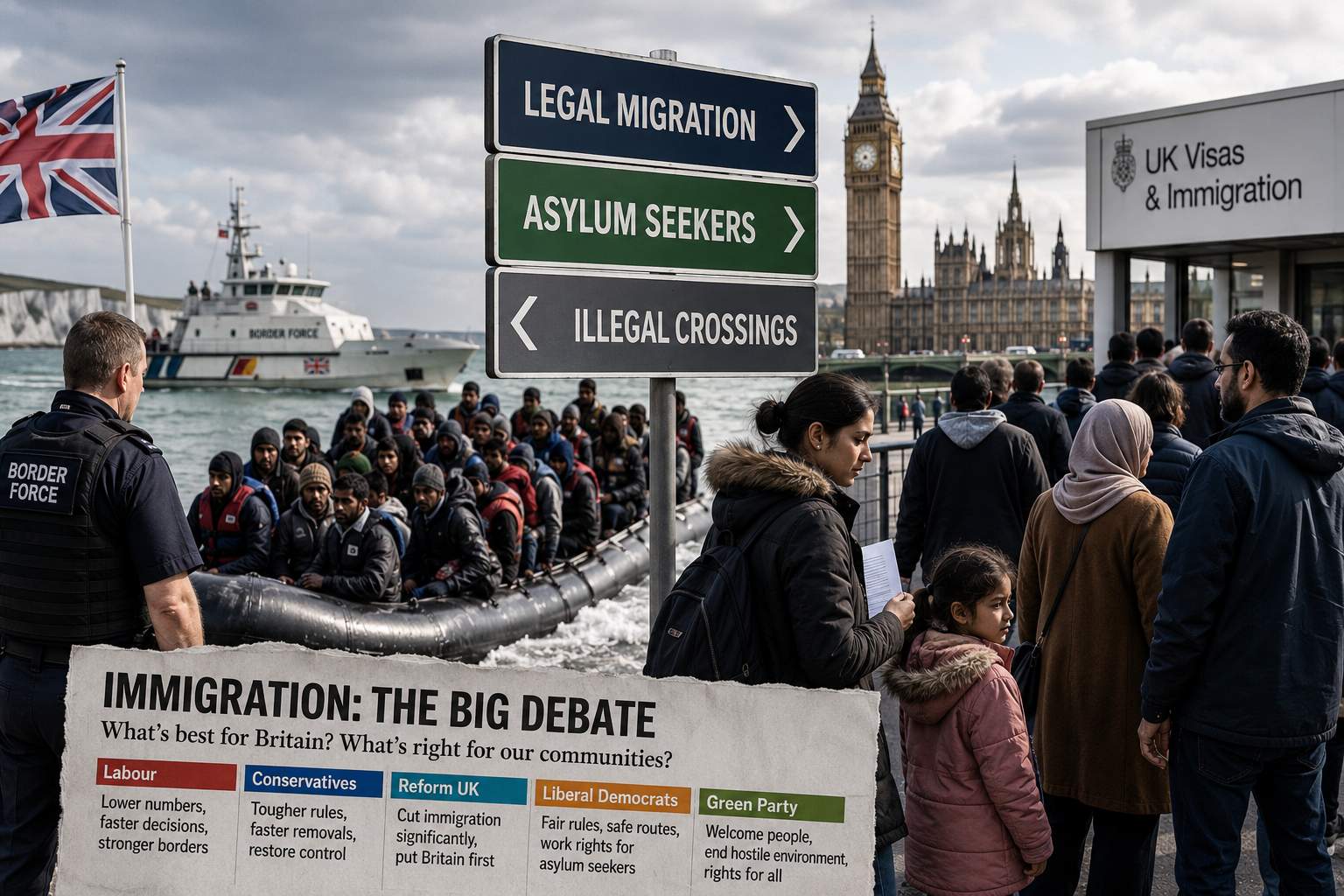
Immigration has become one of the most divisive political debates in Britain, covering everything from legal work and study visas to small boat crossings, asylum claims and the use of hotels to house people awaiting decisions.
For readers in Newcastle and the wider North East, the issue is not just about Westminster headlines. It affects local councils, housing pressure, public services, universities, care providers, employers and communities where migration has helped fill key workforce gaps.
The debate is often reduced to slogans, but legal migration, illegal migration and asylum are different issues. Legal migration includes people arriving with work, study or family visas. Illegal migration usually refers to people entering or remaining in the UK without permission. Asylum involves people asking for protection because they say they are fleeing persecution, war or serious harm.
Official figures show net migration has fallen sharply from recent record highs, but asylum claims and small boat crossings remain politically sensitive. That has created a sharp divide between parties promising tougher enforcement and those arguing for safer legal routes, faster decisions and a more humane system.
Reform UK And Its Promise To Cut Immigration Sharply.
Reform UK has placed immigration at the centre of its political message.
Nigel Farage and senior Reform figures argue that immigration levels are too high and place pressure on housing, public services and wages. The party has called for a dramatic reduction in legal migration and has said Britain should leave the European Convention on Human Rights if necessary to allow tougher deportation policies.
Reform has also proposed a much harder line on illegal migration. In 2025, Farage said a Reform government would detain and deport people arriving illegally, including those crossing the Channel in small boats. The party has framed this as a way to restore border control and discourage people-smuggling gangs.
Supporters argue this would benefit UK residents by reducing pressure on housing, schools, GP services and council budgets. In the North East, where many communities already face deprivation and stretched public services, that message may appeal to voters who feel local services are under strain.
However, critics argue Reform's approach could create serious legal, practical and humanitarian problems. Mass detention and deportation would require huge capacity, international agreements and court-tested legislation. There are also questions about how people could be returned to countries such as Afghanistan, Iran or Eritrea if those governments refuse cooperation or if return would place people at risk.
For Newcastle, the economic impact also matters. The city relies on international students, NHS workers, care staff and university research talent. A sharp reduction in legal migration could ease some pressure on services, but it could also make staff shortages worse in hospitals, social care, hospitality and higher education.
Labour's Plan To Control Borders While Keeping Legal Routes.
Labour has taken a tougher tone on immigration since entering government, while still rejecting Reform's more hardline approach.
Prime Minister Keir Starmer and Labour ministers have said they want to bring immigration down, reduce small boat crossings and speed up asylum decisions. The government has focused on a new Border Security Command, stronger action against people-smuggling gangs and cooperation with France.
Labour also moved away from the previous Conservative Rwanda scheme, arguing that it was costly, ineffective and unlikely to deal with the scale of the problem. Instead, the government has pursued returns agreements, including a UK-France arrangement aimed at returning some people who cross illegally while accepting others through legal routes.
For residents in Newcastle and the North East, Labour's approach could offer a middle ground. It promises stronger enforcement against illegal migration while maintaining legal migration routes for workers, students and families.
That matters locally because universities such as Newcastle University and Northumbria University benefit from international students, while the NHS and care sector depend heavily on overseas recruitment.
The risk for Labour is that voters who want rapid reductions in immigration may see the approach as too slow. At the same time, refugee charities argue that tougher asylum rules could still punish vulnerable people who have no safe way to reach Britain legally.
The central question for Labour is whether it can reduce crossings and clear backlogs without creating new legal bottlenecks or adding pressure to councils already dealing with housing shortages.
Conservative Policy And The Push For Tougher Enforcement.
The Conservative Party has also moved towards a much harder immigration position since losing office.
Senior Conservative figures, including Shadow Home Secretary Chris Philp, have argued that Britain needs stronger border controls, faster removals and major changes to asylum appeals. The party has discussed leaving the European Convention on Human Rights and limiting the ability of people arriving illegally to claim asylum in the UK.
The Conservatives have also proposed tougher deportation rules for foreign nationals convicted of crimes and stronger sanctions against countries that refuse to take back their citizens.
Supporters argue that this would benefit UK residents by increasing public confidence in the system and reducing the number of people staying in Britain after failed claims or criminal convictions. For voters in parts of the North East concerned about fairness, enforcement and pressure on housing, this approach may sound more credible than the current system.
Critics say the Conservative record is complicated. Net migration reached record highs under Conservative governments, and the asylum backlog grew significantly during their time in office. Opponents argue that tougher rhetoric did not always translate into workable administration.
There are also concerns about removing independent legal oversight from asylum appeals. Refugee groups and legal organisations warn that mistakes in asylum decisions can have life-changing consequences, especially for people fleeing torture, trafficking or persecution.
For Newcastle residents, the Conservative approach could mean fewer arrivals through irregular routes if successfully implemented, but it may also increase legal disputes and create uncertainty for employers relying on overseas workers.
Liberal Democrats And A More Humane Immigration System.
The Liberal Democrats have taken a more liberal position on immigration and asylum than Labour, the Conservatives or Reform UK.
The party has argued that the current system is inefficient, expensive and too often cruel. It supports scrapping hostile environment policies, allowing more asylum seekers to work while waiting for decisions and creating more safe and legal routes for refugees.
The Liberal Democrats have also backed closer cooperation with Europe, including youth mobility-style arrangements, and have called for reforms to family visa rules.
Supporters argue this would benefit UK residents by reducing the cost of asylum accommodation, helping people support themselves through work and making the system faster and more humane. If asylum seekers were allowed to work sooner, there could be less reliance on taxpayer-funded accommodation and more contribution to local economies.
In Newcastle and the North East, this could potentially help sectors with labour shortages, particularly hospitality, care and community services. It could also reduce tensions around asylum hotels if people were processed faster and allowed to live more independently.
Critics argue that more generous routes could encourage further migration unless carefully managed. Some voters may also worry that a softer approach would make it harder to control numbers or remove people whose claims fail.
The Liberal Democrat challenge is persuading the public that compassion and control can exist together.
Green Party Support For Safe Routes And Migrant Rights.
The Green Party has taken one of the most pro-migration positions in British politics.
The party supports ending the hostile environment, expanding safe routes for people seeking sanctuary and allowing asylum seekers to work while their claims are processed. It has also called for major reform of the Home Office and an end to most immigration detention, except where someone poses a danger to public safety.
Green politicians argue that migration is often discussed in a way that ignores human dignity and the economic contribution migrants make. They say people fleeing war, persecution or climate-related displacement should not be criminalised for seeking safety.
Supporters say this approach would benefit communities by reducing destitution, improving integration and allowing people to contribute instead of being trapped in limbo. For Newcastle, where voluntary groups and faith organisations already support asylum seekers and refugees, this policy direction may appeal to those who want a more welcoming system.
However, critics argue that Green policies may be seen as too open-ended by voters concerned about housing, public spending and public service capacity. Without strict limits, opponents say councils could face additional pressure.
The Green Party's argument is that those pressures are caused more by underinvestment than migration itself. Its critics believe that even well-funded services would struggle without stronger border controls.
What The Figures Show Nationally.
The latest official migration figures show how quickly the debate has changed.
The Office for National Statistics reported that long-term net migration fell significantly in the year to June 2025, down to around 204,000. That was a major fall from the post-pandemic peak and reflected fewer people arriving for work and study, alongside more people leaving the UK.
However, asylum figures remain high. Home Office data showed more than 111,000 people claimed asylum in the year ending June 2025, the highest figure for more than two decades. A major share of those claims came from people who had arrived by small boat, while others arrived legally on visas before later claiming asylum.
Small boat crossings remain one of the most visible parts of the issue, even though they are only one part of the wider immigration system. According to House of Commons Library analysis, around a third of people who have claimed asylum since 2018 arrived by small boat, rising to a higher share in the year ending March 2026.
These figures explain why the debate has become so politically charged. Net migration is falling, but asylum pressure remains high, and the public sees images of dangerous Channel crossings almost every week.
Why The North East Has A Different Immigration Debate.
The North East does not experience immigration in the same way as London, the South East or parts of the Midlands.
Newcastle is more diverse than many surrounding areas, partly because of its universities, hospitals and service economy. Census data shows the city has a larger migrant population than many other parts of the region, while rural and coastal communities often experience lower overall migration but may feel sharper changes when asylum accommodation or new labour markets appear quickly.
This matters because public opinion is often shaped not just by numbers, but by how quickly communities feel change is happening and whether local services are coping.
For example, if GP appointments, housing and school places already feel stretched, immigration can become a focal point for wider frustration. At the same time, many North East employers depend on migrant workers, especially in health, social care, food production, logistics and higher education.
A policy that cuts migration sharply could satisfy voters who want lower numbers, but it could also make recruitment harder. A policy that expands safe routes and allows asylum seekers to work could help fill vacancies, but it may worry residents who feel the region lacks enough housing and public investment.
The Choice Facing Voters.
The immigration debate is not simply about being for or against migration.
Reform UK wants a major reduction in immigration and far tougher action on illegal arrivals. Labour wants lower numbers, stronger border enforcement and faster asylum processing while keeping legal routes for workers and students. The Conservatives are pushing for tougher deportation powers and tighter legal controls. The Liberal Democrats want a fairer system with safe routes and work rights for asylum seekers. The Greens want the most rights-based approach, with fewer detention powers and a stronger welcome for refugees.
For Newcastle and the North East, the practical question is which approach would improve everyday life.
Would lower migration ease pressure on housing and public services, or would it worsen staffing shortages in hospitals, care homes and universities? Would tougher asylum rules restore confidence, or would they create more legal challenges and human hardship? Would safe routes reduce dangerous crossings, or would they increase the number of people trying to come to Britain?
Those are the questions voters will need to weigh carefully as immigration remains one of the defining political issues in the UK.
Political News
Immigration, Asylum And Small Boats: The Key Differences
Advertisement


Comments (0)
You must be logged in to post comments.
Don't have an account? Register here
No comments yet. Be the first to share your thoughts!