
Questions are being raised about the future of Britain's Skilled Worker visa system after Government records revealed that a wide range of businesses across Newcastle upon Tyne have been approved to recruit workers from overseas through a route originally designed to address labour shortages in specialist occupations.
The findings come at a politically sensitive moment as the Government continues its immigration crackdown, introduces stricter visa requirements and attempts to reduce net migration following years of record-high arrivals.
While ministers insist the system is being tightened and abuse is being tackled, critics argue that sponsor licence records tell a different story.
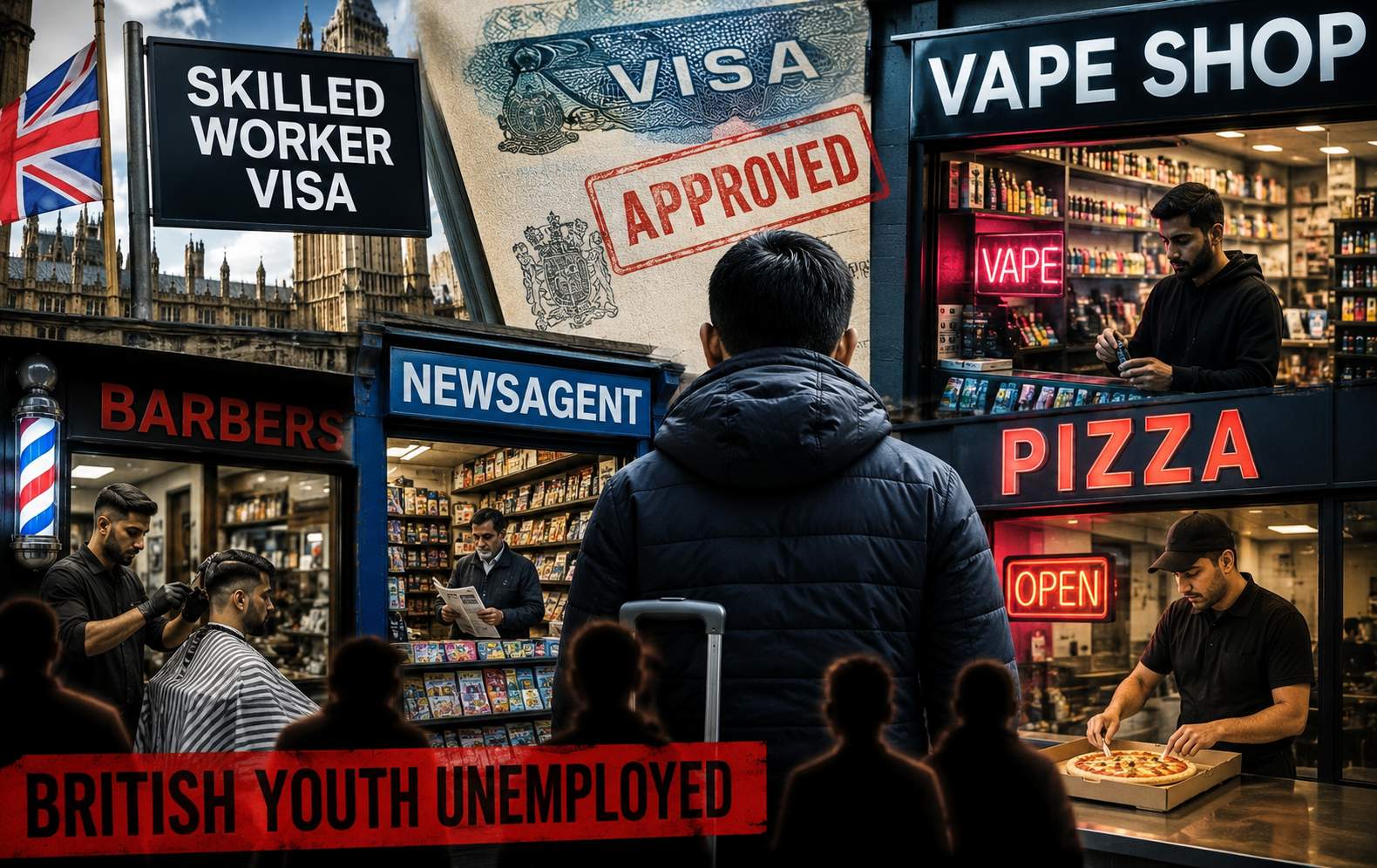
Businesses listed on the Government register include pizza outlets, barber shops, bakeries, donut stores, take-aways, vape shops, convenience shops, restaurants, newsagents and religious organisations, leading opponents to question whether the definition of a "skilled worker" has become too broad.
The debate has become particularly intense in Newcastle, where local sponsor licence data has highlighted the extent to which businesses traditionally associated with entry-level employment are able to access overseas recruitment routes.
For supporters of immigration reform, the issue is no longer simply about numbers. Instead, they argue it is about whether Britain's work visa system is still focused on attracting highly trained professionals or whether it has gradually expanded into sectors that once relied heavily on local workers, students and young people entering employment for the first time.
Immigration Crackdown Continues Across Britain.
The controversy comes despite a significant tightening of immigration policy over the past two years.
The Government has introduced a series of reforms aimed at reducing migration levels, raising salary thresholds and restricting access to visa routes considered vulnerable to abuse. The changes form part of a wider immigration crackdown designed to restore confidence in border controls and reduce reliance on overseas recruitment.
Recent figures show net migration has fallen sharply following reforms introduced under both the previous Conservative government and continued under Labour. Official statistics indicate net migration dropped to around 171,000 in 2025, representing one of the steepest declines in recent years. Much of that fall was driven by reduced numbers of overseas workers and dependants entering the country.
The Government has also increased salary thresholds for Skilled Worker visas, removed more than 100 occupations from overseas recruitment access and ended certain sponsorship routes that ministers believed were contributing to unsustainable migration levels.
Despite those reforms, sponsor licence data continues to generate controversy because many businesses still retain the ability to recruit 'skilled workers' internationally.
Newcastle Businesses Listed On Sponsor Register.
The Government's register of licensed sponsors contains thousands of organisations nationwide, including numerous businesses operating in Newcastle upon Tyne and the wider North East.
Among those listed are vape shops, barber shops, convenience stores, bakeries, restaurants, ministries and newsagents.
Examples appearing in the data include Qandil Barber Shop Ltd, Arch News NCL Ltd, Grainger News Ltd, St Anthony's News Ltd, Han Pizza Ltd, Pizza Tyne Ltd, Black Box Bakery Ltd, Black Box Donuts Ltd, Docs Fish & Chips, the Apostolic Church Newcastle and Centre 61 Ministries.
Critics argue that many of these businesses are difficult to reconcile with the public understanding of what constitutes a skilled occupation.
For decades, jobs in takeaway restaurants, convenience stores, pizza outlets, barber shops and similar businesses were often viewed as accessible entry-level opportunities requiring limited prior experience.
Many local residents believe such positions have historically provided an important first step into employment for school leavers, students and young workers looking to gain workplace experience.
The presence of these businesses on the sponsorship register has therefore become a focal point for wider concerns about immigration policy and labour market priorities.
What Does "Skilled Worker" Actually Mean.
At the centre of the debate is a question that has become increasingly political.
What exactly qualifies as a skilled worker?
When the visa route was first promoted, many voters associated it with highly trained professions such as engineers, doctors, software developers, scientists, architects and specialist healthcare workers.
However, immigration rules classify skill levels differently from public perception.
In many cases, occupations can qualify under government frameworks even if they do not require university degrees.
Supporters of the current system argue that businesses still need managers, supervisors and experienced staff capable of meeting operational requirements.
Yet critics believe the distinction between genuinely specialist roles and general service-sector employment has become increasingly blurred.
For example, opponents argue that many roles within pizza restaurants, barber shops, vape retailers and convenience stores can be learned through practical workplace training rather than requiring years of formal education.
That does not mean the work lacks value, but critics question whether it fits the spirit of a system marketed around highly skilled migration.
Calls For Immigration Reform Intensify.
The Newcastle findings arrive amid growing national pressure for further immigration reform.
The Government's 2025 Immigration White Paper outlined plans to strengthen border controls, reduce migration and focus more heavily on higher-skilled recruitment. Ministers argued that Britain needed a system that prioritised domestic workforce development while reducing dependence on overseas labour.
Among the measures announced were higher salary thresholds, stricter sponsorship requirements, tighter English language expectations and reductions in the number of occupations eligible for overseas recruitment.
The Government has repeatedly stated that immigration policy should focus on attracting workers who provide clear economic value while encouraging employers to invest more heavily in British workers.
Yet campaigners who support tougher controls argue that sponsor licence records continue to expose weaknesses within the system.
They claim that if businesses such as newsagents, takeaway outlets and barber shops can sponsor overseas workers, the Government has not gone far enough in reforming the route.
Supporters of the current framework respond that sponsor licences alone do not guarantee visas and that employers must still meet strict legal requirements.
Youth Unemployment Adds Pressure To The Debate.
Concerns over youth employment have added another dimension to the discussion.
Britain continues to face challenges surrounding young people who are not in employment, education or training.
Recent reports have warned about the long-term economic consequences of rising inactivity among younger age groups, prompting renewed calls for job creation, apprenticeships and workplace training opportunities.
Critics of the sponsorship system argue that businesses should focus more heavily on recruiting local workers before turning to overseas labour markets.
In Newcastle and across the North East, some campaigners believe employers should be encouraged to invest in training programmes for young people rather than relying on international recruitment routes.
Others reject the suggestion that migration is responsible for youth unemployment.
Economists frequently point to a range of contributing factors including education outcomes, health issues, economic conditions, regional inequalities and changing workforce expectations.
Nevertheless, the political connection between migration and employment remains a powerful issue, particularly in communities where opportunities are perceived to be limited.
Ministers Say Controls Are Working.
Government ministers argue that recent migration figures demonstrate reforms are already producing results.
Net migration has fallen dramatically from record highs, while work-related arrivals have dropped significantly following visa restrictions and salary threshold increases.
The Home Office has also highlighted increased enforcement activity against sponsors that fail to comply with immigration rules.
Officials say licences can be suspended or revoked where businesses are found to have breached sponsorship requirements or created non-genuine vacancies.
The Government has additionally reduced the number of occupations eligible for sponsorship and ended overseas recruitment in some sectors viewed as vulnerable to exploitation.
Supporters of the crackdown argue these measures represent the most significant tightening of the immigration system in years.
However, critics counter that the existence of thousands of active sponsor licences demonstrates how extensive the system has become.
Newcastle Reflects A Wider National Question.
Although the sponsor licence debate is playing out nationally, Newcastle offers a clear snapshot of the broader conversation taking place across Britain.
The city has experienced significant economic change over recent decades, with growth in technology, healthcare, higher education and professional services.
At the same time, concerns about wages, employment opportunities and economic mobility continue to feature prominently in local political discussions.
For many residents, the appearance of pizza outlets, barber shops, ministries, bakeries, donut businesses, fish and chip shops and newsagents on sponsor registers raises understandable questions.
Supporters of reform believe businesses should recruit locally wherever possible and reserve overseas sponsorship for genuinely specialist roles that cannot easily be filled from within Britain.
Others argue that businesses must retain flexibility and that labour shortages can emerge across a wide range of sectors, not just traditionally high-skilled professions.
The disagreement reflects a broader national divide over how immigration policy should balance economic growth, workforce needs and public confidence.
The Future Of The Skilled Worker System.
The Government has made clear that further immigration reforms remain under consideration.
Recent policy changes have focused on reducing migration numbers, raising skill thresholds and strengthening enforcement. Ministers have repeatedly stated that Britain must move toward a higher-skill, lower-migration model that places greater emphasis on domestic workforce development.
Yet the ongoing debate surrounding sponsor licence holders suggests questions remain over whether existing reforms have gone far enough.
Critics argue that the Government cannot claim to be prioritising highly skilled migration while businesses commonly associated with entry-level employment continue to appear on sponsorship registers.
Supporters of the current approach respond that sponsorship decisions are based on legal criteria rather than public assumptions about particular industries.
What remains clear is that immigration is once again at the centre of British politics.
As ministers continue their crackdown on migration and pursue further reforms, scrutiny of sponsor licence data in Newcastle and across the country is likely to intensify.
Whether future governments choose to tighten the rules even further or defend the existing framework may ultimately depend on how voters answer a simple question.
Readers Can View The Full Government Data.
One aspect of the debate that is often overlooked is that the information referenced in this article is publicly available and can be examined by anyone. The Government publishes a regularly updated Register of Licensed Sponsors through UK Visas and Immigration, allowing members of the public to see which organisations have been granted permission to sponsor overseas workers under the Skilled Worker and Temporary Worker visa routes.
The register contains tens of thousands of organisations from across the UK and includes businesses, charities, educational institutions, religious organisations, healthcare providers, retailers and hospitality firms. It is updated regularly as licences are granted, renewed, suspended or revoked.
A review of the latest records shows a wide variety of Newcastle upon Tyne organisations currently holding sponsorship licences. These include pizza businesses, barber shops, bakeries, fish and chip shops, donut stores, convenience stores, newsagents, vape stores churches and ministries, alongside larger employers operating in sectors more commonly associated with highly skilled migration.
For critics of the current system, the publication of these records raises questions about whether the Skilled Worker visa route has expanded beyond its original purpose. They argue that many of the businesses appearing on the register represent sectors where jobs have historically been filled by local workers, students and those entering the workforce for the first time.
Supporters of the current framework take a different view. They point out that holding a sponsor licence does not automatically result in visas being granted and that employers must still satisfy Home Office requirements, salary thresholds and sponsorship obligations before workers can be recruited from overseas.
The publication of the register allows readers to examine the data for themselves rather than relying solely on political claims, campaign groups or media reporting. Those interested in exploring the information further can search the Government's Register of Licensed Sponsors and view which organisations across Newcastle, the North East and the wider UK have been approved to sponsor overseas workers.
As scrutiny of immigration policy continues to grow, more people are turning to the Government's own sponsor licence register to understand which Newcastle businesses are permitted to recruit overseas workers and how the Skilled Worker visa system is operating in practice. The publicly available database allows readers to review the evidence for themselves and draw their own conclusions about whether Britain's immigration reforms have gone far enough.
To read the full list, you can see the public register here.
Should the Skilled Worker visa route be reserved almost exclusively for highly specialised professions such as doctors, surgeons, scientists, etc?
Join the conversation below and share your views.
Local News
From Vape Shops to Ministries: Newcastle Immigration Sponsor Data Sparks Controversy
Advertisement





Comments (0)
You must be logged in to post comments.
Don't have an account? Register here
No comments yet. Be the first to share your thoughts!