
The North East's automotive industry is usually discussed in terms of a single plant. That plant matters enormously, but the more significant economic story is the network built around it.
Suppliers, logistics operators and specialist engineering firms across Sunderland, South Tyneside, Washington and County Durham form one of the most concentrated automotive clusters in the UK.
Here is how it works.
The Nissan plant opened in 1986.
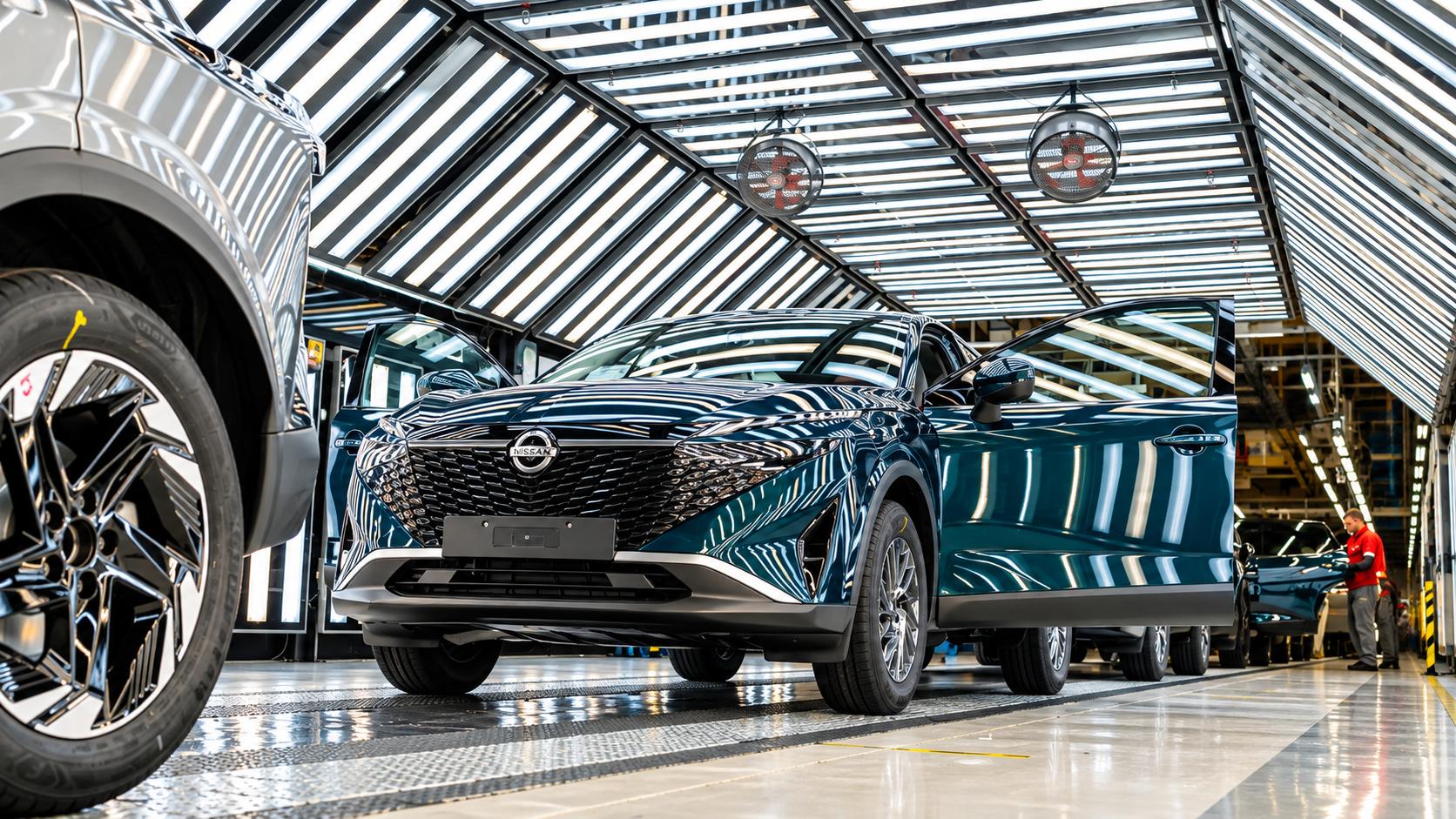
Vehicle manufacturing began at Sunderland in 1986, on a former airfield site, and the plant has since become the highest-volume car factory in the United Kingdom.
Its productivity has consistently been among the highest in Europe, which is the principal reason investment has continued to be directed to the site across several decades and multiple model programmes.
Employment at the plant itself runs to several thousand, but the wider effect on regional employment is several times that figure.
Just-in-time manufacturing drives the geography.
Modern vehicle assembly operates on just-in-time principles, in which components arrive at the line shortly before they are needed rather than being stockpiled.
That reduces the capital tied up in inventory and the space required, but it demands suppliers located close enough to deliver reliably within tight windows.
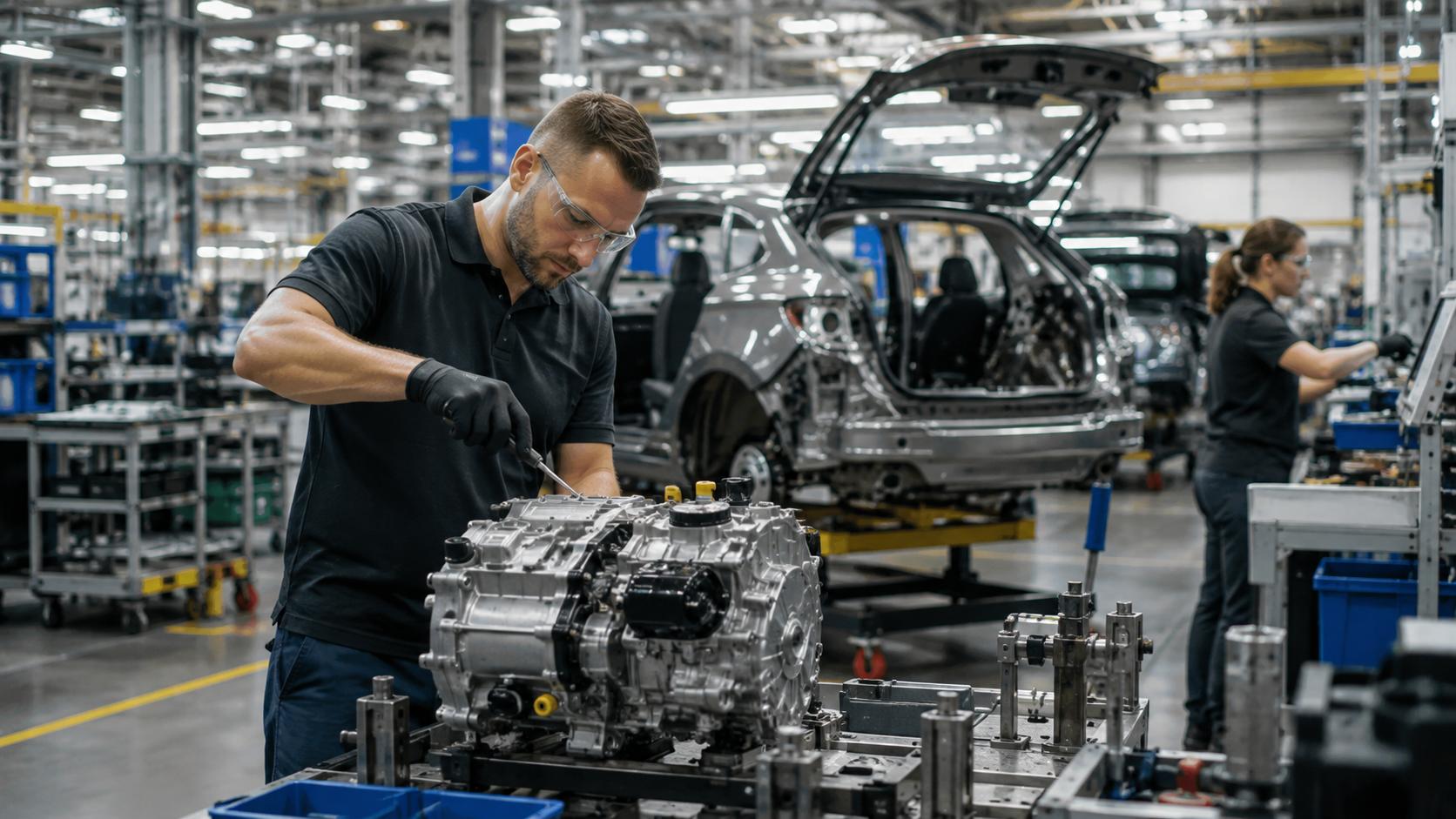
The consequence is a cluster. Suppliers producing seats, panels, exhausts, plastics, wiring and interior components have established plants within a short drive of the assembly line, several of them supplying in sequence, matched to individual vehicles as they move down the line.
Named suppliers operate across the region.
Unipres, producing pressed body panels, operates a major facility in Sunderland. Vantec provides logistics services central to the just-in-time operation.
Other suppliers across the cluster produce components including interior trim, lighting, seating, thermal systems and structural parts, with sites in Sunderland, Washington, Peterlee, Cramlington and South Tyneside.
Many are subsidiaries of international groups that located in the region specifically to serve the plant, and their presence has in turn attracted further engineering and toolmaking capability.
The IAMP was built for expansion.
The International Advanced Manufacturing Park, straddling the boundary between Sunderland and South Tyneside, was developed specifically to provide sites for automotive and advanced manufacturing suppliers.
It was designated to allow expansion of the cluster with the necessary infrastructure and highway access already in place, and it has attracted occupiers including suppliers and logistics operators.
Its development involved both councils working jointly, which is unusual and reflected the recognition that the cluster crosses administrative boundaries.
Batteries changed the picture.
The shift to electric vehicles has fundamentally altered automotive supply chains, since a battery electric vehicle contains far fewer moving parts than one with an internal combustion engine.
That reduces demand for some traditional components while creating substantial new demand for battery cells, modules, thermal management and power electronics.
Battery manufacturing has been established adjacent to the Sunderland plant, and a substantially larger gigafactory has been developed alongside it, representing one of the largest single manufacturing investments the region has seen.
Because battery packs are heavy and expensive to transport, co-location with vehicle assembly is a strong commercial logic, which anchors both activities in the region.
The sector body coordinates the cluster.
The North East Automotive Alliance was established to represent and support the regional cluster, with membership spanning vehicle manufacturing, suppliers, logistics and services.
It runs supplier development programmes, skills initiatives and events connecting smaller firms with tier-one buyers, and works on the transition to electrification.
For a smaller engineering business seeking to enter automotive supply, the accreditation requirements are demanding, and sector bodies are generally the practical route to understanding what is needed.
The workforce question is live.
Electrification changes required skills, with growing demand for high-voltage electrical competence, battery systems knowledge and automation skills.
Regional colleges and training providers have developed provision accordingly, and the combined authority holds devolved adult education responsibilities that can be directed at identified gaps.
Apprenticeships have historically been a significant route into the sector, and the cluster has been a substantial provider of engineering apprenticeships in the region.
Newcastle plays a supporting role.
Although assembly is concentrated in Sunderland, the wider cluster reaches across Tyneside.
Engineering firms, toolmakers, testing and inspection services and logistics operators based in Newcastle, Gateshead, Washington and Cramlington all supply into automotive, and Newcastle University and Northumbria both conduct relevant research and supply engineering graduates.
Newcastle also provides much of the professional support the sector needs, from corporate law and accountancy to recruitment specialising in engineering and manufacturing roles.
Concentration carries risk.
A cluster built around a single anchor plant is exposed to decisions taken by that manufacturer, and those decisions are made against global considerations including trade arrangements, energy costs, and where future model programmes are allocated.
The region has experienced that exposure before, and the periodic uncertainty over model allocation is followed closely across the local economy.
Diversification within the cluster, including firms supplying sectors beyond automotive, is one response, and several regional suppliers have deliberately broadened their customer base.
Share your thoughts.
Does your family have a connection to the automotive cluster in the region?
Business News
Inside the North East Automotive Supply Chain
One car plant in Sunderland anchors a network of suppliers employing tens of thousands across the region, and the whole system is built around timing.
Advertisement



Comments (0)
You must be logged in to post comments.
Don't have an account? Register here
No comments yet. Be the first to share your thoughts!