
Another year has passed and once again the United Kingdom is left asking the same uncomfortable question after Eurovision - what exactly is the BBC trying to achieve?
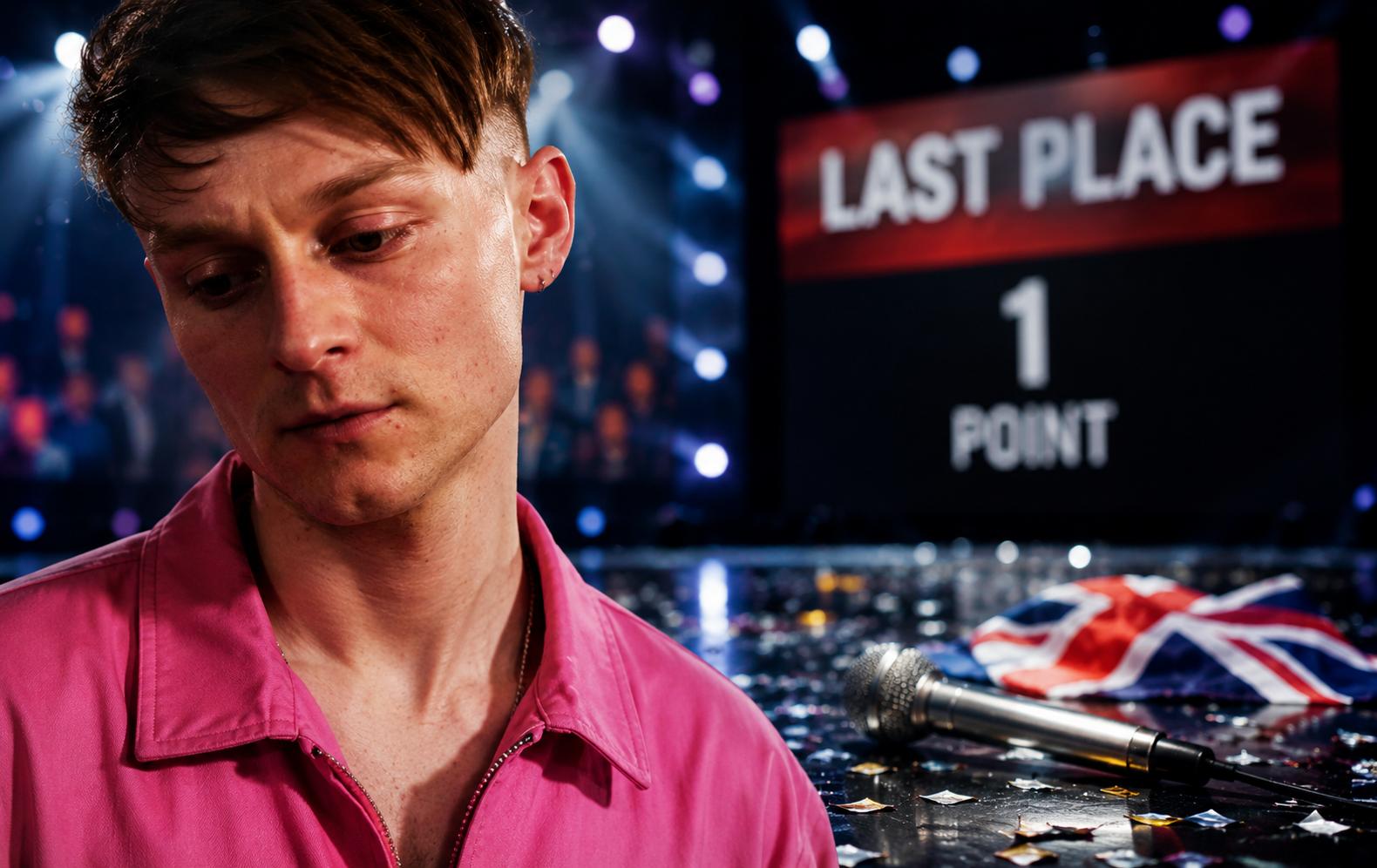
The 2026 Eurovision Song Contest ended in disappointment for the UK after Look Mum No Computer, the stage name of musician Sam Battle, finished at the bottom of the scoreboard with just a single point. For millions of viewers across Newcastle upon Tyne and the rest of the country, it felt painfully familiar.
The UK has now finished near or at the bottom multiple times in recent years, despite being one of the biggest music markets in the world. Since 2010, Britain has only managed one genuine Eurovision success story, with Sam Ryder’s second-place finish in 2022. Outside of that, the results have been consistently poor.
This latest defeat is already sparking serious debate about whether the BBC’s Eurovision strategy is fundamentally broken.
Another Risk That Failed.
Sam Battle certainly cannot be accused of lacking energy or commitment. Dressed in a bright pink boiler suit and performing the eccentric synth-pop track Eins, Zwei, Drei, the musician delivered one of the most unusual UK Eurovision entries in years.
The performance featured distorted vocals, frantic electronics and quirky British humour, including references that many European viewers likely struggled to understand. While some fans praised the entry for feeling uniquely British, the wider Eurovision audience clearly did not connect with it.
Public voters awarded the song zero points, while juries gave it just one.
For many Eurovision fans, the result was predictable long before the final scoreboard appeared.
The song divided opinion heavily online, with critics arguing that the BBC once again misunderstood what works at Eurovision. Others defended the broadcaster for at least attempting something different after years of sending overly polished pop songs that also failed to deliver results.
Still, frustration is growing.
Is The BBC Really Trying To Win?
That question is now being asked more loudly than ever.
The UK music industry remains one of the most influential in the world. British artists dominate global charts, festivals and streaming platforms. From The Beatles to Adele, Ed Sheeran to Dua Lipa, Britain continues to produce some of the planet’s biggest stars.
So why does the country repeatedly struggle at Eurovision?
Some fans believe the BBC simply does not take the contest seriously enough. Critics argue that the broadcaster often treats Eurovision as entertainment first and competition second.
Over the years, the UK has regularly sent entries that feel either overly safe or strangely gimmicky, with little middle ground between the two extremes.
This year’s performance has only fuelled speculation that the BBC may prioritise creating viral moments or social media discussion over genuinely competing to win.
There is also the uncomfortable possibility that major established artists still view Eurovision as career damage waiting to happen.
Olly Alexander’s difficult experience in 2024 only reinforced those fears. Despite entering the competition with a strong fanbase and industry credibility, he finished a disappointing 18th and later described the aftermath as brutal.
That result may have further discouraged mainstream British stars from getting involved.
As a result, the BBC has increasingly relied on independent or lesser-known acts without the backing of major labels or large promotional campaigns.
Is The BBC Trying Too Hard To Be Politically Correct?
Another criticism increasingly being raised by Eurovision fans is whether the BBC has become too focused on appearing politically and culturally progressive rather than selecting entries with genuine mass appeal.
Some viewers believe recent UK Eurovision acts have been chosen partly because they fit certain social or creative narratives instead of simply being the strongest commercial option available. Critics argue the broadcaster sometimes appears more interested in avoiding controversy and pleasing media commentators than sending songs capable of competing with Europe’s best performers.
That perception has only intensified after several years of disappointing results.
While Eurovision has always celebrated diversity, individuality and self-expression, some fans feel the BBC may now be overthinking its selections in an attempt to satisfy modern cultural expectations rather than focusing purely on entertainment value and broad audience connection.
Others strongly disagree with that criticism and argue the real issue is simply poor song selection and weak staging choices, not politics.
Still, the debate continues growing online, especially after another UK collapse on the Eurovision scoreboard. Many viewers now believe the BBC needs to stop trying to make statements and instead concentrate on sending memorable songs that ordinary audiences across Europe will actually vote for.
For frustrated fans in Newcastle upon Tyne and across the UK, the feeling is becoming harder to ignore - Britain’s Eurovision strategy may have become more about image than winning.
Eurovision Success Requires More Than Quirkiness.
Many Eurovision experts point to Sam Ryder’s success in 2022 as proof that the formula is not impossible for the UK.
Ryder arrived with a strong song, excellent vocals, genuine charisma and a positive online following. Most importantly, audiences across Europe believed in him.
That connection simply has not existed with many other recent British entries.
Eurovision success requires a combination of memorable music, emotional appeal, strong staging and widespread public support. Countries that consistently perform well understand this balance perfectly.
Finland is a good example.
After years of disappointing Eurovision performances following Lordi’s 2006 victory, Finland transformed its fortunes by embracing originality while still focusing on commercially strong songs.
Recent Finnish entries like Cha Cha Cha proved that unusual performances can succeed if the music itself connects emotionally with audiences.
That may be where the UK continues to fail.
Being quirky alone is not enough. Audiences still want songs they can remember, sing along to and emotionally invest in.
Growing Frustration Across The UK.
Social media reaction following the 2026 final was brutal for the BBC.
Many viewers questioned why Britain continues to underperform despite having access to one of the strongest music industries in Europe. Others accused the broadcaster of selecting acts that appeal to internal committees rather than real audiences.
In Newcastle, Eurovision viewing parties once again turned into nights of frustration as UK hopes collapsed on the scoreboard.
For younger viewers especially, Eurovision remains hugely popular, making repeated failure even harder to accept.
Some fans are now calling for a complete overhaul of the UK selection process, including a televised national competition similar to Finland’s successful model.
Others believe the BBC should work directly with major record labels and proven songwriters to attract stronger talent.
Either way, confidence in the current system appears to be fading fast.
Can The UK Ever Win Eurovision Again?
Despite another disappointing result, few people believe the UK is incapable of winning Eurovision.
The ingredients clearly exist. Britain still produces world-class artists, songwriters and performers every year. The challenge lies in convincing those artists that Eurovision is worth taking seriously again.
Until that changes, the cycle of risky gimmicks, underwhelming results and public frustration may continue.
For now, the BBC faces growing pressure to explain why one of the world’s leading music nations continues to fall short on Europe’s biggest stage.
And after yet another last-place finish, many fans are no longer willing to accept excuses.
Should the BBC completely change its Eurovision strategy, or is the UK simply choosing the wrong acts year after year?
Entertainment News
Look Mum, No Win - BBC Eurovision Failures Raise Questions After Another UK Last Place
Advertisement

Comments (0)
You must be logged in to post comments.
Don't have an account? Register here
No comments yet. Be the first to share your thoughts!