
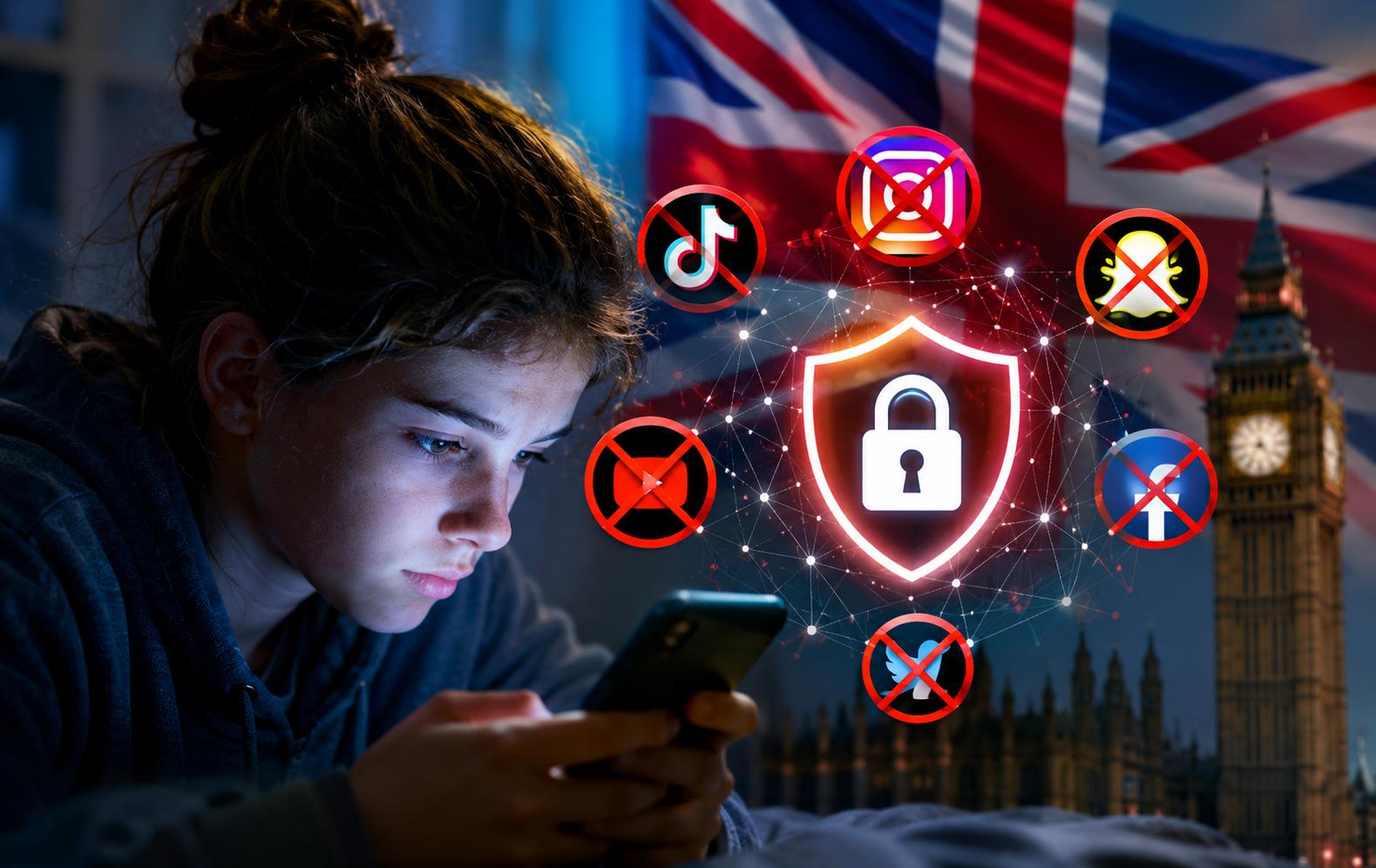
The UK government is preparing to introduce major new online safety measures aimed at protecting children and teenagers from addictive social media features, with experts predicting sweeping changes that could affect millions of young users across Newcastle and the wider UK.
Following the conclusion of the government’s online safety consultation, Prime Minister Keir Starmer recently signalled that action could happen “very, very quickly”, sparking growing debate among parents, schools, technology firms, and digital rights campaigners.
While a full social media ban for under-16s now appears less likely, several alternative restrictions are reportedly being considered behind the scenes. These proposals focus less on blocking access completely and more on limiting the features experts believe encourage excessive screen time and unhealthy online behaviour.
For families across Newcastle, where concerns over online safety and mental health among young people continue to rise, the proposed measures are already becoming a major talking point.
Newcastle Parents Increasingly Concerned About Social Media Use.
Teachers and parents throughout the North East have become increasingly vocal about the impact social media is having on children’s concentration, sleep patterns, and mental wellbeing.
Schools across Newcastle have reported growing concerns over cyberbullying, online harassment, and the pressure young people face from constant digital engagement.
Many parents say they feel trapped between allowing their children to stay socially connected and protecting them from addictive online environments.
The government’s latest consultation appears to reflect these wider public concerns. Instead of introducing an outright ban similar to the one introduced in Australia, UK officials are believed to be exploring more targeted restrictions designed to reduce harmful engagement patterns.
Experts say one of the reasons for avoiding a complete ban is that many teenagers often find ways around restrictions through VPN services or alternative online platforms.
As a result, ministers are now believed to be focusing on making mainstream social media platforms less addictive rather than completely inaccessible.
Infinite Scroll Could Face Major Restrictions.
One of the most widely discussed proposals involves limiting or banning infinite scroll features for younger users.
Infinite scroll allows social media feeds to continuously load fresh content without users reaching a stopping point. Critics argue this design keeps people engaged for far longer than intended, particularly children and teenagers.
Technology experts say platforms such as TikTok, Instagram, and YouTube Shorts have perfected engagement systems designed to maximise watch time and interaction.
Mental health campaigners argue these systems can encourage compulsive behaviour and contribute to increased anxiety among younger users.
For Newcastle families already struggling with excessive screen time, restrictions on endless scrolling could represent one of the biggest changes to social media usage in years.
Several researchers have compared infinite scrolling features to gambling-style reward systems, where users continuously search for entertaining or emotionally stimulating content.
If introduced, the restrictions could fundamentally change how social media apps operate for under-16 accounts.
Video Autoplay Features Also Under Scrutiny.
Autoplay videos are another feature reportedly under consideration by government advisers.
Currently, many apps automatically begin playing videos as users scroll through their feeds. Critics say this encourages passive consumption and increases the amount of time users spend online without consciously deciding to continue watching.
Online safety advocates believe disabling autoplay for children could help reduce compulsive social media use and improve attention spans.
Technology companies, however, may strongly resist such changes because autoplay systems play a major role in user engagement and advertising revenue.
Some digital experts believe platforms may eventually introduce youth-specific versions of their apps in order to comply with future UK regulations.
For teenagers in Newcastle and across Britain, this could create a noticeably different social media experience from the one currently used by adults.
Push Notifications Could Be Limited For Children.
Government officials are also believed to be examining restrictions on push notifications and alerts linked to under-16 accounts.
Notifications are designed to encourage users to return to apps throughout the day by alerting them to messages, comments, likes, or new content uploads.
Critics argue these systems interrupt concentration and contribute to unhealthy levels of phone dependency among younger users.
Some proposals reportedly involve device-level restrictions, meaning Apple and Google could eventually be required to automatically limit notifications for children.
This would represent a major shift in responsibility away from social media companies themselves and toward smartphone manufacturers.
Parents across Newcastle have increasingly raised concerns about children checking phones late at night after receiving notifications from social media apps.
Experts say reducing constant digital interruptions could improve sleep quality and concentration among younger users.
Social Media Algorithms Could Be Weakened.
One of the most controversial proposals involves limiting personalised recommendation algorithms for children.
Algorithms currently analyse a user’s viewing habits, likes, comments, and interactions in order to recommend highly personalised content.
Supporters of reform argue this system can quickly push vulnerable young people toward harmful or extreme content because the software prioritises engagement above wellbeing.
Campaigners say weakening recommendation systems for under-16s could help create safer and less addictive online spaces.
However, critics argue this could dramatically reduce the appeal of social media platforms for younger audiences.
Technology firms may also face significant technical and financial challenges adapting their systems to meet new requirements.
Despite this, pressure on the industry continues growing as governments worldwide increasingly focus on online safety concerns.
Device-Level Age Verification Could Change Online Access.
Another major proposal centres around stronger age verification technology.
Social media firms have repeatedly argued that app stores and device manufacturers should take greater responsibility for confirming user ages before accounts are created.
Under this model, companies such as Apple and Google could potentially verify ages directly through devices, limiting what apps and features younger users can access.
Supporters believe this approach could improve privacy because children would not need to repeatedly share identification details with multiple platforms.
However, privacy campaigners have warned that widespread age verification systems could create new concerns surrounding data protection and surveillance.
For many Newcastle parents, though, stronger age verification measures may provide reassurance that children are not easily bypassing age restrictions online.
VPN Restrictions Remain A Possibility.
One of the more controversial ideas being discussed involves restrictions on VPN usage for children.
VPNs allow internet users to hide or change their location online, making it possible to bypass regional restrictions and content blocks.
Some policymakers believe VPNs could undermine future social media safety rules if teenagers use them to access unrestricted versions of platforms.
Although experts believe a complete VPN ban remains unlikely, restrictions targeting under-16 users could still emerge in future legislation.
Digital rights groups have criticised the idea, arguing VPNs are also important privacy and cybersecurity tools used by businesses, journalists, and ordinary consumers.
The debate highlights the growing tension between online safety efforts and broader concerns surrounding internet freedom and privacy rights.
Newcastle Schools And Parents Await Government Decision.
With pressure mounting on ministers to act, many schools and families across Newcastle are now waiting to see exactly what the government announces in the coming weeks.
Some parents strongly support tougher regulation, believing social media companies have been allowed to operate without enough accountability for too long.
Others worry that overly strict measures could push teenagers toward less regulated corners of the internet where risks may actually increase.
Technology experts say the UK’s decisions could also influence future online safety policies in other countries if the measures prove successful.
What appears increasingly clear is that social media regulation is entering a new phase.
For younger users across Newcastle and the wider UK, the online experience of the future could soon look very different from the one they know today.
Do you think the UK government should introduce stricter social media rules for children in Newcastle and across the country?
Tech News
Major Social Media Changes Could Arrive In The UK Within Weeks
Advertisement




Comments (0)
You must be logged in to post comments.
Don't have an account? Register here
No comments yet. Be the first to share your thoughts!