
Men's Health Week 2026 is shining a spotlight on an issue that continues to affect millions of families across Newcastle, the North East and the wider UK.
Despite major advances in healthcare, men continue to experience poorer health outcomes than women across a range of conditions. One of the most striking statistics remains that around one in five men in the UK dies before reaching the age of 65. Health experts say many of these deaths could be prevented through earlier diagnosis, healthier lifestyles and greater engagement with healthcare services.
This year's campaign aims to encourage men to take a more active role in managing their physical and mental wellbeing while also highlighting the importance of making health services more accessible and relevant to men.
For many families across Newcastle, the message resonates strongly. Whether it is a father delaying a visit to the GP, a friend struggling with mental health challenges or a relative living with an undiagnosed condition, the impact of poor men's health can be felt in communities throughout the city.
Men are still less likely to seek help.
One of the biggest challenges facing healthcare providers is that many men continue to avoid discussing health concerns until symptoms become difficult to ignore.
Research has consistently shown that men are less likely than women to visit their GP, attend routine health screenings or seek support for mental health issues. According to NHS England data, men are significantly less likely to engage with preventive healthcare services, despite often experiencing higher rates of serious illness later in life.
Health professionals believe cultural attitudes remain a major factor. Many men continue to feel pressure to appear resilient and self-sufficient, which can lead to delays in seeking medical advice.
In Newcastle, organisations working in health and wellbeing have reported growing efforts to break down these barriers by encouraging open conversations about physical and mental health in workplaces, community centres and sports clubs.
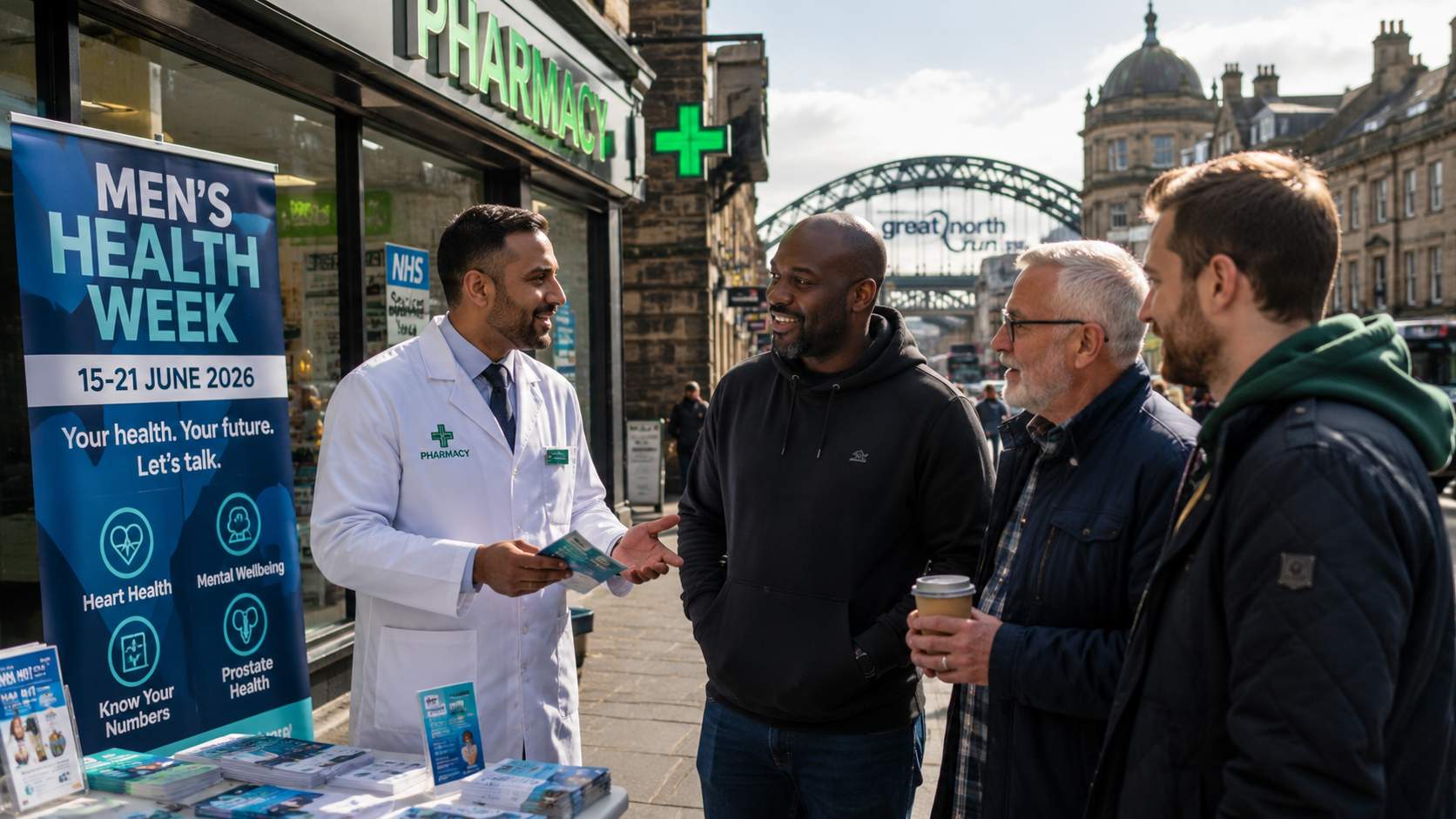
Men's Health Week 2026 focuses on pharmacies.
Running from 15 June to 21 June 2026, Men's Health Week is organised annually by the Men's Health Forum and serves as a national awareness campaign designed to improve health outcomes for men.
This year's theme focuses on the role community pharmacies can play in improving men's health.
Pharmacies are often more accessible than traditional healthcare settings and can provide advice, health checks, blood pressure monitoring, medication support and guidance on a wide range of health concerns.
The Men's Health Forum is expected to publish a new report examining how stronger engagement between men and community pharmacies could help improve health outcomes and encourage earlier intervention when problems arise.
For Newcastle residents, this is particularly relevant. Community pharmacies remain a key part of the local healthcare network and are often available without appointments, making them a convenient first point of contact for men who may be reluctant to visit a GP surgery.
The statistics behind men's health.
The numbers surrounding men's health continue to concern campaigners and healthcare professionals alike.
According to the Office for National Statistics, life expectancy for males in England remains lower than for females. Men are also more likely to die prematurely from heart disease, certain cancers and preventable illnesses.
Mental health presents another significant challenge. Data from the Office for Health Improvement and Disparities shows that around three quarters of all suicides registered in the UK involve men. Suicide remains the leading cause of death among men under 50.
Meanwhile, NHS figures indicate that obesity rates remain higher among men than women in several age groups, increasing the risk of diabetes, heart disease and stroke.
In the North East, public health data has repeatedly shown that some communities face higher levels of health inequality compared with other parts of England. This means campaigns such as Men's Health Week can play an important role in encouraging earlier intervention and improving long-term health outcomes.
Mental health continues to dominate discussions.
Over the past decade, mental health has become one of the most important topics within men's health campaigns.
While awareness has increased significantly, experts warn that stigma still prevents many men from seeking support.
Organisations across Newcastle have been working to address this challenge by creating safe spaces where men can discuss mental health without fear of judgement. From community groups and support networks to workplace initiatives and sporting organisations, there has been a growing effort to normalise conversations around emotional wellbeing.
The Men's Health Forum has long highlighted the importance of stress management and practical approaches to improving mental wellbeing. Their resources focus on helping men recognise symptoms early and develop healthier coping strategies before problems escalate.
Health professionals say that reducing stigma could be one of the most effective ways to improve overall health outcomes for men in the years ahead.
Why knowing your numbers matters.
A recurring theme throughout Men's Health Week campaigns has been the importance of understanding personal health indicators.
Many men know their football scores, work targets and household finances but remain unaware of key health measurements such as blood pressure, cholesterol levels, body mass index and blood sugar readings.
Health experts argue that these numbers can provide early warning signs of serious health conditions and enable treatment before long-term complications develop.
This message has become increasingly important as rates of type 2 diabetes continue to rise across the UK. According to Diabetes UK, more than 5.8 million people are now living with diabetes or pre-diabetes, making awareness and prevention more important than ever.
For Newcastle residents, routine checks through GPs and pharmacies could help identify potential issues before they become life-threatening.
Workplace wellbeing is becoming increasingly important.
The workplace has emerged as one of the most effective settings for improving men's health.
Many men spend a significant portion of their lives at work, making employers well positioned to support both physical and mental wellbeing.
Mates in Mind is one organisation leading efforts to improve workplace mental health. The charity works with employers across the UK to provide training, support and resources designed to reduce stigma and create healthier working environments.
Their work recognises that mental health challenges can affect anyone and that supportive workplace cultures can have a significant impact on employee wellbeing.
Employers across Newcastle are increasingly investing in wellbeing programmes, recognising that healthier workforces benefit both individuals and businesses alike.
The growing challenge of prostate cancer.
Another issue receiving increased attention is prostate health.
Prostate cancer is now the most common cancer affecting men in England. According to Prostate Cancer UK, more than 55,000 men are diagnosed each year, with incidence rates continuing to rise as awareness and screening improve.
Health organisations are encouraging men to learn about risk factors, understand symptoms and discuss concerns with healthcare professionals.
Campaigners argue that greater awareness could lead to earlier diagnosis and significantly improved outcomes.
For many families in Newcastle, prostate cancer has touched the lives of fathers, grandfathers, brothers and friends, making education and awareness particularly important.
Building healthier futures for men.
Men's Health Week is about much more than a single awareness campaign.
It represents an opportunity to encourage long-term changes in attitudes, behaviours and healthcare provision. Supporters believe that by promoting prevention, early diagnosis and open conversations, more men can enjoy longer, healthier lives.
The message from campaigners is simple. Looking after health should not be seen as a sign of weakness. Whether it involves speaking to a pharmacist, booking a health check, discussing mental health concerns or making lifestyle changes, taking action early can make a significant difference.
For Newcastle and communities across the UK, improving men's health is not just about individuals. It is about supporting families, strengthening communities and ensuring fewer sons, fathers, brothers and grandfathers are lost too soon.
Join The Conversation.
How do you think men's health services could be improved across Newcastle and the North East?
Health
Men's Health Week Highlights Growing Concerns Across The North East
Advertisement





Comments (0)
You must be logged in to post comments.
Don't have an account? Register here
No comments yet. Be the first to share your thoughts!