
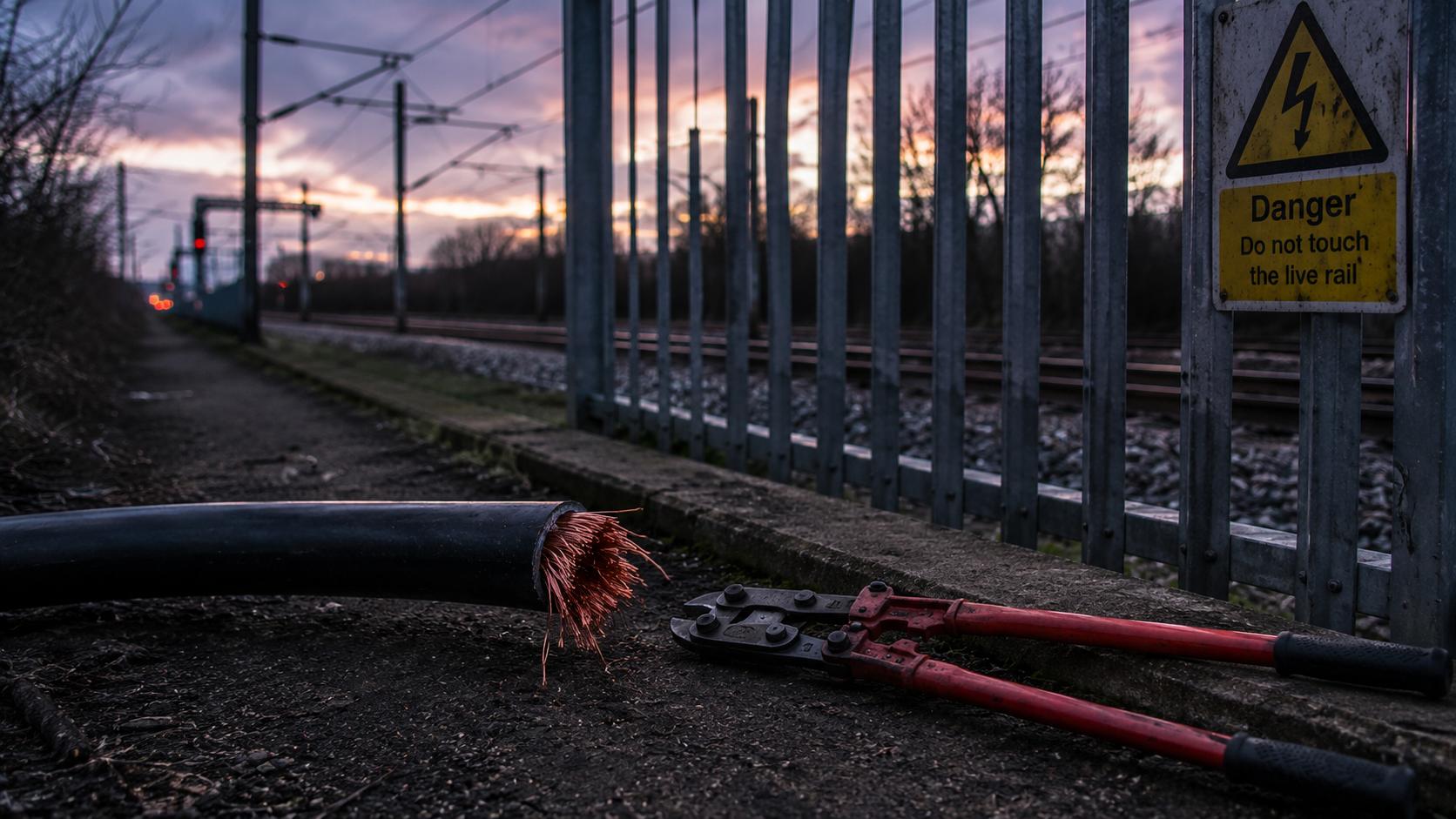
A stolen length of cable can bring a railway to a standstill, plunge a building into darkness or knock out a stretch of road lighting. Metal theft is one of those crimes whose true cost dwarfs the few pounds a thief makes at the scrapyard, and as metal prices climb it has been rising again, with consequences that reach businesses and infrastructure across the North East.
A Half-Billion-Pound Problem.
Metal theft is estimated to cost the UK economy in the region of 500 million pounds a year, and by one analysis has cost around 4.3 billion pounds over the past decade. After falling following a clampdown in the previous decade, incidents have been rising again year on year since around 2019. The crime is frequently under-recorded, partly because a metal theft is often logged under a broad heading such as non-dwelling burglary, which disguises its true scale in the official statistics and makes the real burden on business hard to capture fully.
Driven by the Price of Copper.
The engine of the problem is the global price of metal, copper above all. When copper prices climb, so does cable theft, and prices have been high: copper reached around 10,300 dollars a tonne in late September 2025, among the highest levels seen in recent years. That makes the contents of a substation, a railway cutting or a building site a tempting target, and organised crime groups have increasingly moved in, treating the theft of metal from critical infrastructure as a business rather than opportunism.
The Cost to the Railways.
Nowhere is the disruption clearer than on the railways, which run through the heart of the North East via the East Coast Main Line. Across the network in 2025 there were more than 100 separate incidents of live cable theft, causing well over 100,000 minutes of train delays and costing in the region of 5 million pounds, a sharp increase of around half on two years earlier. A single theft can delay scores of trains and disrupt thousands of journeys, and the cost of repairs and compensation is ultimately borne by passengers and taxpayers. High-profile incidents have caused chaos on major routes, including international services.
What Gets Targeted.
Beyond the railways, the targets are wide-ranging. Catalytic converters, stripped from parked cars for the precious metals inside them, have seen thefts soar over the past decade. Lead is stolen from the roofs of churches and historic buildings, leaving congregations and heritage bodies with repair bills far exceeding the scrap value taken. Copper cable is pulled from electricity substations, solar farms, building sites and telecoms networks, sometimes cutting power or communications to homes and businesses. For a solar installation or a construction site, a single raid can mean tens or hundreds of thousands of pounds in losses and lost output.
The Wider Business Impact.
For businesses, the damage rarely stops at the value of the metal. There is the cost of replacing what was taken, the disruption while systems are down, lost production or trading, higher insurance premiums, and the expense of beefing up security with fencing, cameras, alarms and forensic marking. Infrastructure operators have been urged to audit their site security, check perimeters and ensure alarm and camera systems are properly maintained, precisely because the financial logic of prevention has shifted as theft has risen.
The Response.
Tackling metal theft has long been treated as a serious priority by specialist policing, given the threat to national infrastructure, and the response combines several strands. The trade in stolen metal is targeted through controls on scrap dealers, encouragement of cashless transactions that leave a trail, and visits to scrap yards to check that materials are being handled lawfully. On the ground, cable and metal are increasingly marked with traceable tags and coded to make stolen material identifiable and harder to sell. Multi-agency operations bring together police, infrastructure operators and others to target the organised groups behind the most damaging thefts.
A Crime With a Long Reach.
The story of metal theft is a reminder that a crime can be far more costly to society than to its perpetrator. A thief may pocket a few tens of pounds for cable that takes thousands to replace and disrupts the journeys, power or worship of countless people. For North East businesses and the infrastructure they rely on, the rising tide of metal theft is a tangible threat, and one whose real price is paid not at the scrapyard counter but in delayed trains, darkened streets, damaged buildings and the bills that follow.
The Danger to the Thieves and the Public.
Beyond the financial cost, metal theft carries a serious and sometimes overlooked danger to life, both to those who commit it and to the wider public. Stealing live electrical cable, whether from the railway, an electricity substation or a building's supply, means working around high voltages capable of causing fatal injury, and there have been deaths and serious harm among those attempting it.
The risks do not stop with the thief. Cable stolen from signalling systems can compromise the safety mechanisms that keep trains apart, and metal taken from manhole covers, crash barriers or street furniture can create hazards for drivers, pedestrians and rail passengers who have no idea anything is amiss.
A stolen drain cover leaves an open hole; missing barriers remove a protection on a fast road; tampered-with infrastructure can fail at the worst possible moment. This is part of why the theft of metal from critical infrastructure has long been treated with a seriousness out of proportion to the modest sums thieves typically earn, and why the response involves not just recovering costs but protecting public safety.
For businesses and infrastructure operators in the North East, the message is that securing metal assets is not only about preventing financial loss and disruption, important though those are, but about removing a genuine risk to the safety of staff, customers and the travelling public, a dimension of the crime that gives added urgency to prevention.
Share your thoughts.
Metal theft costs far more to repair and disrupt than thieves ever make, and rising metal prices have driven it up again across vital infrastructure.
Has metal or cable theft ever disrupted your journey, your power or your local area?
Crime News
Stripped for Scrap: The Rising Toll of Metal Theft
Metal theft costs the UK around £500m a year and is rising with copper prices, disrupting railways and businesses. We look at the toll and the response.
Advertisement




Comments (0)
You must be logged in to post comments.
Don't have an account? Register here
No comments yet. Be the first to share your thoughts!