
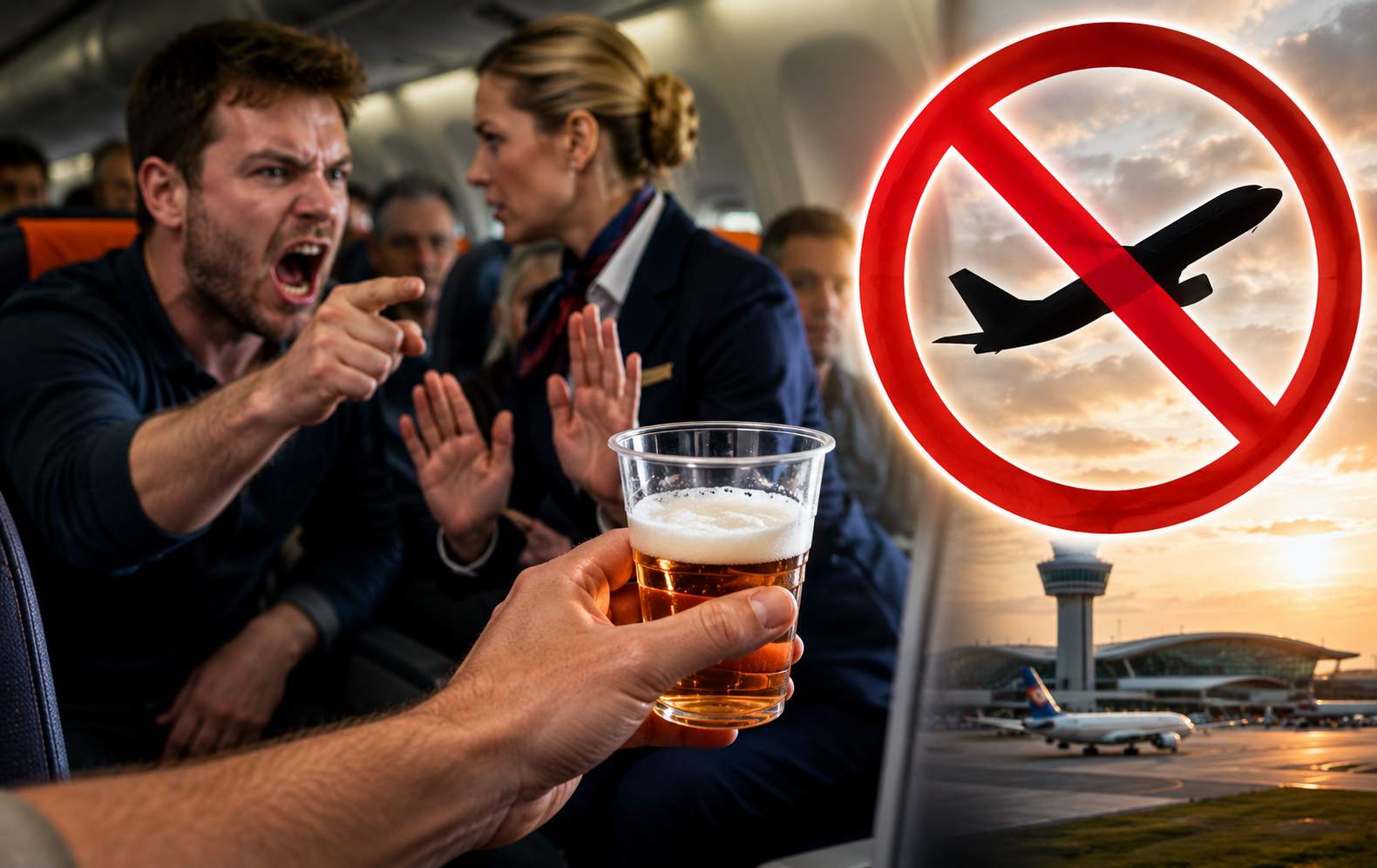
Passengers travelling through Newcastle Airport could soon see the effects of a major new Government proposal designed to tackle disruptive behaviour on flights, with repeat offenders potentially facing bans across multiple airlines.
The plans, currently being explored by ministers and aviation industry leaders, would allow airlines to share information about passengers involved in serious onboard incidents. The move could lead to individuals who repeatedly cause disruption being prevented from booking flights with other carriers, rather than simply being banned by a single airline.
The proposal comes amid growing concern across the aviation sector about unruly behaviour in the air, much of which is linked to excessive alcohol consumption before boarding. Airlines say the problem is becoming increasingly costly and disruptive, affecting both flight operations and the travel experience of thousands of passengers every year.
What The Proposal Means For Newcastle Airport Passengers.
For travellers using Newcastle International Airport, the plans could bring added reassurance during busy holiday periods when flights are operating at near capacity.
Every year, millions of people from Newcastle, Northumberland, Sunderland, Gateshead and County Durham pass through the airport on their way to destinations across Europe and beyond. While the vast majority of passengers travel without issue, even a single disruptive individual can have a significant impact on an entire flight.
Delays, diversions and onboard incidents can quickly turn the start of a holiday or business trip into a stressful experience. Supporters of the proposed changes believe a tougher approach could help reduce these incidents and improve journeys for responsible travellers departing from Newcastle Airport.
The plans are particularly relevant for North East holidaymakers heading to popular destinations during the summer months, when airports and airlines often experience their busiest periods of the year.
Government Exploring National Airline Ban System.
Officials from the Department for Transport and the Home Office are currently working on proposals that could allow airlines to share information about passengers involved in serious cases of misconduct.
Under the current system, a passenger banned by one airline can often continue flying with another carrier because airlines are generally unable to access information about incidents involving competitors.
The proposed scheme could change that by creating a framework that alerts airlines when an individual has been involved in severe disruptive behaviour. Airlines would then have the option of refusing future bookings if they believe there is a risk of further incidents.
While discussions remain at an early stage, industry leaders argue that better information sharing could help tackle repeat offenders while acting as a deterrent for others considering similar behaviour.
Growing Concerns Over Disruptive Behaviour.
Airlines have repeatedly warned that incidents involving disruptive passengers are becoming more common.
These cases can include aggressive behaviour, verbal abuse directed at cabin crew, refusal to follow safety instructions and alcohol-related disorder. In more serious situations, aircraft have been forced to divert from their planned destinations, causing major disruption for everyone on board.
For passengers departing from Newcastle Airport, such incidents can lead to missed connections, delayed arrivals and unexpected changes to travel plans.
A Government source said antisocial behaviour on flights is unacceptable because it threatens the safety of passengers and crew while disrupting hard-earned holidays. Ministers have indicated they are keen to explore additional measures that could strengthen existing enforcement powers and reduce the number of incidents occurring onboard aircraft.
Airlines Support Tougher Measures.
The aviation industry has broadly welcomed discussions around stronger action against disruptive travellers.
Tim Alderslade, Chief Executive of Airlines UK, said airlines already operate a zero-tolerance approach to serious misconduct but believes additional measures could provide valuable support when dealing with the most severe cases.
Industry leaders argue that a national ban list would prevent repeat offenders from simply switching airlines after receiving a ban from another carrier.
Airlines operating routes from Newcastle Airport, including Jet2, Ryanair, easyJet and TUI, have all faced the wider challenges associated with disruptive passengers. Carriers say the overwhelming majority of customers behave responsibly and should not have their journeys negatively affected by the actions of a small minority.
The Financial Cost Of Flight Disruptions.
Beyond the safety concerns, disruptive behaviour creates a substantial financial burden for airlines.
Industry estimates suggest diverting an overseas flight due to passenger misconduct costs an average of £47,600. Those expenses can include additional fuel, airport fees, accommodation costs, crew scheduling changes and compensation obligations.
The impact often extends beyond the airline itself. Passengers may miss onward flights, lose valuable holiday time or face delays that continue long after the original incident.
For Newcastle travellers heading abroad on family holidays, city breaks or business trips, the knock-on effects of a diverted flight can be both frustrating and expensive.
As airlines continue to report rising numbers of incidents, pressure has grown on both government and industry leaders to identify more effective solutions.
Debate Continues Over Airport Alcohol Sales.
The proposal has also reignited debate about alcohol consumption at airports.
Many of the most serious incidents involve passengers who have consumed excessive amounts of alcohol before boarding. This has prompted some airline executives to call for tighter controls on airport drinking.
Ryanair Chief Executive Michael O'Leary has questioned why alcohol is served in airport bars during the early hours of the morning, arguing that excessive drinking before flights contributes to disruptive behaviour later in the journey.
While there are currently no plans to restrict alcohol sales at Newcastle Airport, the wider debate is likely to continue as officials examine ways of reducing onboard incidents.
Consumer groups have also supported stronger penalties, arguing that the consequences should reflect the seriousness of behaviour that can compromise safety at 35,000 feet.
Industry Talks Expected Later This Month.
Government officials are expected to meet airline representatives later this month to discuss how any future scheme could operate in practice.
Questions remain about how passenger information would be shared, what level of misconduct would trigger inclusion and how privacy concerns could be addressed within existing legal frameworks.
Despite those challenges, there appears to be growing support across the aviation industry for a more coordinated approach to dealing with repeat offenders.
For Newcastle Airport passengers, the ultimate goal is simple. Creating a safer, more reliable and less disruptive travel experience for the overwhelming majority of people who fly responsibly.
A Major Change For UK Air Travel.
If introduced, the plans would represent one of the biggest changes to passenger enforcement in UK aviation for years.
For travellers flying from Newcastle Airport, the proposal could help reduce the risk of delays, diversions and onboard disturbances caused by a small number of disruptive passengers.
While the details are still being worked out, airlines, ministers and consumer groups appear united on one point. Everyone should be able to travel safely and enjoy their journey without having it disrupted by those who refuse to follow the rules.
Do you support a nationwide airline ban for disruptive passengers?
Travel
Newcastle Airport Travellers Could Be Affected By New Flight Ban Rules
Advertisement




Comments (0)
You must be logged in to post comments.
Don't have an account? Register here
No comments yet. Be the first to share your thoughts!