
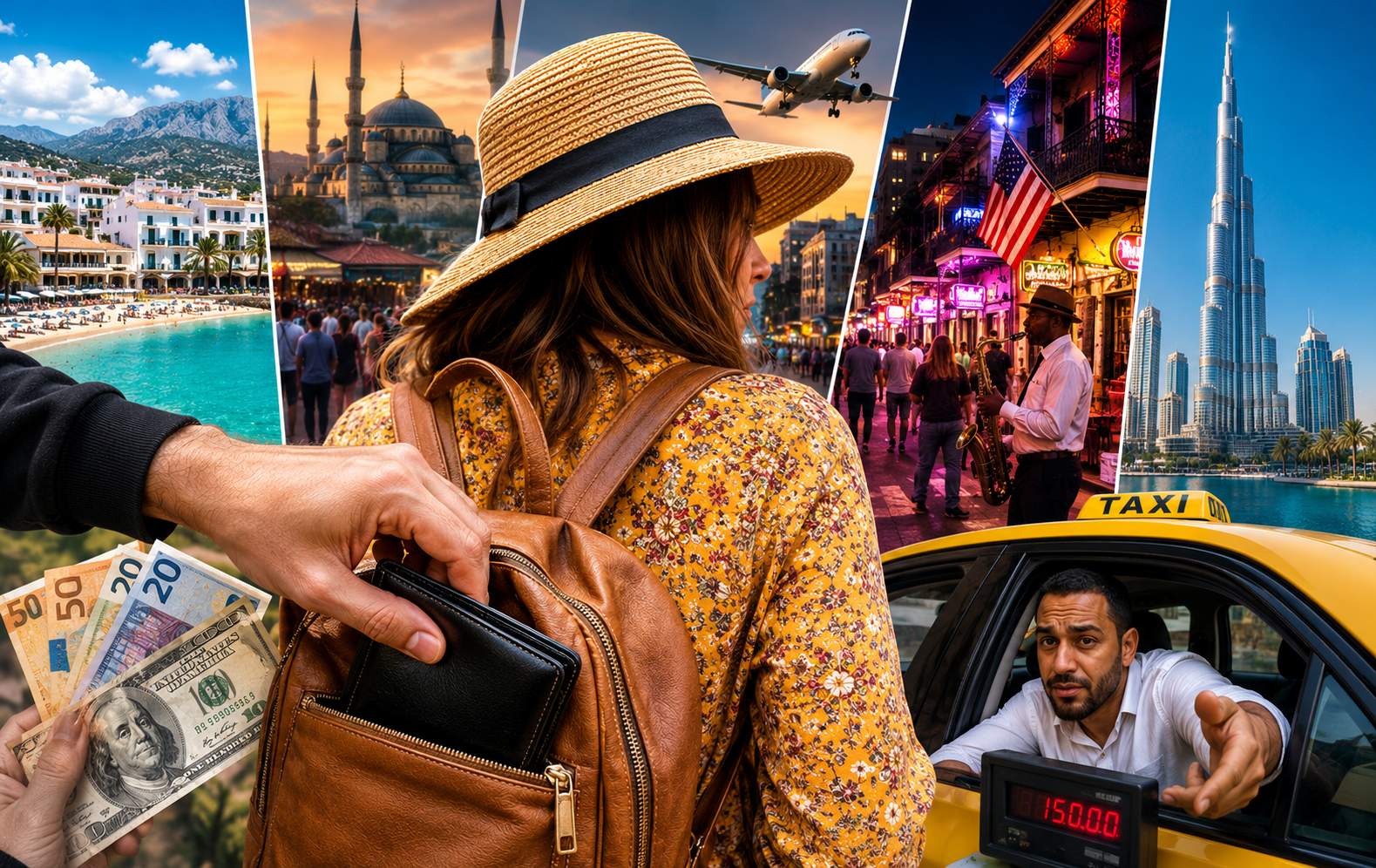
Millions of British holidaymakers will jet off to destinations such as Spain, Turkey, Tenerife, Dubai and New Orleans this year, with many departing from Newcastle International Airport in search of sunshine, culture and relaxation.
While the overwhelming majority of trips pass without incident, travel experts continue to warn that tourists remain a prime target for scammers looking to exploit visitors unfamiliar with local customs, transport systems and currencies.
Recent research from the Mastercard Economics Institute found that travel-related fraud increased by more than 12 per cent during the early stages of trip planning in 2024, highlighting the growing threat facing holidaymakers.
With millions of tourists expected to visit some of the world's most popular destinations this summer, knowing the most common scams could save travellers hundreds, or even thousands, of pounds.
Spain - The Distraction Pickpocket Scam.
Spain remains one of the UK's favourite holiday destinations, attracting more than 80 million international visitors each year. Popular hotspots including Barcelona, Benidorm, Madrid and the Costa del Sol continue to draw huge crowds, but those crowds also create opportunities for criminals.
One of the most common scams involves distraction tactics used by pickpocketing gangs. Tourists may be approached by someone asking for directions, offering assistance, dropping an item nearby or creating a minor commotion. While attention is diverted, an accomplice steals a wallet, phone or handbag.
Barcelona has long been associated with pickpocketing concerns, particularly around Las Ramblas and busy transport hubs. Reports suggest theft remains one of the most common crimes affecting visitors in the city.
Travellers should keep valuables in zipped pockets, avoid carrying large amounts of cash and remain vigilant in crowded areas.
Turkey - The Friendly Local Bar Scam.
Turkey continues to be a hugely popular choice for British tourists thanks to destinations such as Antalya, Marmaris, Bodrum and Dalaman.
One scam regularly reported by visitors starts with an apparently friendly local striking up a conversation. After gaining trust, the individual may invite tourists to a nearby bar, nightclub or restaurant.
Once inside, drinks and food begin arriving at the table, often without prices being discussed beforehand. When it is time to pay, tourists are presented with a hugely inflated bill that can run into hundreds of pounds.
In some cases, visitors report feeling pressured into paying by intimidating staff or security personnel.
Travel experts advise checking online reviews before entering unfamiliar venues and agreeing prices in advance whenever possible.
New Orleans - The Bet You Cannot Win.
New Orleans attracts millions of visitors each year thanks to its music scene, food culture and famous Bourbon Street nightlife.
One of the city's oldest scams revolves around a seemingly harmless wager. A stranger approaches a tourist and says they can guess where they got their shoes.
No matter what answer the visitor gives, the scammer replies: "You got them on your feet in New Orleans."
The scammer then aggressively demands payment for winning the bet.
While the amount requested is often small, many tourists feel intimidated into handing over cash.
Visitors should simply decline conversations involving unusual bets or challenges and continue walking without engaging.
Dubai - The Fake Taxi Trap.
Dubai has become one of the fastest-growing destinations for UK travellers, offering luxury hotels, shopping and year-round sunshine.
Although the city is generally considered safe, fake taxi scams still catch out some visitors.
Criminals may operate unofficial vehicles near airports, hotels or tourist attractions. Tourists are offered what appears to be a convenient ride, only to discover later that fares have been dramatically inflated.
Some drivers take unnecessarily long routes to increase the final charge, while others claim card payment systems are unavailable and demand cash.
Holidaymakers should use official taxis, ride-hailing apps or transport recommended by their hotel.
Before setting off, it is also worth checking that the meter is running and confirming the expected route.
Tenerife - The Fake Petition And Charity Scam.
Tenerife remains one of the most popular Canary Islands destinations for British travellers, with thousands flying there every week from UK airports including Newcastle.
One increasingly common scam involves individuals carrying clipboards who approach tourists in busy promenades, beaches and shopping areas.
The scammer may claim to be collecting signatures for a charity, disability organisation or local campaign. Once a signature has been obtained, the tourist is pressured into making a donation.
In some cases, the clipboard serves as a distraction while an accomplice attempts to steal valuables.
Authorities and travel safety experts advise politely declining all unsolicited approaches and keeping bags securely fastened when stopped by strangers.
Travel Scams Are Becoming More Sophisticated.
The nature of travel scams is also changing rapidly. Criminals are increasingly using technology to target holidaymakers before they even arrive at their destination.
Security researchers recently uncovered a sophisticated operation involving hotel booking information being used to create highly convincing phishing messages. More than 350 hotels and accommodation providers across 50 countries were reportedly affected.
These scams often appear genuine because they contain legitimate booking details, making it easier for criminals to trick travellers into revealing payment information.
Experts recommend verifying any payment request directly with a hotel or travel provider before clicking links in emails, text messages or messaging apps.
How To Protect Yourself Abroad.
While scams can occur anywhere in the world, a few simple precautions can dramatically reduce the risk of becoming a victim.
Travellers should keep valuables out of sight, avoid carrying all cash and cards together, use reputable transport providers and be cautious when approached by strangers offering deals that seem too good to be true.
Researching common scams before travelling can also make a significant difference. Criminals often rely on surprise and confusion, but informed tourists are far less likely to be targeted.
For holidaymakers flying from Newcastle Airport this year, a few minutes of preparation before departure could help ensure that memories are made for all the right reasons.
Stay Alert And Enjoy Your Holiday.
Most trips to Spain, Turkey, Tenerife, Dubai and New Orleans are trouble-free, and millions of tourists return home each year with nothing but positive memories.
However, understanding the tricks commonly used by scammers can help travellers enjoy their holiday with greater confidence and avoid turning a dream getaway into an expensive lesson.
Which destination do you think has the biggest tourist scam problem right now?
Travel News
The Travel Scams Costing Tourists Thousands in Popular Holiday Hotspots
Advertisement




Comments (0)
You must be logged in to post comments.
Don't have an account? Register here
No comments yet. Be the first to share your thoughts!