
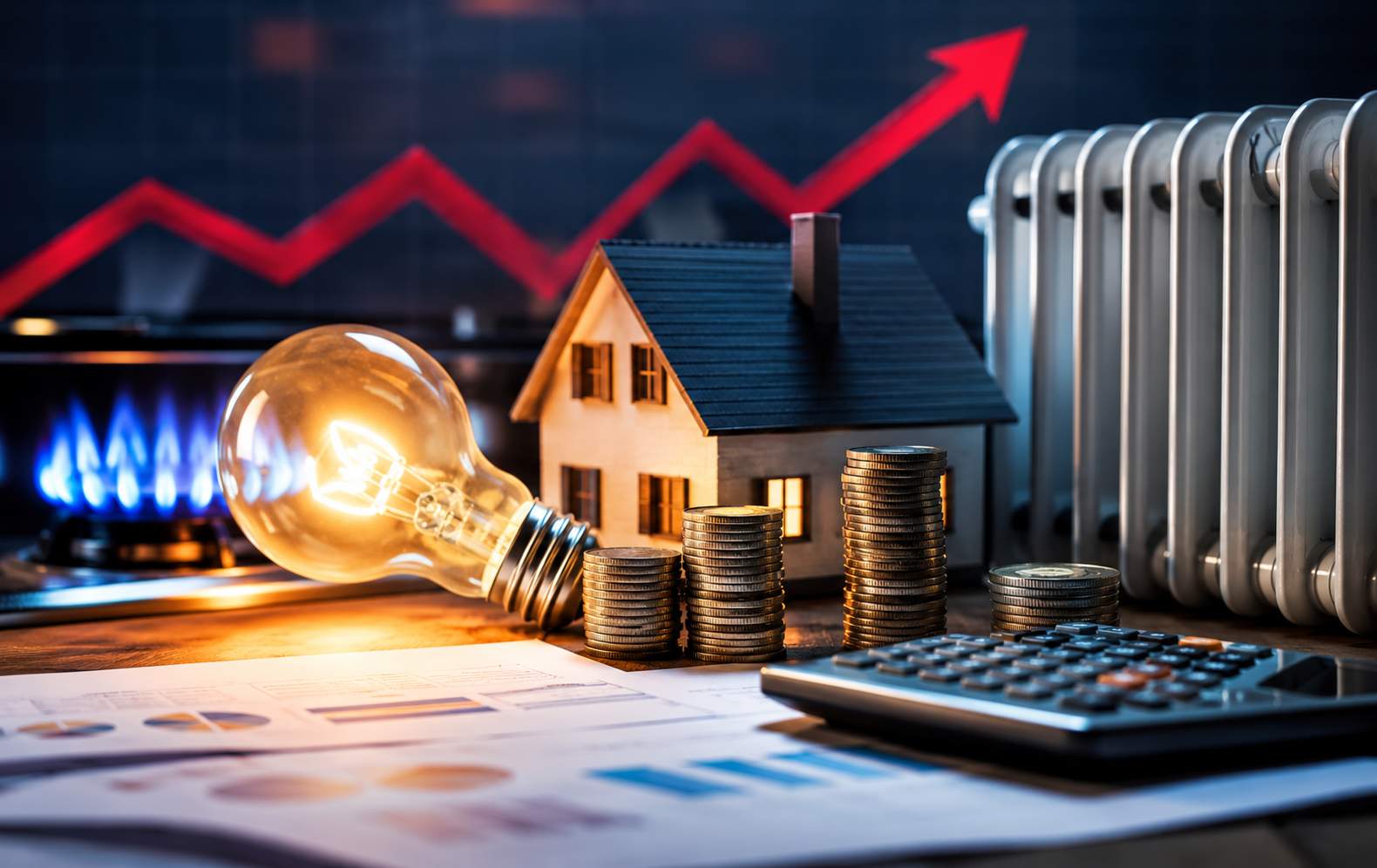
Millions of households across the UK are preparing for another rise in energy costs after Ofgem confirmed the latest increase to the energy price cap for summer 2026. From 1 July to 30 September 2026, the average annual household energy bill will rise to £1,862, marking a significant 13% increase compared with the previous three-month period.
The latest announcement is expected to place additional pressure on families already struggling with the rising cost of living, particularly in cities such as Newcastle where many residents continue to face higher food, housing and transport expenses.
Ofgem said the increase reflects growing wholesale energy costs alongside continued pressure on the wider energy network. The regulator reviews the cap every three months and adjusts it depending on market conditions, supplier costs and infrastructure spending.
While the energy price cap limits how much suppliers can charge per unit of gas and electricity, it does not place a limit on total household bills. This means homes using more energy will continue to pay significantly more, especially during colder months.
The latest rise has already sparked concern among consumer groups who fear many households could struggle financially ahead of winter.
What the New Energy Price Cap Means for Customers.
The energy price cap affects households on standard variable tariffs in England, Scotland and Wales. It sets maximum rates suppliers can charge for each unit of energy alongside daily standing charges.
From July 2026, the average electricity unit price for customers paying by Direct Debit will rise from 24.67 pence per kilowatt hour to 26.11 pence per kilowatt hour.
Gas prices are seeing an even sharper increase. Unit rates for gas will jump from 5.74 pence per kilowatt hour to 7.33 pence per kilowatt hour.
Standing charges, which customers pay regardless of how much energy they use, remain high across the country. Electricity standing charges will sit at around 57.19 pence per day, while gas standing charges will average 29.04 pence daily.
Although the daily electricity standing charge has reduced slightly by a fraction of a penny, many campaigners argue the fixed costs remain unfair, particularly for low-income households and people trying to reduce energy usage.
For many families in Newcastle and the wider North East, the latest increase could add hundreds of pounds annually to already stretched household budgets.
Why Energy Bills Are Rising Again.
Ofgem says the latest increase is largely driven by rising wholesale energy prices. Wholesale costs represent the amount suppliers pay to purchase gas and electricity before it reaches homes and businesses.
According to the regulator, around 45 pence of every £1 spent on a standard energy bill currently goes towards wholesale energy costs. Another 25 pence covers network infrastructure including pipes, cables and maintenance work required to deliver energy safely across the country.
Supplier operating costs account for roughly 16 pence in every pound spent. These costs include customer service, billing systems and the rollout of smart meters.
Government environmental and social schemes make up around 6 pence of every pound spent on energy. These schemes help support renewable energy projects and provide assistance for vulnerable households.
Energy analysts say global market instability continues to affect prices despite improvements seen earlier in the year. Ongoing geopolitical tensions, demand fluctuations and investment pressures within the energy sector are all contributing to uncertainty.
Many experts believe energy prices may remain unpredictable well into 2027.
Newcastle Families Concerned Over Rising Living Costs.
The latest increase is expected to hit households across Newcastle particularly hard, especially families already facing financial pressure due to inflation and rising mortgage or rent payments.
Community organisations throughout the North East have repeatedly warned that energy affordability remains a major issue for thousands of residents. Charities fear another rise in bills could force more people to choose between heating and other essential spending later this year.
Consumer groups are also concerned about the continued impact of standing charges, which apply even when little or no energy is used. Critics argue the system disproportionately affects pensioners, single-person households and people attempting to cut energy consumption.
In Newcastle, local advice centres have reported increasing numbers of residents seeking support with debt management, energy repayment plans and emergency financial assistance.
Some campaigners are now urging the government and regulators to review how standing charges are calculated in order to provide greater protection for lower-income households.
Why Standing Charges Differ Across the UK.
One issue that continues to confuse many customers is why standing charges vary depending on where people live.
Ofgem says standing charges are calculated based on several regional factors. These include the number of homes in each area, average energy usage, network maintenance costs and the amount suppliers must spend to buy energy for local demand.
The cost of upgrading and maintaining regional infrastructure also plays a major role in determining standing charges.
As a result, households in different parts of the UK can pay noticeably different daily rates even when using similar amounts of energy.
Some areas with older infrastructure or lower population density can face higher network costs, which are then reflected in customer bills.
Critics argue the system creates unfair regional differences and penalises some communities simply because of where they live.
Understanding Single Rate and Economy 7 Tariffs.
Ofgem has also reminded customers that electricity pricing structures vary depending on tariff type.
Most households use a standard single-rate tariff, meaning they pay the same electricity rate throughout the day and night.
However, some customers use multi-rate tariffs such as Economy 7. These tariffs charge different prices depending on the time electricity is used.
Economy 7 customers typically receive cheaper electricity overnight but pay higher rates during peak daytime hours.
These tariffs can benefit households able to shift energy use to off-peak periods, such as running washing machines overnight or charging electric vehicles during cheaper hours.
However, experts warn that Economy 7 tariffs are not suitable for everyone. Households using most of their electricity during the day may end up paying more overall.
Ofgem says combined rates on multi-rate tariffs cannot exceed the overall price cap level.
Pressure Grows on the Government and Ofgem.
The latest price rise has intensified calls for stronger action to support households facing energy affordability problems.
Consumer rights groups have urged ministers to expand financial support schemes and consider reforming standing charges to ease pressure on vulnerable households.
Some experts are also calling for faster investment in renewable energy infrastructure to reduce the UK's dependence on volatile global gas markets.
Energy efficiency campaigners argue many homes across Newcastle and the North East still suffer from poor insulation, outdated heating systems and high energy waste. They say long-term investment in housing improvements could significantly reduce bills while also helping the UK meet climate targets.
Political pressure is expected to increase further if prices continue rising later this year.
Ofgem has already confirmed the dates for future price cap announcements, with the next review due on 26 August 2026 covering the period from October to December.
Additional updates will follow in November 2026 and February 2027.
What Households Can Do to Reduce Energy Costs.
Although customers cannot avoid the price cap increase entirely, energy experts say there are several ways households can potentially reduce bills.
Simple steps such as lowering thermostat settings slightly, improving insulation and reducing standby electricity use can help lower consumption.
Customers are also being encouraged to regularly submit meter readings to avoid estimated billing and check whether fixed tariff deals may offer savings compared with standard variable rates.
Using appliances during off-peak hours can also reduce costs for households on Economy 7 tariffs.
In Newcastle, some local councils and community organisations continue to provide energy advice schemes designed to help residents improve efficiency and access available financial support.
Experts also recommend checking eligibility for government support programmes aimed at pensioners, low-income households and vulnerable residents.
Energy Costs Remain One of Britain's Biggest Financial Worries.
Despite hopes earlier this year that prices might stabilise, energy bills continue to remain one of the biggest financial concerns for households across Britain.
The latest increase reinforces fears that many families may face another difficult winter if wholesale market pressures continue.
For households in Newcastle and across the UK, the coming months could prove financially challenging as energy, food and housing costs all remain elevated.
Analysts say future price cap movements will depend heavily on international gas prices and broader economic conditions.
Until then, millions of households will be closely watching future Ofgem announcements while searching for ways to manage rising bills.
Although the regulator insists the price cap protects customers from excessive charges, many consumers feel current costs remain far too high compared with pre-crisis levels seen just a few years ago.
As concerns over affordability continue to grow, pressure is mounting on both the government and energy industry to provide longer-term solutions for struggling households.
Are rising energy bills affecting your household in Newcastle or elsewhere in the UK?
Lifestyle
Newcastle Families Hit by New 13% Energy Bill Price Hike
Advertisement





Comments (0)
You must be logged in to post comments.
Don't have an account? Register here
No comments yet. Be the first to share your thoughts!