
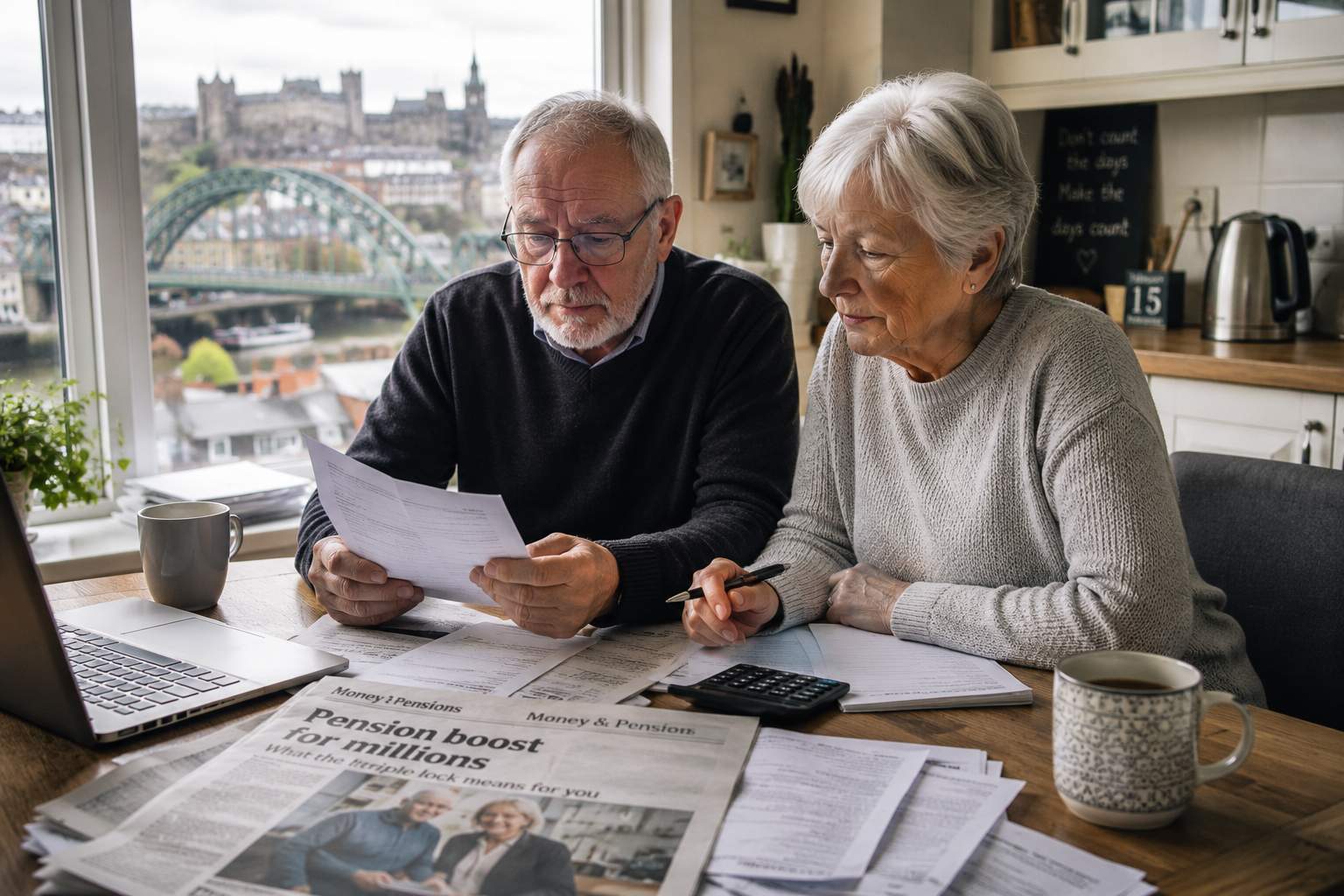
or millions of pensioners across the UK, the state pension triple lock has become one of the most important policies affecting their finances. It determines how much the state pension rises each year and is often praised for helping older people keep pace with rising living costs.
However, despite its popularity among pensioners, economists, politicians and taxpayers remain divided over whether the triple lock can continue in its current form. Supporters argue it protects older people from poverty, while critics warn it is becoming increasingly expensive and unfair to younger generations.
The debate is particularly relevant in cities such as Newcastle, where many residents rely heavily on state pension income and where rising household costs continue to put pressure on family budgets.
What Is The State Pension Triple Lock?
The triple lock is a government commitment that guarantees the UK State Pension increases each April by whichever of the following three measures is highest:
• Average earnings growth
• Inflation, measured by the Consumer Prices Index (CPI)
• 2.5%
The policy was introduced in 2011 to prevent pension incomes from falling behind wages and living costs. Before its introduction, many pensioners saw their income lose value over time as prices increased faster than pension payments.
The system applies to both the new State Pension and the basic State Pension.
How Much Has The Triple Lock Increased Pensions?
The impact has been significant.
From April 2025, the full new State Pension increased from £221.20 per week to £230.25 per week, adding around £470 per year for pensioners receiving the full amount.
Government figures suggest pensioners could receive up to £1,900 more over the course of the current Parliament because of continued triple lock increases.
Research also suggests the policy has left pensioners substantially better off than they would have been under inflation-only increases. One recent analysis estimated pensioners are around £1,300 better off because of the triple lock system.
Why Newcastle Pensioners Pay Close Attention To It.
Newcastle has a sizeable retired population and many older residents depend heavily on their state pension as their primary source of income.
Like many areas in the North East, Newcastle has neighbourhoods where average incomes are below the national average and where private pension savings are often lower than in wealthier parts of southern England.
For pensioners living in areas such as Byker, Walker, Benwell and parts of Gateshead, annual pension increases can make a noticeable difference when it comes to paying energy bills, buying food and managing rising housing costs.
When inflation surged in recent years, many older residents found themselves facing rapidly increasing prices for essentials. The triple lock helped cushion some of that financial pressure.
Why Critics Say The Triple Lock Is Becoming A Problem.
Despite its popularity, there are growing concerns about the long-term affordability of the policy.
The main criticism is simple. The UK population is ageing.
People are living longer and drawing pensions for more years. At the same time, there are proportionally fewer working-age taxpayers funding those pension payments.
The Institute for Fiscal Studies has warned that the triple lock creates uncertainty for public finances because future pension increases depend on whichever measure happens to be highest each year.
According to analysis cited by the IFS, state pension spending could rise by around £80 billion in today's money by the 2070s, with more than half of that increase linked to the triple lock itself.
Some forecasts suggest the policy could add tens of billions of pounds to government spending over coming decades.
The Generational Divide Debate.
Another major criticism centres on fairness.
Many younger workers have experienced years of stagnant wage growth, high housing costs and rising taxes. Some economists argue that pension incomes have increased faster than earnings for working households.
Critics question whether it is fair for pensioners to receive guaranteed annual increases when many workers do not enjoy the same protection.
This argument has become increasingly prominent during periods when public services are under pressure and government budgets are stretched.
Supporters of the triple lock respond by pointing out that many pensioners rely almost entirely on the state pension and would struggle without these annual increases.
The Tax Issue Few People Realise.
An unexpected consequence of triple lock increases is that more pensioners are beginning to pay income tax.
The personal tax allowance has remained frozen at £12,570 for several years. Meanwhile, state pension payments continue to rise.
Recent estimates suggest more than 8.8 million people aged over 66 now pay income tax, up from around 6.7 million a few years ago.
Some analysts predict that future state pension increases could push the full State Pension above the personal allowance threshold altogether, meaning pensioners with additional income sources could face larger tax bills.
Could The Triple Lock Be Reformed?
Successive governments have promised to maintain the triple lock because it remains highly popular with voters.
However, economists continue to suggest alternatives.
Some propose a "double lock", which would remove the 2.5% minimum guarantee. Others favour linking pensions solely to earnings growth over the long term.
Supporters of reform argue these changes would reduce pressure on public finances while still protecting pensioners from inflation.
Opponents warn that weakening the triple lock could increase pensioner poverty and leave millions worse off in retirement. Research cited by pension experts suggests that removing the policy altogether could significantly increase financial hardship among future retirees.
Why The Debate Is Not Going Away.
The triple lock remains one of the most politically sensitive policies in Britain.
For Newcastle pensioners, it represents financial security during uncertain economic times. For critics, it raises difficult questions about fairness, affordability and the long-term sustainability of public spending.
With the UK population continuing to age and state pension costs rising year after year, the debate over the future of the triple lock looks set to remain firmly on the political agenda.
Whether it survives unchanged or eventually faces reform, one thing is certain. Millions of pensioners across Newcastle and the rest of the UK will be watching closely.
Share your views in the comments below.
Do you think the state pension triple lock should remain in place, or is it time for reform?
Political News
Newcastle Pensioners Could Be Most Affected by Triple Lock Debate
Advertisement


Comments (0)
You must be logged in to post comments.
Don't have an account? Register here
No comments yet. Be the first to share your thoughts!