
Long before Newcastle became famous for its modern nightlife, the city was already one of Britain's busiest places to spend an evening. During the Victorian era, Newcastle's booming population, thriving industries and expanding railway network created a city that came alive after dark.
From elegant dinners in fashionable restaurants to packed theatres, lively music halls and traditional public houses, a Victorian night out offered something for almost every social class. While the venues have changed, many of the streets where Geordies enjoyed an evening more than 150 years ago remain instantly recognisable today.
Planning an evening in Victorian Newcastle.
A night out usually began with careful planning.
By the mid nineteenth century, Newcastle newspapers regularly carried pages of advertisements promoting theatre performances, concerts, public lectures, music hall acts and special dinners. Families often planned their evenings days in advance, while wealthier residents booked theatre boxes well before major productions arrived.
The arrival of Newcastle Central Station in 1850 transformed the city's evening economy. Visitors from towns across Northumberland, County Durham and beyond could now travel into Newcastle more easily before returning home later the same evening. Railway expansion dramatically increased visitor numbers and helped establish Newcastle as the entertainment capital of the North East.
By 1871, Newcastle's population had grown to more than 128,000, almost doubling from the start of Queen Victoria's reign. That rapidly expanding population created strong demand for entertainment every evening of the week.
Dinner was part of the occasion.
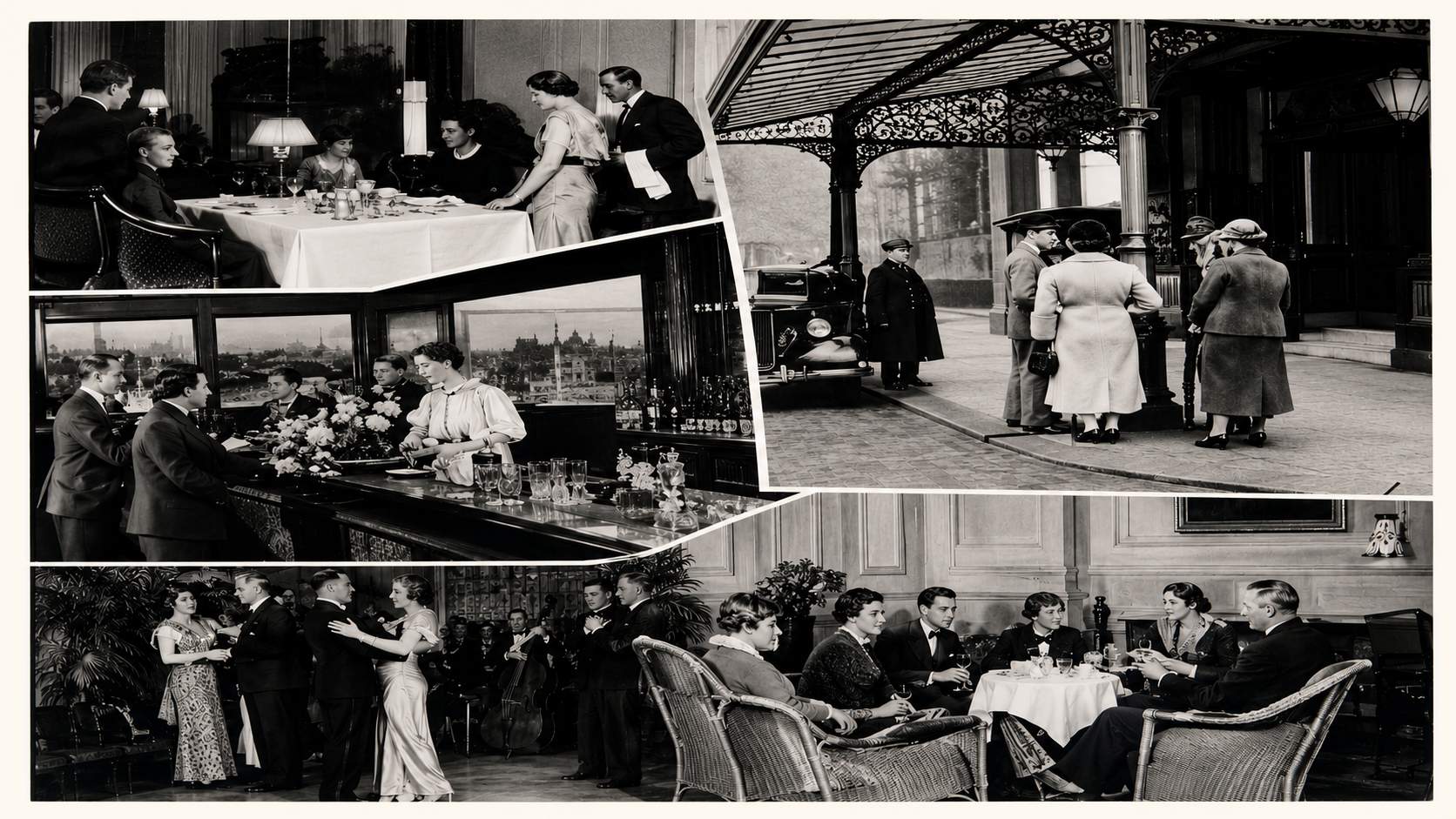
For wealthier Victorians, dinner was often the first stop before the evening's entertainment.
Grey Street, Grainger Street and the surrounding city centre featured hotels, dining rooms and restaurants serving everything from fresh North Sea fish to roast meats, game and elaborate desserts. The nearby Royal Station Hotel, opened in 1858, quickly became one of Newcastle's finest dining destinations, attracting travellers, businessmen and theatre-goers alike.
Working-class families enjoyed very different meals. Pie shops, chop houses, oyster stalls and street vendors offered affordable food before an evening at the theatre or music hall. Fish, shellfish and locally caught salmon regularly appeared on menus thanks to Newcastle's close links with the River Tyne and North Sea fishing ports.
Victorian Newcastle catered for every budget, making entertainment increasingly accessible as the city grew.
Theatre was the highlight of the evening.
For many residents, the Theatre Royal on Grey Street represented the pinnacle of a night out.
Opened in 1837, the magnificent theatre welcomed touring Shakespeare productions, opera companies, comedy performances and spectacular dramas. Famous actors from across Britain travelled north to perform before enthusiastic Newcastle audiences.
Charles Dickens also drew enormous crowds during his famous public readings at the nearby Music Hall on Nelson Street. Between 1852 and 1867 he visited Newcastle six times, later praising local audiences by declaring, "A finer audience there is not in England."
The Theatre Royal continues operating today and seats around 1,250 people, making it one of Britain's oldest continuously operating theatres. That remarkable continuity gives modern visitors a direct connection with Newcastle's Victorian social life.
Music halls brought entertainment to everyone.
While theatres appealed to many middle-class audiences, music halls attracted people from every walk of life.
These lively venues combined singing, comedy, dancing, magic acts, acrobats and audience participation in performances that changed nightly. They were noisy, energetic and hugely popular.
The Music Hall on Nelson Street became one of Newcastle's leading entertainment venues during the nineteenth century, hosting concerts, lectures and celebrity appearances. Elsewhere across the city, dozens of smaller halls entertained industrial workers looking to relax after long shifts in shipyards, factories and coal mines.
Music halls played a major role in shaping British popular entertainment, influencing everything from modern stand-up comedy to variety television.
Public houses were social hubs.
No Victorian night out would have been complete without a visit to a public house.
By the late nineteenth century, Newcastle contained hundreds of licensed pubs and beer houses, reflecting both the city's growing population and Britain's strong brewing traditions. Ale was by far the most common drink, although porter, stout, gin and whisky were also widely available.
Pubs were about far more than drinking. Customers discussed politics, business, football, local news and shipping arrivals while enjoying music, card games and conversation.
Some establishments even hosted amateur performances, debating societies and community meetings, making them important social centres long before television or radio existed.
The streets remained busy long after sunset.
Victorian Newcastle was anything but quiet once darkness fell.
Gas street lighting illuminated major routes including Grey Street, Grainger Street and Mosley Street, making evening travel safer and encouraging more people to stay in the city after work. Horse-drawn cabs carried wealthier visitors between venues, while many residents simply walked home through Newcastle's bustling streets.
Street musicians, newspaper sellers and food vendors continued working well into the evening, creating an atmosphere that would have felt surprisingly familiar to anyone enjoying Newcastle city centre today.
Although nightlife looked very different, the excitement of crowds gathering for entertainment remains one of the strongest links between Victorian Newcastle and the modern city.
A city built on entertainment and community.
Looking back, a Victorian night out was about far more than simply watching a show.
It was an opportunity to meet friends, enjoy good food, experience live performances and become part of a rapidly growing city full of confidence and ambition. Newcastle's wealth, created through coal, engineering and shipbuilding, supported an extraordinary cultural scene that rivalled many larger British cities.
Many of the original venues have disappeared, but landmarks such as the Theatre Royal, Central Station and the historic streets of Grainger Town continue telling that story every day.
Walking through Newcastle today, it is surprisingly easy to imagine the sound of carriage wheels, theatre crowds and music hall songs echoing through streets that have entertained generations for almost two centuries.
Share your thoughts.
Which surviving historic Newcastle venue is your favourite?
Entertainment News
Newcastle's Local Victorian Social Scene & Nightlife
Advertisement


Comments (0)
You must be logged in to post comments.
Don't have an account? Register here
No comments yet. Be the first to share your thoughts!