


The case has attracted widespread attention following the release of police bodycam footage showing the 18-year-old being handcuffed while repeatedly telling officers he had been stabbed. The footage emerged after Vickrum Digwa was convicted of murdering Nowak with a kirpan, a ceremonial Sikh dagger with a blade measuring approximately 21cm. Digwa was later sentenced to life imprisonment with a minimum term of 21 years.
Alongside questions surrounding the police response, attention has increasingly turned towards whether religious exemptions that allow Sikhs to carry kirpans in public continue to strike the right balance between religious freedom and public safety.
What Is A Kirpan?
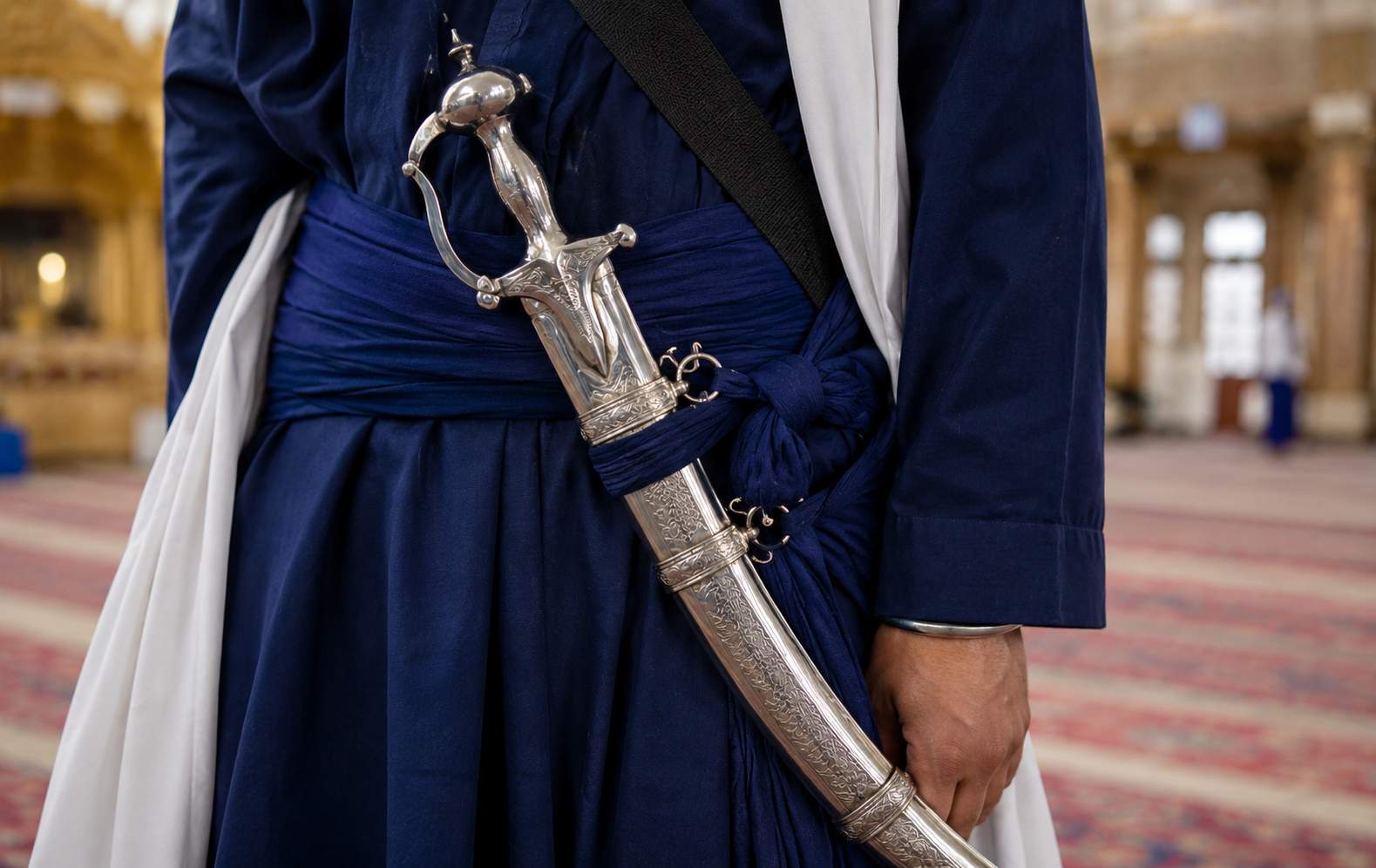
A kirpan is a ceremonial dagger carried by many practising Sikhs as one of the Five Ks, which represent important articles of faith within Sikhism.
For Sikhs, the kirpan is not viewed as a weapon but as a symbol of justice, responsibility and the duty to protect others. It is regarded as an important expression of religious identity and commitment to Sikh values.
UK law provides exemptions allowing Sikhs to carry kirpans for religious reasons. These exemptions have existed for many years and are intended to protect religious freedom while recognising the significance of the item within Sikh faith and culture.
However, the Henry Nowak case has prompted renewed discussion over whether additional safeguards may now be necessary.
The Case That Changed The Conversation.
Henry Nowak was a first-year university student when he was stabbed in Southampton in December 2025.
Court proceedings heard that Digwa used a kirpan during the fatal attack before allegedly claiming that Nowak had racially abused him. Evidence presented during the trial disputed those claims.
The case generated national outrage after bodycam footage showed officers handcuffing Nowak while he repeatedly told them he had been stabbed and was struggling to breathe.
Many members of the public questioned why the victim was initially treated as a suspect while suffering life-threatening injuries.
The incident has led to ongoing scrutiny of Hampshire Police, with investigations examining both the actions of officers at the scene and wider procedures used during the response.
Officer Resignation Adds To Public Concern.
Public interest in the case intensified further after it emerged that one of the officers involved had resigned from Hampshire Police.
The resignation came amid continuing investigations into the police response and has fuelled calls for greater accountability.
While authorities have stressed that investigations remain ongoing and conclusions should not be reached prematurely, the development has only increased public concern over how the incident was handled.
For many observers, the case now raises two separate but connected questions. One concerns the use of a kirpan in a fatal attack. The other concerns whether opportunities were missed to save the victim's life after officers arrived.
How Common Is Knife Crime In Britain?
Knife crime remains one of the most significant public safety concerns across England and Wales.
According to the Office for National Statistics, police recorded more than 50,000 offences involving a knife or sharp instrument in the year ending March 2025.
The overwhelming majority of these incidents do not involve kirpans. However, the figures help explain why any case involving a legally carried blade quickly attracts public attention.
Successive governments have introduced tougher sentencing laws, restrictions on certain knives and increased stop-and-search powers in an effort to reduce knife-related violence.
Against that backdrop, the Henry Nowak case has inevitably raised questions about whether current religious exemptions should be reconsidered.
The Newcastle Sikh Community Should Not Be Judged By One Individual.
While the debate surrounding kirpan laws has intensified following Henry Nowak's death, community leaders and Sikh organisations have repeatedly stressed that the actions of one individual should not be used to define an entire faith community.
Newcastle upon Tyne is home to a long-established Sikh population that has contributed to the city and wider North East region for generations. Sikh communities across Newcastle are involved in charitable projects, food bank initiatives, fundraising events and interfaith activities that support people from all backgrounds.
The Gurdwara Sri Guru Singh Sabha in Newcastle has served worshippers for decades and remains an important centre for faith, education and community engagement. Meanwhile, Gurdwara Shaheed Baba Deep Singh Ji has become another significant place of worship serving Sikhs across the region.
National Sikh organisations have publicly condemned the killing of Henry Nowak and expressed sympathy for his family. They have also warned against allowing the actions of one person to create hostility towards the wider Sikh community.
Many Sikhs have pointed out that millions of people worldwide carry kirpans responsibly every day without incident. They argue that the criminal actions of one individual should not overshadow the peaceful beliefs and contributions of law-abiding Sikhs throughout the UK, including those living in Newcastle and the North East.
For many observers, the challenge is ensuring that legitimate public safety concerns can be discussed openly without unfairly targeting an entire religious group.
Arguments For Keeping The Exemption.
Many Sikh organisations continue to defend the right to carry kirpans, arguing that religious freedoms should not be restricted because of the actions of one person.
Supporters of the current law point out that kirpans have been carried legally in Britain for decades without widespread problems. They also note that existing legislation already makes it a criminal offence to use a kirpan unlawfully.
Legal experts have argued that carrying a kirpan for religious reasons does not provide immunity from prosecution. If a crime is committed, offenders can still face the full force of the law.
Those supporting the current exemption believe that existing safeguards remain sufficient.
Arguments For Reforming The Law.
Others believe the Henry Nowak case demonstrates that changes should be considered.
Some campaigners are not calling for an outright ban but instead support measures such as stricter limits on blade length, mandatory concealment requirements or restrictions in certain public spaces.
There have also been calls for a broader review of how religious exemptions interact with modern knife crime legislation.
Critics argue that public safety should remain the overriding priority and that laws created decades ago may need updating to reflect current concerns surrounding violent crime.
The fact that a legally carried religious blade was ultimately used in a murder has intensified these arguments.
The Police Response Remains Under Scrutiny.
While debate surrounding kirpans continues, many people believe the police response remains the most significant aspect of the case.
The bodycam footage showing Henry Nowak repeatedly telling officers he had been stabbed has shocked people across the country.
Political leaders, police oversight bodies and legal experts have all called for a thorough examination of the circumstances surrounding the incident.
Questions remain about decision-making at the scene, training procedures and whether opportunities existed to provide faster medical assistance.
The outcome of those investigations may ultimately have a lasting impact on policing policies across the UK.
A Debate That Extends Beyond One Case.
The discussion surrounding kirpans extends far beyond Southampton and one tragic incident.
It touches upon fundamental issues involving religious liberty, equality before the law, community relations and public safety.
Most people agree that Sikhs should not be blamed for the actions of one individual. At the same time, many believe legitimate questions about public safety deserve careful examination.
As policymakers, legal experts, faith leaders and community representatives continue discussions, pressure is likely to grow for a detailed review of existing laws and guidance.
Whether that leads to legislative change remains uncertain, but there is little doubt that Henry Nowak's death has become a defining moment in a debate that is likely to continue for years to come.
What Happens Next?
Investigations into both the police response and wider circumstances surrounding the case remain ongoing.
The findings could influence future discussions about knife legislation, religious exemptions and policing procedures across England and Wales.
For many people, the central question remains whether current laws strike the correct balance between respecting religious freedoms and ensuring public safety.
Whatever the outcome, the death of Henry Nowak has prompted a national conversation that reaches far beyond one courtroom and into the wider debate about how Britain manages competing rights and responsibilities in a modern society.
Should kirpan daggers continue to be permitted in public under religious exemptions, or is it time for Parliament to review the law following the death of Henry Nowak?



Comments (0)
You must be logged in to post comments.
Don't have an account? Register here
No comments yet. Be the first to share your thoughts!