
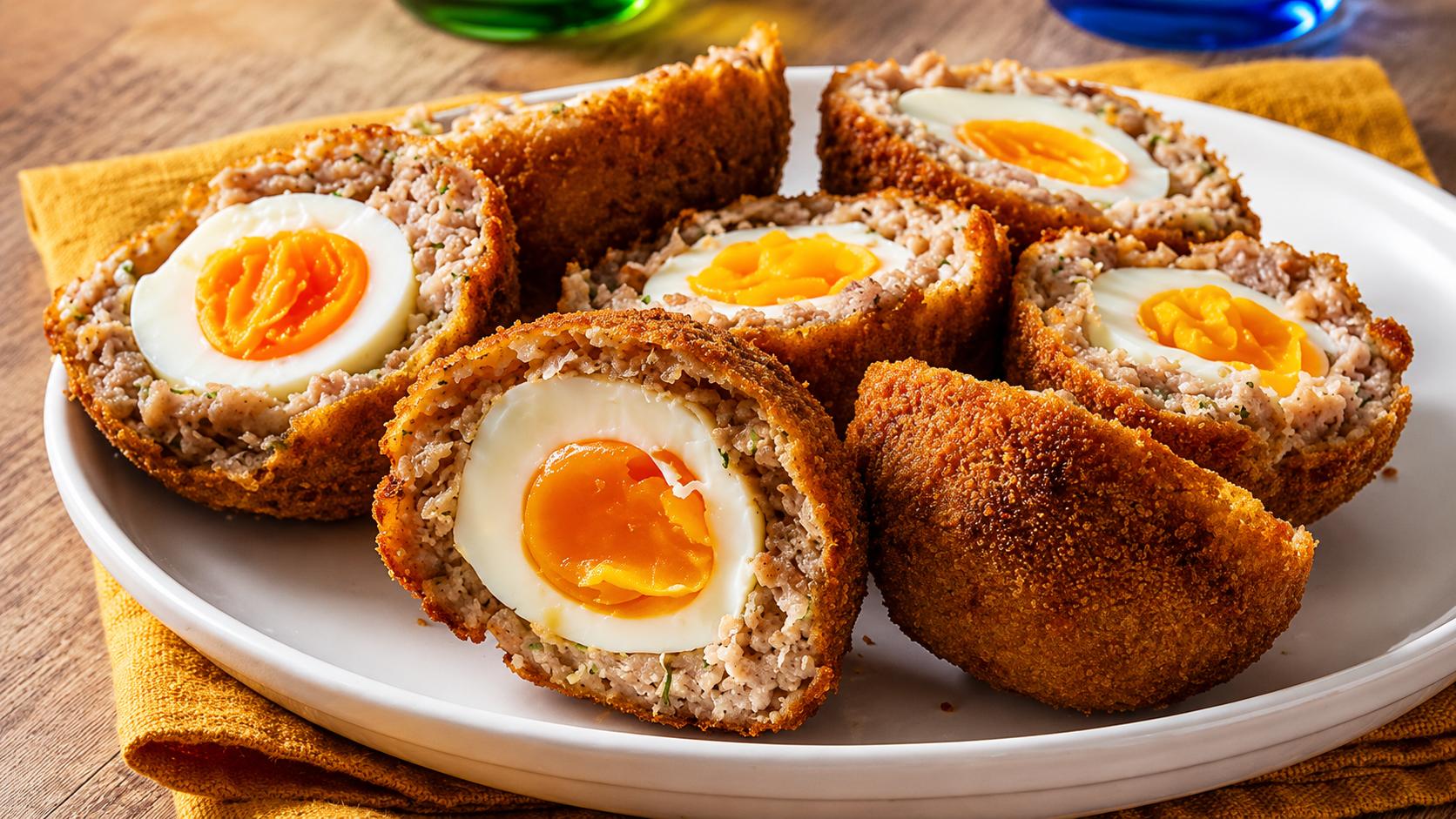
Scotch eggs, consisting of a hard-boiled or soft-boiled egg wrapped in sausage meat, coated in breadcrumbs and fried or baked until golden, rank among Britain's most distinctive savoury snacks, instantly recognisable and genuinely beloved across the entire country. Despite their name, the exact origins of the Scotch egg remain somewhat genuinely disputed among food historians.
Three Competing Origin Stories.
One widely circulated theory credits the London department store Fortnum and Mason with inventing the Scotch egg during the early eighteenth century, specifically designed as portable, filling food suited to travellers undertaking long coach journeys, needing something substantial and easily transportable that would not spoil quickly during extended travel across the country.
An alternative theory suggests the dish draws inspiration from Mughlai cuisine, specifically nargisi kofta, an Indian dish also featuring a boiled egg wrapped in spiced minced meat, with British colonial officials potentially bringing the concept back to Britain and adapting it into what eventually became the distinctly British Scotch egg most people recognise today.
Yet another theory suggests the name "Scotch" actually derives from the specific culinary term "to scotch", meaning to mince or chop finely, referring to the process of preparing the sausage meat coating rather than indicating any genuine geographical connection to Scotland specifically, a linguistic explanation that would neatly resolve why the dish's actual connection to Scotland has always remained genuinely unclear.
A Travelling Snack for Generations.
Whatever its true origin, the Scotch egg became firmly established as a popular British picnic food during the nineteenth and twentieth centuries, valued for its genuine portability and the satisfying combination of protein-rich egg and savoury sausage meat, making it a reliably filling choice for packed lunches, picnics and journeys of every kind across the country.
The Gastropub Reinvention.
The Scotch egg experienced a genuine renaissance during the 2010s, as gastropubs across Britain began reinventing the humble snack with premium ingredients, including black pudding coatings, soft-boiled eggs with deliberately runny yolks and gourmet sausage meat blends. What had once been considered a simple pub snack became a fashionable menu staple once again.
That trend reached Newcastle too, where pubs across the city began putting their own spin on the classic recipe. One local example is The Cozy Dove in Spital Tongues, which has built a reputation among regulars for its 'Newcastle Egg' a Scotch egg that is made with 1/2 black pudding and 1/2 traditional sausage meat, served with a rich yolk that has proved a popular choice with customers.
This revival helped turn the Scotch egg into something of a defining symbol of modern British gastropub culture during the decade, regularly appearing on menus throughout Newcastle and the wider North East. It is commonly served as a starter with piccalilli, chutneys or other sharp accompaniments that cut through the richness of the black pudding or sausage meat.
Traditional and Gourmet, Side by Side.
Today, Scotch eggs remain genuinely popular across Britain in both their traditional, simple picnic form and their more elaborate gourmet pub incarnation, reflecting the dish's genuine versatility and enduring appeal across different dining contexts, from a quick, practical snack to a genuinely thoughtfully composed starter on an upmarket restaurant menu.
A Festival and Event Favourite.
Scotch eggs have become a particularly popular choice at food festivals and outdoor events across the country, valued for their genuine portability and the way they translate well to being eaten standing up, without cutlery, much as they always have since their earliest origins.
Specialist Scotch egg stalls and producers have emerged at markets across Newcastle and the wider North East in recent years, often offering an extensive range of flavour variations well beyond the traditional recipe, reflecting the dish's genuinely enduring, evolving popularity.
A Snack That Travels Well.
Scotch eggs hold up genuinely well after being made in advance, unlike many other hot pub snacks, making them a particularly practical choice for packed lunches, picnics and travel, much as they always have done since their earliest documented origins. Few snacks manage to bridge tradition and modern gastropub trends quite so successfully.
Several UK-based Scotch egg producers have built entire businesses specifically around reinventing the snack, offering an extensive seasonal range of flavour combinations and premium ingredients that would have seemed genuinely unimaginable to the dish's original, considerably simpler nineteenth-century version. That kind of continued reinvention keeps a genuinely simple, centuries-old snack feeling properly fresh for each new generation of diners.
Join the conversation below.
Do you prefer your Scotch egg hot or cold?
Food & Drink News
Scotch Eggs: From Practical Picnic Food to Gourmet Pub Snack
Scotch eggs have travelled a genuinely remarkable journey from humble travelling food to a fixture of upmarket gastropub menus across the country.
Advertisement

Comments (0)
You must be logged in to post comments.
Don't have an account? Register here
No comments yet. Be the first to share your thoughts!