
Fresh concerns have emerged over the UK's student loan system after new figures revealed that tens of thousands of former university students who studied in Britain are now unaccounted for overseas, with hundreds of millions of pounds in unpaid debt still outstanding.
Data released by the Student Loans Company (SLC) shows that more than 42,000 former students who left the UK after completing their studies have effectively disappeared from the repayment system. The missing borrowers are linked to almost £900 million in outstanding student loan debt, adding to growing concerns about the long-term sustainability of higher education funding.
The figures have reignited debate over how student loans are recovered once graduates move abroad, with critics arguing that taxpayers are being left to shoulder the burden when repayments cannot be collected.
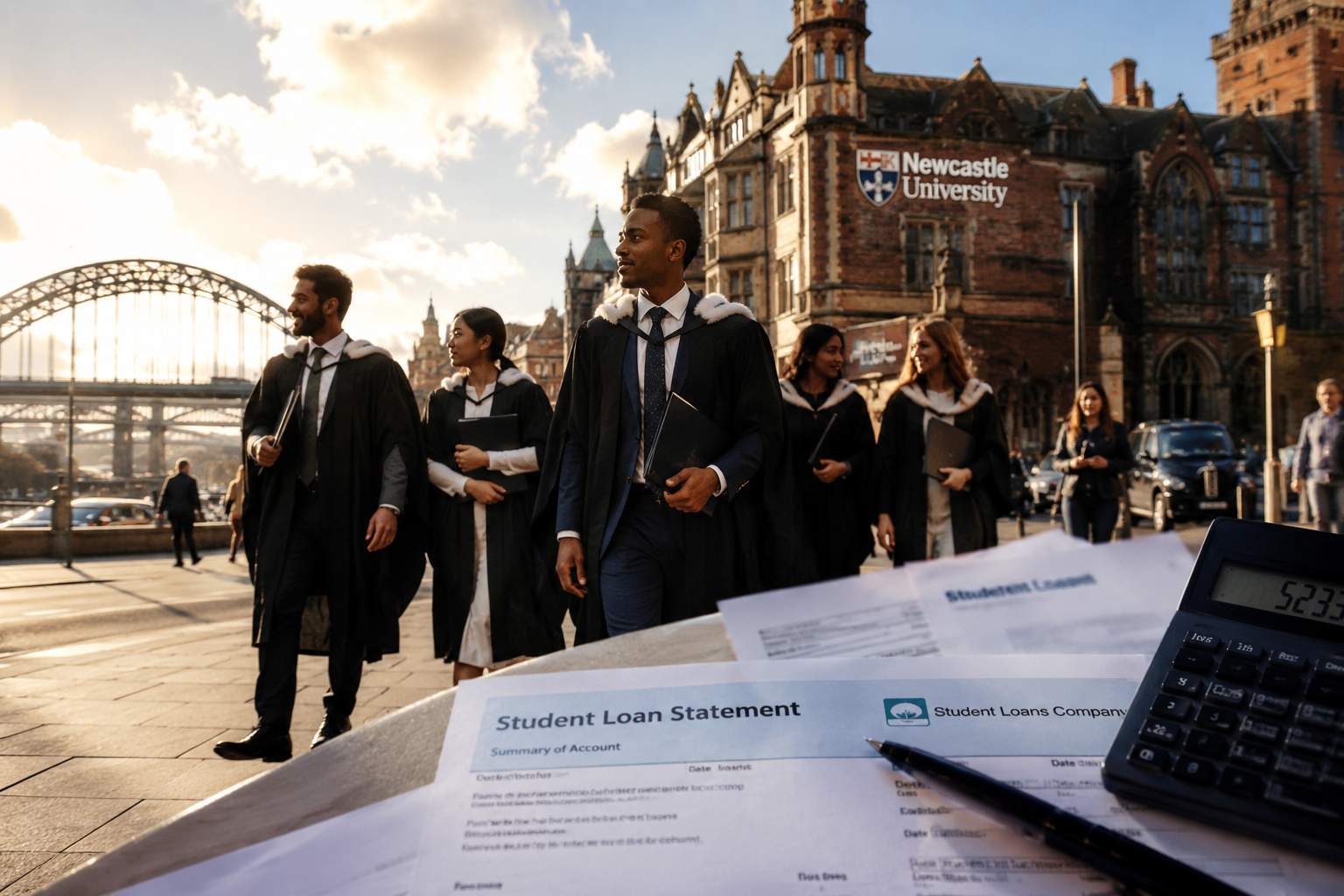
The issue is particularly relevant for major university cities such as Newcastle, where institutions including Northumbria University and Newcastle University attract thousands of students from across the UK and around the world every year.
Thousands Of Graduates No Longer Traceable Overseas.
According to the latest figures, officials are currently attempting to recover outstanding student loan balances worth £3.4 billion from approximately 121,000 former borrowers living abroad.
While many graduates continue making repayments after leaving Britain, thousands have fallen out of contact with authorities. Unlike borrowers who remain in the UK, overseas graduates cannot be easily tracked through HM Revenue and Customs records, making enforcement significantly more difficult.
Australia is believed to be home to around 15,000 borrowers with outstanding loans, while approximately 7,600 are thought to be living in the United States. Spain and Ireland account for around 5,500 borrowers each, while thousands more are believed to reside in the United Arab Emirates, China, Bulgaria and Romania.
The Student Loans Company has repeatedly stressed that moving abroad does not eliminate repayment obligations. However, the practical challenge of locating borrowers and verifying their income continues to create difficulties for enforcement teams.
Why The Student Loan Recovery System Faces Challenges.
Student loans in England are generally repaid automatically through the tax system once graduates earn above specified income thresholds. This process works efficiently for those living and working within the UK.
Problems arise when borrowers relocate overseas.
Graduates who move abroad are required to inform the Student Loans Company and provide details of their income so that appropriate repayment arrangements can be made. If they fail to do so, tracking their employment status can become almost impossible.
Official data indicates that more than 90 percent of overseas borrowers had verified residency and employment information during the most recent reporting period, suggesting the majority continue to comply with the rules. However, the remaining proportion still represents tens of thousands of individuals whose circumstances are unclear.
Critics argue that the current system relies heavily on voluntary compliance, leaving authorities with limited options when borrowers fail to engage.
Newcastle's Universities And The International Student Economy.
The issue carries particular significance for Newcastle, which has become one of the UK's leading destinations for international higher education.
Northumbria University has built a strong global reputation in recent years, attracting students from more than 130 countries. Alongside Newcastle University, the institution contributes significantly to the city's economy through tuition fees, accommodation spending and local employment.
International students are widely regarded as a vital part of Newcastle's economic success. They support businesses across the city centre, create jobs and help maintain the global profile of local universities.
However, the latest figures are likely to fuel wider discussions about how publicly backed student finance schemes operate when graduates leave the country after completing their studies.
For universities in cities such as Newcastle, the challenge is balancing the benefits of attracting overseas talent while ensuring the integrity of the student finance system remains protected.
Growing Debate Over Who Should Bear The Cost.
The publication of the figures has prompted renewed criticism from campaign groups and taxpayer advocates.
Some argue that stronger enforcement measures should be introduced to ensure overseas borrowers continue meeting their obligations. Others believe the issue highlights broader weaknesses within the student loan model itself.
Campaigners have suggested a range of possible reforms, including enhanced international data-sharing agreements, improved tracking systems and tighter repayment monitoring for graduates who relocate abroad.
Supporters of the current system point out that many borrowers with outstanding balances are not actively avoiding repayment. Some may be unemployed, earning below repayment thresholds, studying further or experiencing financial hardship.
Under existing rules, graduates are only required to make repayments when their earnings exceed specific income levels, meaning not every unpaid loan reflects deliberate non-compliance.
The Bigger Picture For UK Student Debt.
The debate arrives at a time when student debt remains one of the most significant financial issues facing graduates.
Student loans have become a central part of higher education funding in Britain, with tuition fees and maintenance support helping millions access university study.
Across the wider student finance landscape, concerns about repayment rates have been growing for years. Analysts continue to question how much of the overall loan book will ever be fully recovered.
The challenge is not unique to the UK. Internationally, student debt has become a major policy issue. In the United States, federal student loan balances exceed $1.6 trillion and are held by more than 40 million borrowers, highlighting the scale of higher education financing challenges around the world.
These figures demonstrate how governments globally are grappling with the balance between widening access to education and ensuring loan systems remain financially sustainable.
What This Means For Future Students.
For prospective students considering university in Newcastle or elsewhere in the UK, the latest figures are unlikely to result in immediate changes to funding arrangements.
Student loans remain one of the primary methods through which students finance their degrees, and government-backed support continues to play a crucial role in widening participation.
However, experts believe the growing scrutiny could influence future policy decisions. Governments may face increasing pressure to improve overseas repayment collection, strengthen international agreements and ensure taxpayers receive better value for money.
Universities including Northumbria University are expected to continue attracting significant numbers of international students due to their strong academic reputation and graduate employment outcomes.
The wider debate is therefore likely to focus not on limiting international recruitment, but on ensuring repayment systems can effectively operate across international borders.
Pressure Mounts For A Long-Term Solution.
With billions of pounds in outstanding student debt linked to borrowers living overseas, policymakers face difficult questions about accountability, fairness and public finances.
Supporters of reform argue that stronger international cooperation is essential if repayments are to be collected effectively. Others warn that excessive restrictions could damage the UK's attractiveness as a destination for global talent.
What remains clear is that the issue is unlikely to disappear anytime soon.
As cities such as Newcastle continue benefiting from thriving university sectors and growing international student populations, the challenge of balancing educational opportunity with financial responsibility will remain firmly on the national agenda.
Join The Conversation.
Should the UK be funding education for international students?
Local News
Student Loan Shock: Thousands Leave UK Owing Nearly £900 Million
Advertisement





Comments (0)
You must be logged in to post comments.
Don't have an account? Register here
No comments yet. Be the first to share your thoughts!