
When Kim McGuinness was elected as the first North East Mayor in May 2024, expectations were high.
The role was created as part of a major devolution deal designed to give the North East greater control over transport, investment, skills, housing and economic growth. For many voters in Newcastle and across the wider region, it represented an opportunity to finally address long-standing challenges that have held the area back for decades.
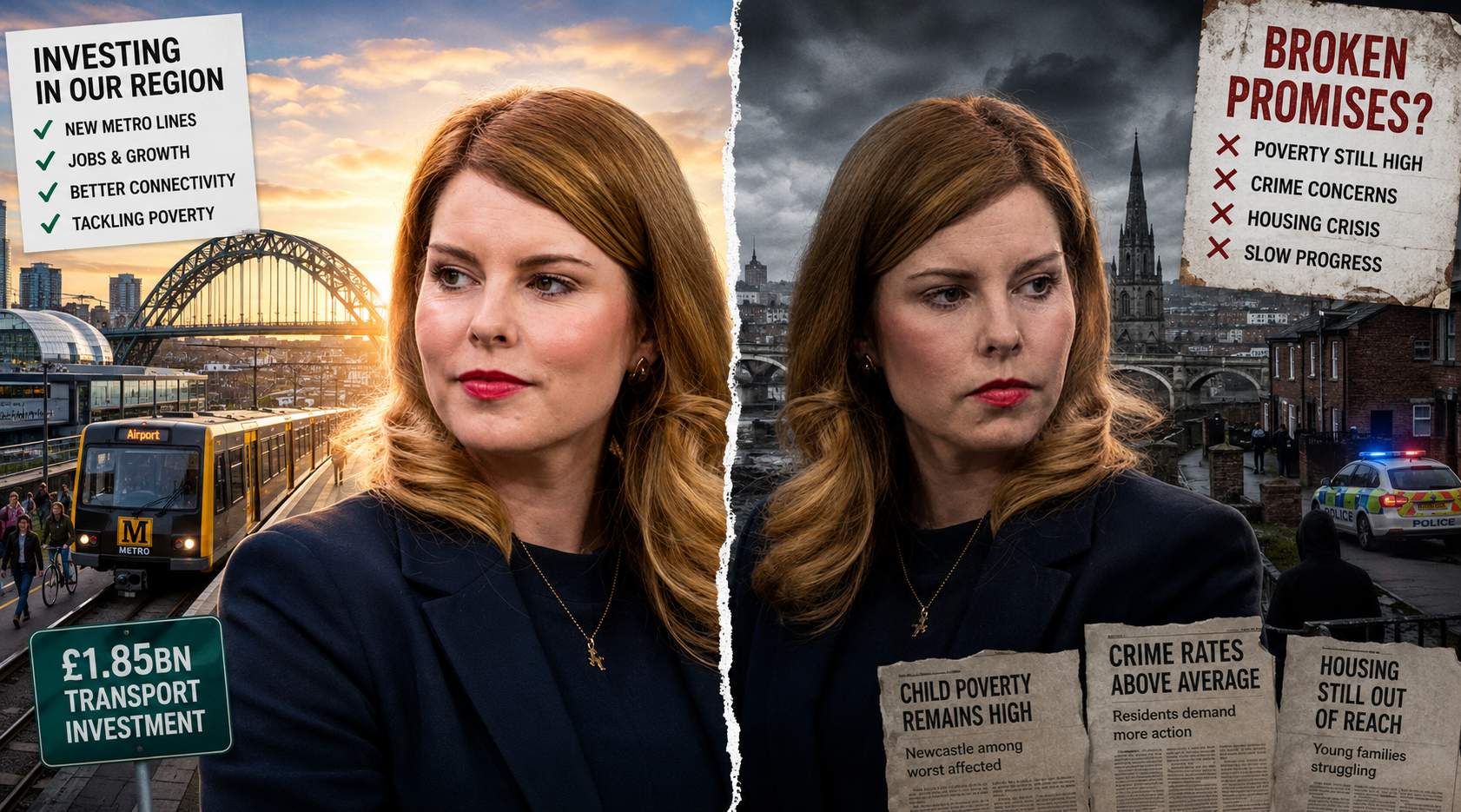
Just over two years into her tenure, a growing debate has emerged. Has Kim McGuinness delivered meaningful positive change for Newcastle, or are residents still waiting to see the benefits promised during the election campaign?
The answer depends largely on which issues matter most to individual residents. There have undoubtedly been major announcements, funding deals and policy initiatives. However, questions remain about whether those investments are yet translating into tangible improvements on the ground.
Understanding The Mayor's Role.
Before judging performance, it is important to understand what powers the North East Mayor actually possesses.
The Mayor oversees strategic areas including transport, economic development, skills, housing and regional investment. The position does not directly control NHS services, local council budgets, policing operations or many day-to-day services that residents often associate with local government.
As a result, measuring success requires examining long-term projects rather than expecting immediate solutions to every local issue.
Kim McGuinness was elected on a platform focused on reducing child poverty, creating better jobs, improving transport and attracting investment to the North East economy.
Transport Has Become The Flagship Achievement.
If there is one area where supporters believe meaningful progress has been made, it is transport.
One of the biggest announcements came in 2025 when the North East secured a £1.85 billion transport funding package from central government. The deal included plans for the first major Tyne and Wear Metro expansion in more than 30 years, connecting Washington to the wider rail network.
The wider package includes investment in local roads, electric vehicle charging infrastructure, walking and cycling routes and improvements to public transport services across the region.
In addition, the Mayor announced £208 million worth of transport projects as part of a wider £800 million programme aimed at improving connectivity across the North East by 2027. These projects include upgraded bus stops, smart ticketing systems, Metro improvements and infrastructure maintenance.
For Newcastle residents who rely on public transport, these developments represent some of the most visible signs of progress so far.
However, critics point out that many projects remain in planning or early delivery stages, meaning residents have yet to experience the full benefits.
Efforts To Reduce The Cost Of Travel.
Affordability has also featured heavily in the Mayor's agenda.
Since taking office, Kim McGuinness has introduced initiatives aimed at reducing transport costs for younger people and families.
Among the most widely publicised measures were the introduction of a £2.50 regional bus fare cap and £1 public transport fares for passengers up to the age of 21. These measures were designed to make travel more affordable while encouraging greater use of public transport.
For many households dealing with rising living costs, these policies have provided practical financial support.
Whether they can be maintained long term remains a question that will likely shape future public opinion.
Has Newcastle Seen Economic Benefits?
Economic growth was another major promise.
The Mayor has repeatedly argued that attracting investment and creating well-paid jobs is essential to the region's future. Recent initiatives suggest some progress is being made.
In early 2026, a landmark partnership was signed between Newcastle Airport, the Port of Tyne, the Port of Sunderland and the Port of Blyth. The agreement aims to strengthen trade links, attract investment and support green energy industries across the region. Officials believe the partnership could help create thousands of jobs while unlocking hundreds of millions of pounds in investment.
The Mayor has also been credited with helping secure support for advanced manufacturing jobs, including intervention that helped safeguard employment at Hitachi's train manufacturing operations in County Durham.
While many of these projects benefit the wider North East rather than Newcastle alone, supporters argue that Newcastle's economy is deeply connected to regional success.
Child Poverty Remains A Major Challenge.
One of Kim McGuinness' headline pledges was tackling child poverty.
The North East continues to experience some of the highest child poverty rates in England. In Newcastle itself, around 38 percent of children are estimated to be living in poverty, according to recent reports.
In response, the Mayor established what was described as the UK's first Child Poverty Reduction Unit. Additional support programmes, including childcare grants for parents returning to work, have also been introduced.
These initiatives have been welcomed by charities and community groups.
However, critics argue that poverty levels remain stubbornly high and that meaningful improvements will require sustained investment over many years rather than a single political term.
What About Crime And Community Safety?
Crime remains one of the issues Newcastle residents care most about.
While policing responsibilities now sit with Northumbria's Police and Crime Commissioner rather than the Mayor, Kim McGuinness' previous experience as Northumbria Police and Crime Commissioner means many voters still associate her with community safety.
Recent crime statistics suggest Newcastle continues to record crime rates above both the regional and national averages.
Current estimates place Newcastle's overall crime rate at approximately 120 to 125 crimes per 1,000 residents annually. Violent crime, anti-social behaviour and shoplifting remain among the most commonly reported offences.
Nationally, crime rates vary significantly depending on location, but Newcastle continues to experience higher crime levels than many suburban and rural areas.
Supporters argue that crime trends are influenced by a wide range of factors beyond the Mayor's direct control. Critics counter that public perceptions of safety remain a significant challenge for Newcastle's future growth.
Housing Affordability Is Still A Concern.
Housing has become another key test of political leadership.
Average house prices in Newcastle have continued to rise, reaching around £200,000 during 2025 and 2026.
At the same time, private rents have increased sharply, placing pressure on first-time buyers and lower-income households.
The Mayor has repeatedly highlighted housing as a priority and has spoken about creating a North East where people can access good-quality homes whether renting or buying.
Yet many residents say affordability remains one of the biggest challenges facing Newcastle today.
For younger people in particular, the dream of home ownership continues to move further out of reach.
Public Perception Is Mixed.
Perhaps the biggest challenge facing any mayor is managing expectations.
The North East Mayor position was created with enormous political attention. Many residents hoped it would quickly transform transport, jobs, housing and public services.
In reality, large infrastructure and economic development projects often take years to deliver measurable outcomes.
Supporters point to the unprecedented transport funding secured, regional investment agreements, anti-poverty initiatives and economic partnerships as evidence that meaningful progress is underway.
Critics argue that everyday issues such as housing affordability, crime, city centre decline and the cost of living continue to dominate local concerns.
Both viewpoints contain elements of truth.
The Verdict So Far.
Judging Kim McGuinness' success depends largely on whether voters focus on outcomes already achieved or future benefits that are still being developed.
The evidence suggests the Mayor has been effective in securing funding, launching initiatives and placing the North East at the centre of national investment discussions. The £1.85 billion transport package alone represents one of the largest infrastructure commitments the region has seen in decades.
However, many of the promised improvements are still in progress. Residents facing high rents, concerns about crime or everyday cost-of-living pressures may reasonably question whether enough has changed yet.
For Newcastle, the true verdict on Kim McGuinness' mayoralty may not become clear until the major transport projects, investment schemes and economic programmes announced during her first years in office begin delivering visible results across the city.
Has the North East Mayor improved transport, jobs and opportunities in your area, or are you still waiting to see the benefits?
Local News
Two Years On: Has Kim McGuinness Made A Difference?
Advertisement




Comments (0)
You must be logged in to post comments.
Don't have an account? Register here
No comments yet. Be the first to share your thoughts!