
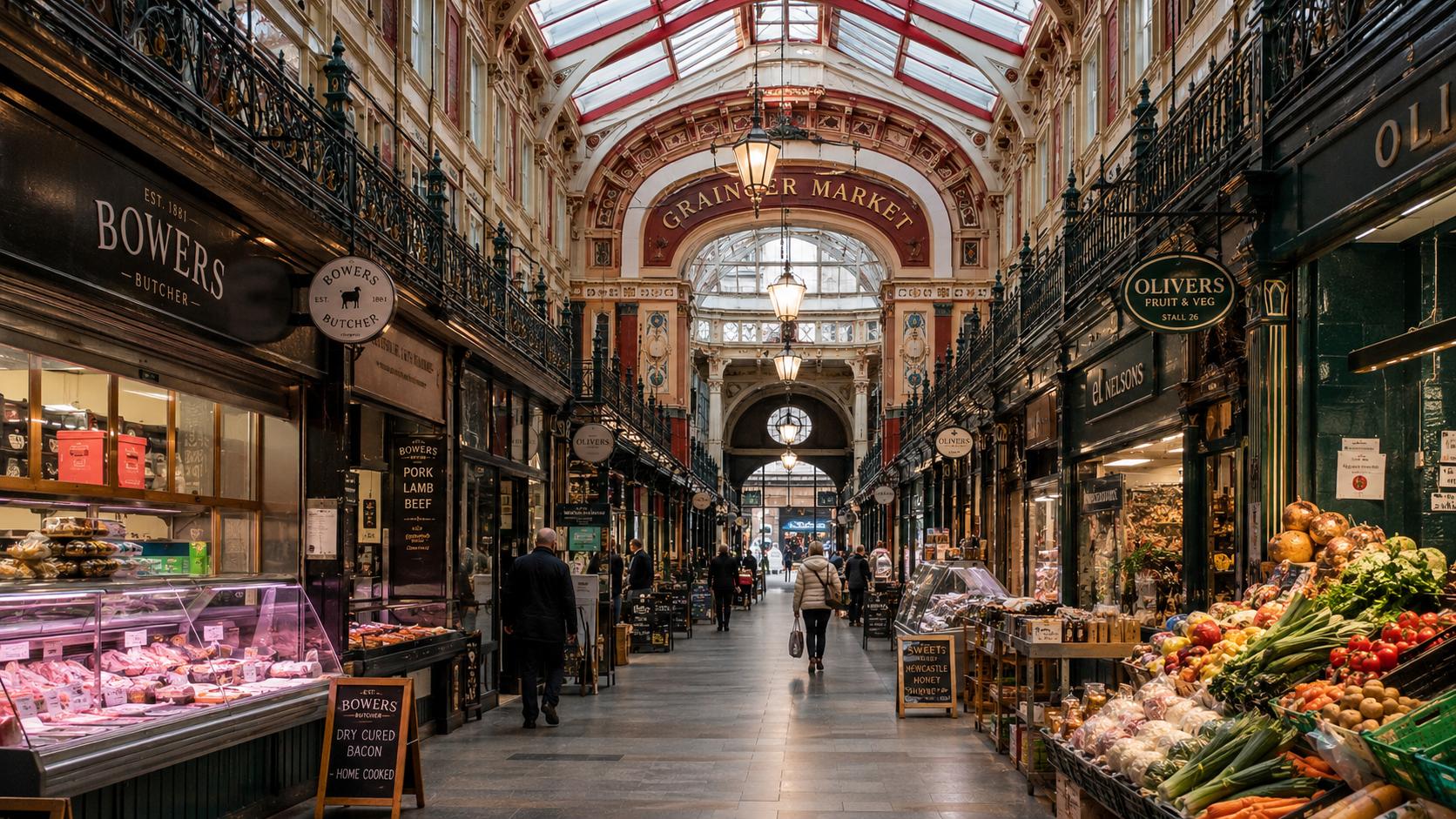
In the heart of Newcastle, just a short walk from Grey's Monument, stands one of the finest historic covered markets in the country. The Grainger Market has been a bustling centre of trade and a beloved part of city life for almost two centuries, its grand Victorian hall sheltering generations of butchers, greengrocers, bakers and traders. It is both a working market and a magnificent piece of the city's heritage.
A Jewel of Grainger Town.
The Grainger Market opened in 1835 as part of the ambitious redevelopment of central Newcastle led by the builder Richard Grainger, the project that gave the city its elegant Grainger Town district. Designed by the celebrated architect John Dobson, the market was conceived as a grand, classically styled covered hall, a modern and impressive replacement for the older open markets it superseded. When it opened, it was hailed as one of the most beautiful markets in the world, and it remains one of the largest market halls in England. Today it is a Grade I listed building, a recognition of its outstanding architectural and historic importance.
A Grand Opening.
The market's opening in 1835 was marked with considerable ceremony, including a vast celebratory dinner held within the hall itself. A great crowd of men sat down to the banquet, while, in keeping with the customs of the time, ladies were permitted only to watch the proceedings from a specially built gallery. This grand occasion reflected just how significant the new market was considered to be, a symbol of Newcastle's confidence and prosperity in the early Victorian era. From its very first day, the Grainger Market was clearly intended to be something special, and nearly two hundred years later it has more than lived up to that promise.
Two Markets in One.
In its original layout, the Grainger Market was effectively divided into two parts, a design still visible in the building today. The eastern section was a meat market, arranged in a series of aisles lined with butchers' stalls, while the western section was a large, open vegetable market housed beneath a grand hall. This division reflected the practical needs of a Victorian city, providing dedicated, well-ordered spaces for the trade in fresh produce and meat. Over time the precise uses have evolved, but the market has always remained a place to buy good, fresh food, and a number of traditional butchers' stalls continue to trade there to this day.
The World's Smallest Marks and Spencer.
One of the Grainger Market's most famous and charming features is its tiny branch of Marks and Spencer, known as the Original Penny Bazaar. Opened in 1895, this is reputed to be the smallest Marks and Spencer store in the world, and it is the last surviving example of the Penny Bazaar stalls from which the entire Marks and Spencer empire grew. Its historic frontage, with the famous old slogan inviting customers not to ask the price because everything cost a penny, is a genuine retail relic. For many visitors, seeking out this little piece of high-street history is a highlight of any trip to the market.
A Living, Working Market.
What makes the Grainger Market so special is that, unlike many historic buildings, it remains very much alive and in use for its original purpose. It is home to scores of independent traders and small businesses, from butchers, bakers and greengrocers to cheesemongers, florists, street food vendors and quirky specialist stalls. Some of these businesses have traded there for decades, becoming institutions in their own right, while new arrivals keep the market fresh and vibrant. With millions of visitors passing through each year, it remains a genuinely busy and beloved part of the city's shopping and dining culture.
A Treasured Newcastle Institution.
The Grainger Market is a wonderful example of a historic building that continues to serve the community that built it, blending heritage and everyday life in the most appealing way. Recent investment, including major work on its roof, has helped secure its future, ensuring that this Victorian gem can continue to thrive. It stands as a monument to the vision of Richard Grainger and John Dobson, and to the enduring appeal of a good, traditional market.
For anyone wanting to experience the food and the character of Newcastle, a wander through the Grainger Market is essential. Beneath its grand roof, amid the bustle of the stalls, you can taste the city's past and present at once, in one of the finest market halls in the land.
A Market for the Whole Community.
Part of what makes the Grainger Market so beloved is the way it serves the whole community, bringing together people of every background under one historic roof. Its mix of traditional traders and newer arrivals reflects the diversity of modern Newcastle, with stalls offering food and goods from around the world alongside long-established local butchers and greengrocers. Throughout the year the market hosts a variety of events, from specialist markets and craft fairs to live music and heritage celebrations, ensuring there is always something to draw people in. It was even voted the favourite market in Britain in a national poll, a fitting tribute to its enduring appeal. Crucially, the market remains an accessible and affordable place to shop and eat, in the heart of a busy city centre, keeping alive the idea of the market as a place for everyone. This sense of inclusiveness and community, combined with its remarkable history and architecture, is what makes the Grainger Market far more than just a place to buy your groceries.
Join the conversation.
Tell us your own stories and views in the comments section, especially your favourite stall in the Grainger Market.
Which Grainger Market trader do you always make a point of visiting?
Food & Drink News
The Grainger Market: Newcastle's Victorian Food Hall
The story of the Grainger Market, Newcastle's grand Victorian covered market that opened in 1835 and still houses the world's smallest M&S.
Advertisement


Comments (0)
You must be logged in to post comments.
Don't have an account? Register here
No comments yet. Be the first to share your thoughts!