
The North East's industrial history was built on coal, shipbuilding and heavy engineering. A substantial part of its industrial present is being built on offshore wind, frequently on the same sites.
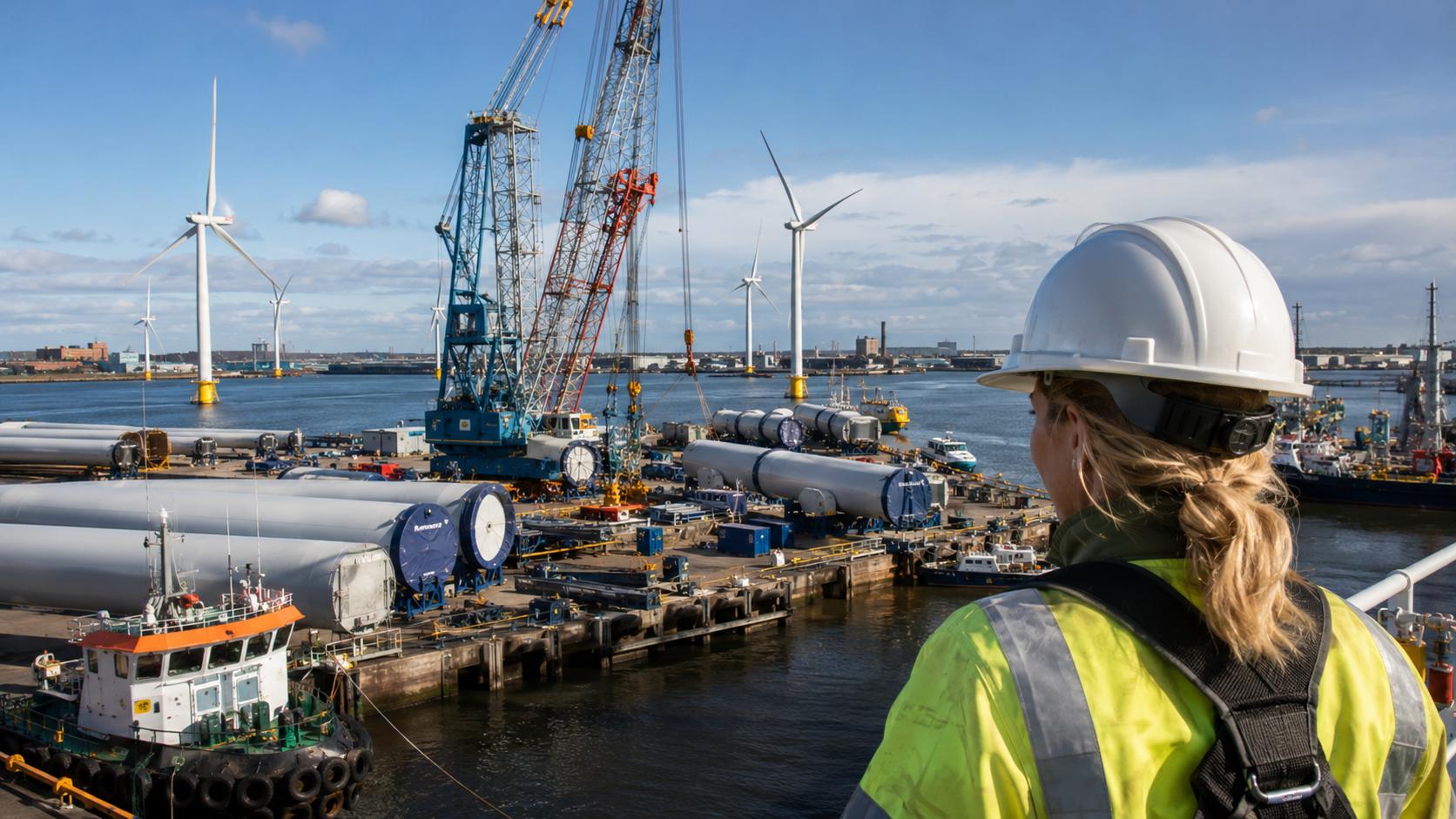
The region now hosts operations bases, manufacturing plants and research facilities serving wind farms in the North Sea, and the supply chain runs from Blyth in the north to the Tees in the south.
Here is what is where.
Dogger Bank is operated from the Tyne.
Dogger Bank Wind Farm, located over 130km off the north east coast, has been developed in phases and is among the largest offshore wind projects in the world.
Its operations and maintenance base is at the Port of Tyne in South Shields, from which technicians and vessels service the turbines across the project's operational lifetime.
That distinction matters economically. Construction work is temporary; an operations base generates skilled employment for decades, since the turbines require maintenance throughout their working life.
The base includes offices, warehousing and facilities for the service operation vessels that carry technicians offshore for extended periods.
Blyth has become an energy cluster.
Blyth's position in offshore wind predates most of the current activity. The first offshore wind turbines in UK waters were installed off the town at the turn of the century.
The Offshore Renewable Energy Catapult operates its National Renewable Energy Centre at Blyth, including test facilities capable of assessing full-scale blades and drive trains, used by manufacturers and developers from across the sector.
The Energy Central initiative has developed the wider site as a cluster combining industry, research and training, including a learning hub aimed at building the regional skills pipeline.
The Port of Blyth has invested substantially in facilities serving offshore energy, and its handling capacity for project cargo has grown accordingly.
Cable manufacturing arrived at Cambois.
JDR Cable Systems opened a subsea cable manufacturing facility at Cambois, near Blyth, producing high-voltage cables for offshore wind projects.
Subsea cabling is a significant bottleneck in offshore wind delivery internationally, and domestic manufacturing capacity reduces reliance on imported product and long lead times.
The facility represented one of the largest single manufacturing investments in Northumberland in recent years, on a site adjacent to the former Blyth power station.
Wallsend builds the structures.
Smulders operates at the Neptune Energy Park in Wallsend, on the north bank of the Tyne, fabricating transition pieces and structural components for offshore wind.
The site occupies land with a long shipbuilding heritage, and the transferability of those skills — heavy fabrication, welding, marine engineering — is a substantial part of why the region has attracted this work.
The Tyne's deep water and existing quayside infrastructure allow large components to be moved directly from fabrication to vessel, which is a genuine competitive advantage over inland sites.
Teesside manufactures monopiles.
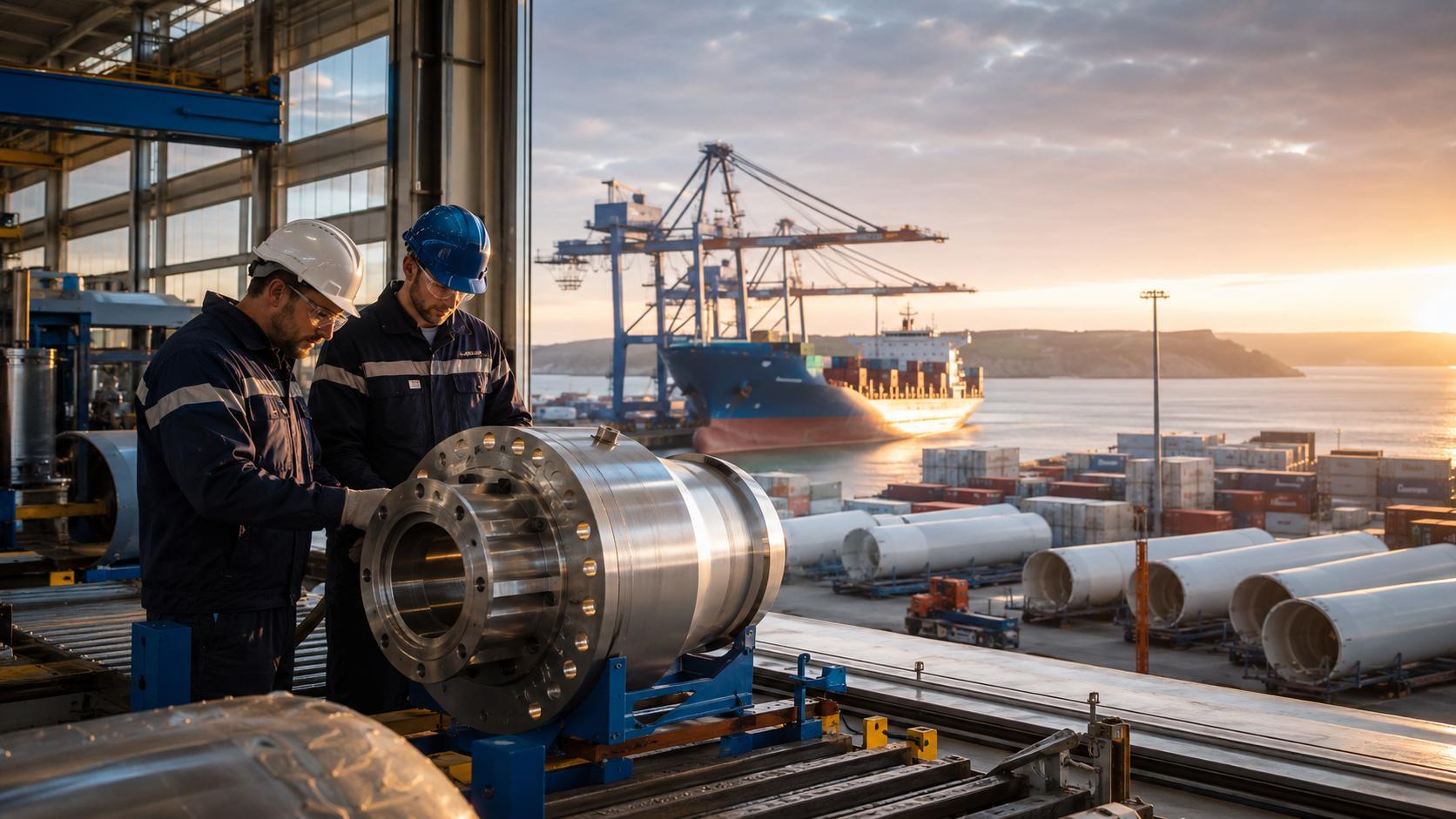
SeAH Wind's facility at Teesworks, on the site of the former Redcar steelworks, manufactures monopiles, the large steel foundations driven into the seabed to support offshore turbines.
The plant is among the largest of its kind and required a purpose-built quay to handle components measuring many tens of metres.
Its location on a former steelmaking site is the clearest single illustration of the region's industrial transition, and Teesworks more widely has been positioned around offshore wind, hydrogen and carbon capture.
The skills question is central.
The sector requires welders, fabricators, electrical technicians, marine crew, project managers and engineers, and demand has consistently outstripped local supply in several trades.
Colleges across the region have developed provision aimed at the sector, and the combined authority holds devolved responsibility for adult education budgets which can be directed towards identified skills gaps.
Offshore wind technician training, including working at height and sea survival, is delivered at several regional centres, and apprenticeship routes into the sector have expanded.
Supply chain opportunities extend beyond the headline plants.
Large manufacturers attract a wider network of suppliers: engineering services, logistics, inspection, coatings, catering, accommodation and marine support.
The North East England Chamber of Commerce and sector bodies run supplier engagement events, and developers publish supply chain requirements ahead of major projects.
For smaller regional firms, the practical route in is generally through tier-one contractors rather than directly to developers, and meeting the required accreditations is usually the first hurdle.
Newcastle firms serve the sector too.
Much of the visible manufacturing sits at Blyth, Wallsend and on the Tees, but a considerable amount of the professional work supporting it is done in Newcastle.
Engineering consultancies, marine survey firms, legal and insurance practices and project management businesses based in the city and along the Tyne serve offshore wind clients across the North Sea.
Newcastle University's research in marine technology, subsea engineering and energy systems also feeds into the sector, and the city's port and river access remain central to how components move.
The risks are real.
Offshore wind development depends heavily on government auction rounds, grid connection availability and global commodity prices, all of which have caused project delays and cancellations elsewhere in recent years.
Manufacturing investment of this kind is long-term and capital-intensive, and it is exposed to changes in policy and market conditions.
The region's exposure is therefore substantial, which is why sector bodies argue consistently for stable long-term policy rather than short-term intervention.
Share your thoughts.
Do you think offshore wind can replace what heavy industry provided in the region?
Business News
The North East's Offshore Wind Supply Chain
From Blyth to Wallsend to the Tees, the region has built a manufacturing and operations base around offshore wind on the sites of its old industries.
Advertisement



Comments (0)
You must be logged in to post comments.
Don't have an account? Register here
No comments yet. Be the first to share your thoughts!