
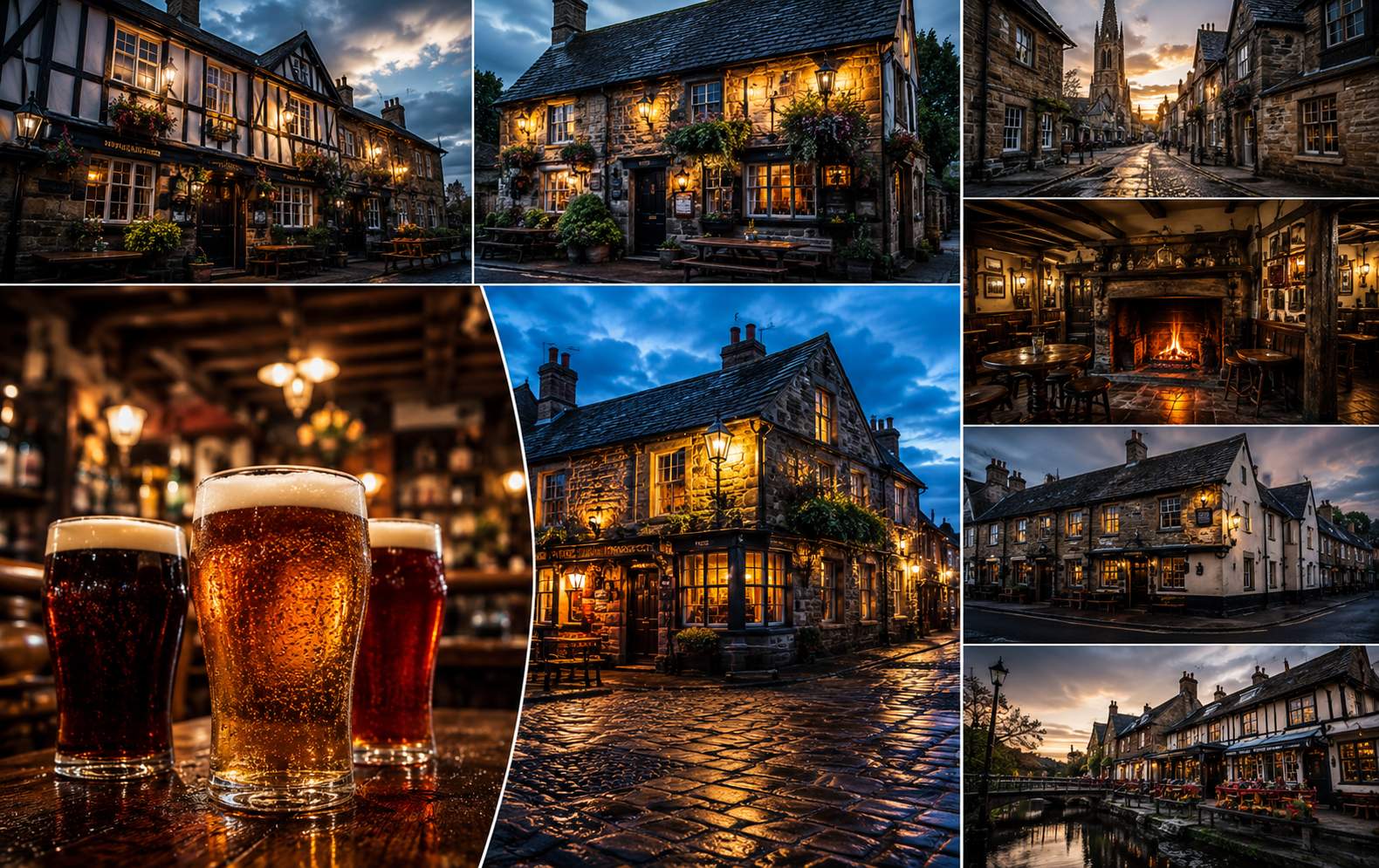
The North East is famous for its castles, coastline and industrial heritage, but hidden between bustling city streets, market towns and rural villages is another part of the region's story - its historic pubs.
Many of these inns have stood for hundreds of years, surviving civil wars, industrial revolutions, economic downturns and changing drinking habits. Some began life as coaching inns for weary travellers. Others welcomed miners, merchants, railway workers and even royalty through their doors.
Today, these pubs offer far more than a pint. They provide a living connection to the region's past, attracting visitors who want to experience authentic North East history while enjoying traditional hospitality.
For anyone planning the ultimate North East pub crawl, these historic inns are worth travelling for.
Why Historic Pubs Remain So Popular.
Despite challenges facing the hospitality industry, Britain's love affair with historic pubs continues.
Historic England describes pubs as some of the country's most important social spaces, highlighting their cultural significance and role in preserving local heritage.
CAMRA's National Inventory of Historic Pub Interiors also identifies hundreds of pubs across Britain that retain original features of national importance, demonstrating growing public interest in preserving traditional pub culture.
Yet these venues face increasing pressure. Recent industry figures revealed that hundreds of pubs across England and Wales permanently closed during 2025, underlining the importance of supporting historic venues that remain open.
The Crown Posada, Newcastle Upon Tyne.
Often described as one of Newcastle's most beautiful pubs, The Crown Posada dates back to 1888 and remains one of the city's most beloved drinking establishments.
Its original stained glass, Victorian wooden fittings and historic interior have survived remarkably intact. Walking inside feels like stepping into another era. The pub's narrow layout, traditional snugs and antique décor create an atmosphere that modern venues struggle to replicate.
Located close to the Quayside, it has become a must-visit stop for both tourists and local ale enthusiasts.
The Bridge Tavern, Newcastle Upon Tyne.
Situated beneath the Tyne Bridge, The Bridge Tavern occupies a site with a long history linked to Newcastle's river trade.
The building itself dates back centuries and has served various purposes over time, including as a merchant's house. Today it combines historic character with modern brewing, producing its own beers while maintaining many original architectural features.
Its location beside one of Britain's most recognisable bridges only adds to its appeal.
The Old George Inn, Newcastle Upon Tyne.
Claiming origins dating back to the sixteenth century, The Old George Inn is often considered Newcastle's oldest pub.
Throughout its long history it has welcomed travellers, merchants and generations of local residents. The timber-framed structure and historic courtyard provide a rare glimpse into how Newcastle appeared long before modern development transformed the city.
Its age alone makes it one of the most significant pubs in the region.
The Turk's Head, Newcastle Upon Tyne.
Located within Newcastle's historic Bigg Market, The Turk's Head occupies one of the oldest surviving pub sites in the city centre.
The venue has undergone changes over the centuries, but it continues to reflect the character of Newcastle's traditional drinking culture. The surrounding area once formed part of the city's medieval commercial district, making it an important location in Newcastle's social history.
The Black Bull, Corbridge.
The picturesque village of Corbridge is packed with Roman and medieval history, and The Black Bull remains one of its standout pubs.
Parts of the building date back hundreds of years and the inn has long served visitors travelling through Northumberland. Its stone walls, low ceilings and traditional fireplaces make it a favourite among visitors seeking a classic countryside pub experience.
Located near Hadrian's Wall, it also attracts tourists exploring one of Britain's most important Roman sites.
The Angel Of Corbridge, Corbridge.
Another historic gem in Corbridge, The Angel has welcomed guests for centuries.
Originally operating as a coaching inn, it provided accommodation and refreshment for travellers moving between Newcastle and Carlisle. Many original features remain intact, helping preserve the building's historic atmosphere.
Its combination of history, architecture and location has made it one of Northumberland's most photographed inns.
The Red Lion, Newbrough.
Dating back to the 1190s according to local historical records, The Red Lion in Newbrough is believed to be one of the oldest continuously operating inns in the North East.
Originally serving travellers crossing Northumberland, the inn retains many original features including exposed stonework and traditional fireplaces.
Few pubs in the region can claim a history stretching back more than 800 years.
The Olde Ship Inn, Seahouses.
Located near the Northumberland coast, The Olde Ship Inn has been welcoming visitors for centuries.
Its maritime connections are central to its story. Fishermen, sailors and traders regularly visited the inn during the height of Northumberland's coastal industries. Today it remains a popular stop for visitors exploring the Farne Islands and Bamburgh Castle.
Its location near the harbour gives it a character that feels distinctly different from inland pubs.
The Cleveland Bay, Eaglescliffe.
While technically located in Teesside, The Cleveland Bay holds a unique place in British pub history.
Historic England recently recognised it as the world's first purpose-built railway pub, constructed alongside the Stockton and Darlington Railway during the early nineteenth century.
The pub remains largely unchanged and offers a fascinating insight into the birth of Britain's railway age.
For history enthusiasts, it represents one of the most significant drinking establishments in the country.
The Dun Cow, Durham.
Few pubs can match the atmosphere of Durham's historic city centre, and The Dun Cow is among its oldest and most famous inns.
Located near Durham Cathedral, the pub has welcomed visitors for generations. Its traditional interior, historic architecture and location within one of England's most beautiful cities make it a favourite destination for tourists and locals alike.
Stories connected to Durham's medieval past continue to surround the building, adding to its appeal.
The Bay Horse Inn, West Rainton.
The Bay Horse Inn has been serving travellers for centuries along historic coaching routes through County Durham.
Like many traditional inns, its importance extended beyond food and drink. It acted as a meeting place, resting point and social hub for the surrounding community.
Many visitors are drawn to its authentic atmosphere and historic character that remain largely unchanged.
Why Historic Inns Offer More Than Modern Bars.
Modern bars often focus on trends, entertainment and contemporary design. Historic pubs offer something entirely different.
Visitors are drawn to original wooden beams, centuries-old stonework, hidden snugs and stories passed down through generations. Every worn floorboard and uneven wall tells part of a larger story about the region's development.
Historic England has repeatedly highlighted the importance of preserving pubs because they act as living records of local communities and changing social history.
For many visitors, the atmosphere cannot be recreated through modern design alone.
The Economic Importance Of Historic Pubs.
Historic pubs also play an important role in local tourism.
Across the North East, visitors regularly include traditional pubs as part of wider trips involving castles, heritage sites, walking routes and coastal attractions.
Tourism experts increasingly recognise that authentic local experiences help attract visitors seeking something more memorable than chain restaurants or generic city centre venues.
As more travellers search for unique destinations, historic pubs continue to benefit from growing interest in cultural tourism and British heritage.
Why The Great North East Pub Crawl Is Worth Experiencing.
The North East possesses one of the richest pub histories in Britain.
From medieval coaching inns and Roman-era villages to railway landmarks and Victorian ale houses, the region offers an extraordinary variety of historic drinking establishments within relatively short travelling distances.
Each pub tells a different story. Some are linked to industrial history. Others preserve centuries of architecture. A few have become famous because of the people who passed through their doors.
Together they create a pub crawl unlike any other in the UK.
For anyone interested in history, architecture, local culture or simply finding a great place to enjoy a pint, the Great North East Pub Crawl offers a journey through centuries of regional life that few other experiences can match.
Which historic North East pub is your favourite, and are there any hidden gems we should add to the list?
Food & Drink News
The Oldest And Most Fascinating Pubs Across North East England
Advertisement




Comments (0)
You must be logged in to post comments.
Don't have an account? Register here
No comments yet. Be the first to share your thoughts!