
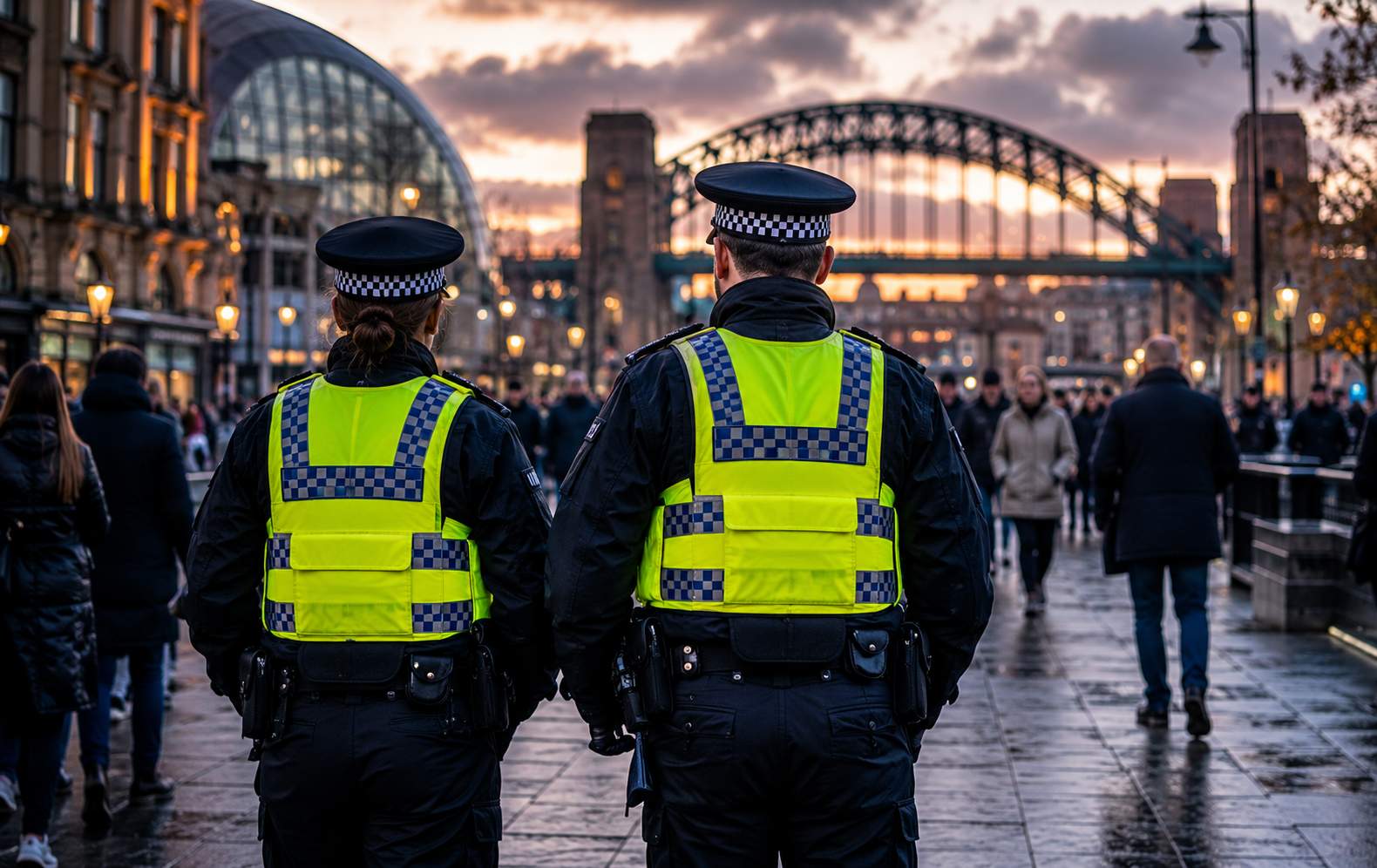
Across Newcastle and the wider North East, neighbourhood policing teams remain one of the most visible parts of modern policing. They patrol communities, respond to local concerns, tackle anti-social behaviour and often serve as the direct link between residents and Northumbria Police.
Yet despite repeated government promises to strengthen community policing, many residents continue to ask the same question: are neighbourhood policing teams actually working?
The issue has become increasingly important as concerns around anti-social behaviour, shoplifting, youth crime, drug activity and public confidence in policing continue to dominate local discussions.
Recent government investment has brought renewed attention to neighbourhood policing, with Northumbria Police set to receive additional officers and funding. However, statistics relating to crime detection, police visibility and community confidence suggest the picture is far more complicated than simply increasing numbers.
What Are Neighbourhood Policing Teams?
Neighbourhood Policing Teams, often referred to as NPTs, are designed to provide a visible police presence within local communities.
Unlike response officers who are primarily dispatched to emergency incidents, neighbourhood officers focus on long-term community issues. Their responsibilities include tackling anti-social behaviour, working with schools, supporting local businesses, engaging with residents and identifying crime hotspots.
Police Community Support Officers, commonly known as PCSOs, also play a major role in neighbourhood policing by providing reassurance patrols and maintaining community relationships.
The idea behind neighbourhood policing is relatively straightforward. The more officers become familiar with their local communities, the easier it becomes to identify repeat offenders, prevent crime and build public trust.
Why Neighbourhood Policing Became a National Issue.
Over the last decade, neighbourhood policing has repeatedly become a political battleground.
Critics argue that reductions in officer numbers and budget pressures weakened community policing across England and Wales, reducing the visible presence many residents had previously associated with local policing.
In response, the Government launched its Neighbourhood Policing Guarantee, a national programme designed to strengthen community policing and improve public confidence. The scheme aims to increase visible patrols, provide named local officers and focus on anti-social behaviour and crime prevention.
Forces across the country have received additional funding to support recruitment and restore neighbourhood policing capacity.
Northumbria Police Set for Major Recruitment Boost.
Northumbria Police has become one of the most prominent examples of this renewed investment.
Under funding allocations linked to neighbourhood policing expansion, the force is expected to recruit an additional 95 police officers, 27 PCSOs and 30 Special Constables.
The force has also announced plans to become the first in the country to offer a specialist direct-entry route into neighbourhood policing roles, allowing recruits to focus on community policing from the beginning of their careers.
Supporters argue that this approach could help create officers with stronger local knowledge and deeper community relationships.
For Newcastle residents who regularly raise concerns about anti-social behaviour, street crime and public disorder, the additional officers are likely to be welcomed.
How Much Does Policing Cost?
Policing remains one of the largest areas of public spending.
According to the Northumbria Police and Crime Commissioner's annual report, Northumbria Police received approximately £378 million in funding during 2024-25 to support crime fighting and public safety across the force area.
Meanwhile, neighbourhood policing expansion funding has provided Northumbria Police with more than £6 million to support additional officers, PCSOs and Special Constables.
The investment reflects growing political recognition that visible policing remains one of the public's top priorities.
However, funding alone does not automatically translate into improved outcomes.
Are Crimes Actually Being Solved?
One of the biggest criticisms facing modern policing is not necessarily crime levels themselves, but detection rates.
Nationally, concerns have grown over the number of criminal investigations that end without a suspect being identified.
Home Office figures referenced earlier this year showed more than 2.2 million criminal investigations across England and Wales were closed without a suspect being identified during part of 2024, equating to over 40 per cent of cases.
Separate national analysis found that many violent and sexual offences across England and Wales remain unsolved, with some neighbourhoods recording extremely low charge or caution rates.
While these figures are not specific to Newcastle, they contribute to wider public concerns about police effectiveness and resource pressures.
Residents often judge policing not by recruitment announcements but by whether crimes are solved and offenders are held accountable.
The Importance of Police Visibility.
Ask many Newcastle residents what they want from policing and the answer is often simple: visibility.
Neighbourhood policing has traditionally been associated with officers walking local streets, speaking with residents and maintaining a visible presence in communities.
Research repeatedly suggests that public confidence increases when residents regularly see local officers.
The Government's Neighbourhood Policing Guarantee specifically highlights visible patrols as a key objective.
However, police leaders across the country have acknowledged that neighbourhood officers are often diverted to cover emergency response duties due to wider operational pressures. National policing assessments have identified this as an ongoing challenge affecting forces across England and Wales.
This means that even where neighbourhood teams exist, residents may not always experience the consistent presence they expect.
Anti-Social Behaviour Remains a Key Concern.
Across Newcastle, Gateshead, Sunderland and other North East communities, anti-social behaviour remains one of the most common concerns raised by residents.
Issues such as nuisance motorbikes, public disorder, vandalism, shoplifting, street drinking and youth-related disturbances frequently dominate local policing priorities.
Neighbourhood teams are often at the centre of efforts to tackle these problems because they work closely with councils, housing providers, schools and community organisations.
Police and Crime Panel reports have highlighted the role neighbourhood teams play in identifying repeat offenders, targeting retail crime and supporting preventative enforcement measures.
Supporters argue that this preventative work often goes unnoticed because successful interventions stop incidents from escalating before they become major crimes.
What Do Residents Think?
Public confidence remains one of the most difficult aspects of policing to measure.
Crime statistics provide one perspective, but public perception is shaped by personal experiences, media coverage and visibility.
For some Newcastle residents, neighbourhood officers remain highly valued local figures who understand community concerns and provide reassurance.
Others argue they rarely see officers patrolling and feel disconnected from local policing.
The challenge for Northumbria Police is balancing complex investigations, emergency response demands and community engagement within finite budgets.
Neighbourhood policing sits at the centre of that balancing act.
Why Newcastle and the North East Matter.
The North East presents unique policing challenges.
The region contains major urban centres, coastal communities, rural areas and significant transport networks, all requiring different policing approaches.
Newcastle city centre alone experiences issues ranging from nightlife-related incidents and shoplifting to organised crime and anti-social behaviour.
Neighbourhood teams are often expected to address local problems while also contributing to broader force priorities.
This makes measuring effectiveness particularly difficult because success may involve preventing crimes that never appear in official statistics.
So, Are Neighbourhood Police Teams Working?
The answer depends largely on how success is defined.
If success means maintaining visible local relationships, tackling anti-social behaviour and improving community engagement, many policing experts argue neighbourhood teams remain essential.
If success is measured purely by crime detection rates and prosecutions, public concerns remain more significant.
What is clear is that neighbourhood policing continues to receive political and financial backing because policymakers believe visible local policing remains central to public confidence.
With additional officers now being recruited across Northumbria, the coming years may provide a clearer indication of whether renewed investment can deliver the results communities across Newcastle and the North East are demanding.
For now, neighbourhood policing remains one of the most important, debated and closely watched parts of modern law enforcement.
Do you regularly see neighbourhood police officers in your area of Newcastle or the North East?
Local News
The Reality of Community Policing Across Newcastle and the North East
Advertisement




Comments (0)
You must be logged in to post comments.
Don't have an account? Register here
No comments yet. Be the first to share your thoughts!