
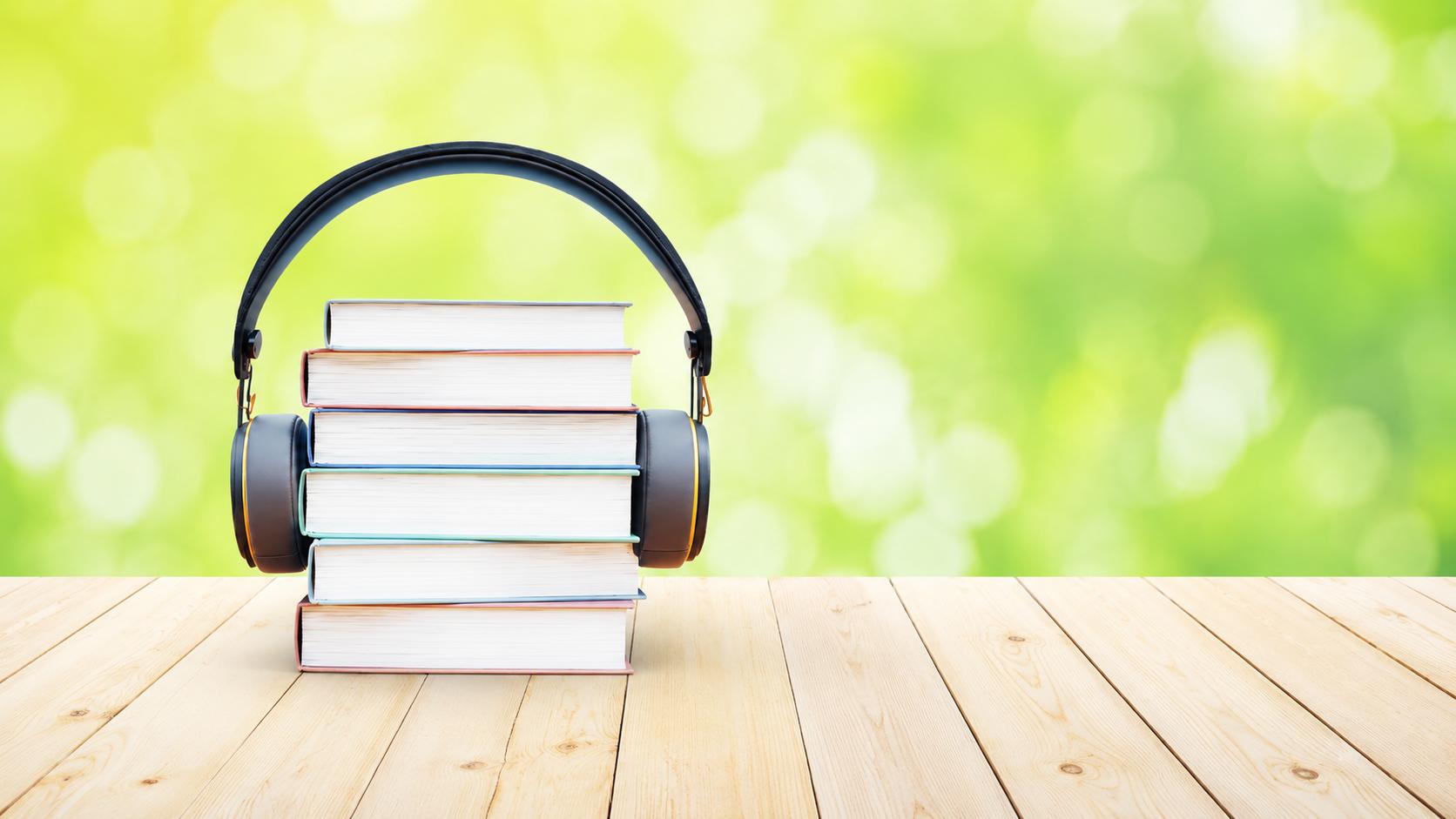
Audiobooks have moved from a niche format to one of the most significant growth areas in publishing. They are listened to on commutes, during housework, at the gym and in bed with the lights off.
They also generate one of the more persistent arguments in reading culture: whether listening to a book counts as having read it.
Here is where the format came from and why it has grown so quickly.
It began as accessibility.
The origins lie in provision for blind and partially sighted readers. Talking book services were established in Britain and the United States in the 1930s, recording full-length books onto gramophone records for readers who could not use print.
The RNIB Talking Book service, launched in the mid-1930s, was among the pioneers, and similar programmes developed internationally.
For several decades, spoken-word books existed almost entirely within that context, funded charitably and distributed by post.
Cassettes opened it up.
The compact cassette made spoken-word recordings genuinely portable, and commercial audiobook publishing began to develop from the 1970s and 1980s.
Libraries stocked them, motorway service stations sold them, and long-distance drivers became a core market. The format's association with car journeys dates from this period and persists.
Abridgement was standard, since a full-length novel required an unwieldy number of cassettes. Books were routinely cut to fit, which purists disliked and publishers regarded as commercial necessity.
Digital removed the constraints.
Downloadable audio changed everything. Length ceased to matter, and unabridged recordings became the norm rather than the exception.
Audible, founded in the mid-1990s and later acquired by Amazon, built the dominant subscription model, and the arrival of smartphones removed the last barrier by putting an entire library in a pocket.
Growth since has been substantial and sustained, with audio consistently reported as the fastest-growing publishing format in the UK and elsewhere over recent years.
Narration is the whole craft.
A good narrator does far more than read aloud. Pacing, characterisation, accent work and restraint all shape the experience, and a poor performance can make an excellent book unlistenable.
Audiobook narration has become a recognised profession with its own awards, and certain narrators have devoted followings who choose titles by who reads them.
Author-narrated books have become common, particularly for memoir, where hearing the writer's own voice adds something a professional reading cannot.
Multi-cast productions with full sound design have blurred the line between audiobook and radio drama, and some publishers now commission audio-first works with no print edition at all.
The listening argument will not go away.
The objection is familiar: listening is passive, reading is active, and the two are not equivalent.
Research on comprehension has generally found broadly similar outcomes between reading and listening for narrative material, though attention and retention vary with context. Listening while driving or doing chores is genuinely more divided than sitting with a book.
The accessibility argument is the strongest counter. For people with visual impairment, dyslexia, chronic illness or conditions affecting concentration, audio is not a shortcut but the route into books at all.
Most sensible positions land somewhere in the middle: the formats are different experiences of the same work, and treating one as illegitimate helps nobody.
It suits particular kinds of book.
Memoir, narrative non-fiction, comedy and character-led fiction generally work outstandingly well in audio.
Books relying on diagrams, footnotes, complex tables or on the reader flipping back to check something are harder. Dense academic work is rarely a comfortable listen.
Poetry divides opinion. Some argue it was made to be heard; others find they need the shape on the page.
Libraries have kept up.
Public library services offer free audiobook borrowing through apps, using the same membership as physical borrowing.
That provision matters, since subscription costs and individual title prices put substantial audio libraries out of reach for many households.
Library apps have become one of the better-value cultural services available, and usage has grown considerably as awareness has spread.
Podcasts blurred the boundary.
The growth of narrative podcasting has made extended listening a normal habit for millions of people who had never considered an audiobook.
Serialised non-fiction, in particular, sits somewhere between the two forms, and publishers have responded by commissioning audio series that would once have been books.
That crossover has widened the audience considerably, and a substantial proportion of new audiobook listeners report arriving through podcasts rather than through print reading.
The market keeps expanding.
Publishers now treat audio as a primary format rather than an afterthought, budgeting for it at acquisition and considering audio potential when commissioning.
Artificial narration using synthesised voices has begun appearing for some titles, which has prompted significant concern among professional narrators about future employment and about quality.
That debate is live and unresolved, and it mirrors similar arguments across the creative industries.
For listeners, the practical position is straightforward. There has never been more choice, and the barrier to trying the format has never been lower.
Share your thoughts.
Does listening to a book still count as reading it?
Entertainment News
The Rise of the Audiobook
Audiobooks began as a service for blind readers and have become one of publishing's fastest growing formats, along with a persistent argument about whether listening counts.
Advertisement

Comments (0)
You must be logged in to post comments.
Don't have an account? Register here
No comments yet. Be the first to share your thoughts!