
Walk into almost any supermarket in Newcastle and you will find apples, bananas, oranges and grapes stacked neatly on shelves. Yet beyond the familiar produce aisle exists a world of extraordinary fruits that many people have never seen, let alone tasted.
Some grow only in specific climates. Others spoil so quickly that exporting them becomes difficult. A few are so unusual that they seem more at home in a fantasy novel than a fruit bowl.
As global food trends continue to introduce new flavours to Britain, curiosity about exotic fruits is rising. The global exotic fruit market is now worth billions of pounds and continues to grow as consumers seek new culinary experiences.
But just how rare are these fruits, and how many people have actually tried them? While no definitive global survey exists, food industry data, production figures and international distribution patterns allow us to make reasonable estimates.
Here are seven of the world's most fascinating rare fruits.
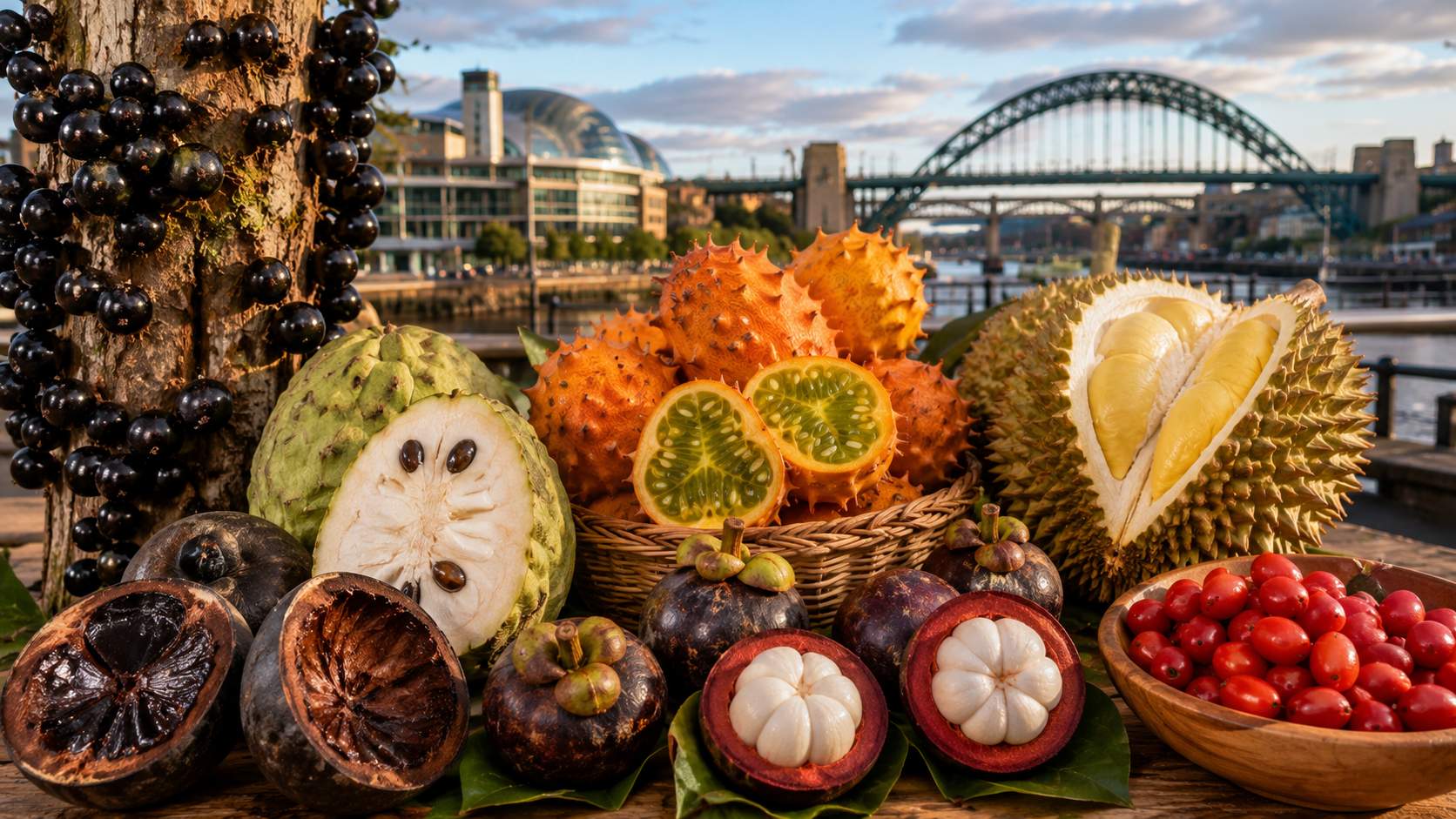
Jaboticaba grows directly from the trunk.
If you have never heard of jaboticaba, you are not alone.
Native to Brazil, jaboticaba looks unlike almost any other fruit tree on Earth. Rather than growing from branches, the dark purple fruits emerge directly from the trunk and main limbs, creating an appearance that often leaves first-time viewers convinced the images have been digitally altered.
The fruit has a sweet, grape-like flavour with floral notes and is commonly used in jams, wines and liqueurs throughout South America.
One reason jaboticaba remains rare internationally is its extremely short shelf life. The fruit begins deteriorating within days of harvest, making export difficult.
Estimated global tasting rate:
Approximately 8 out of every 500 people worldwide may have tried jaboticaba.
Outside Brazil and neighbouring countries, it remains largely unknown, although specialist growers are beginning to introduce it to collectors in Europe.
For adventurous food lovers in Newcastle, finding fresh jaboticaba remains challenging, though occasional specialty importers have begun offering frozen or processed versions.
Cherimoya was once called nature's masterpiece.
The cherimoya has one of the most impressive reputations in the fruit world.
Mark Twain famously described it as "the most delicious fruit known to men", while botanists have referred to it as a masterpiece of nature.
Originally cultivated in Central and South America, cherimoya combines flavours often compared to banana, pineapple, strawberry and vanilla custard.
Its creamy texture has earned it another nickname: the custard apple.
Despite growing in multiple countries today, cherimoya remains relatively uncommon in UK supermarkets due to transport challenges and limited demand compared with mainstream fruits.
Estimated global tasting rate:
Around 15 out of every 500 people worldwide may have tasted cherimoya.
The figure is higher than some fruits on this list because cherimoya is cultivated across parts of Spain, South America, California and Asia.
Kiwano looks like an alien fruit.
The kiwano may be the most visually striking fruit in the world.
Also known as the horned melon, it features a bright orange skin covered with sharp spikes. Inside, a vivid green jelly-like flesh contains edible seeds.
Native to Africa, the fruit has been commercialised in countries including New Zealand and Australia. Its flavour is often described as a mixture of cucumber, kiwi and banana.
Although kiwano occasionally appears in premium supermarkets, most consumers have never encountered it.
Its unusual appearance often attracts attention on social media, where many people assume it has been genetically modified.
Estimated global tasting rate:
Approximately 12 out of every 500 people worldwide have likely eaten kiwano.
The fruit's increasing presence in specialty food markets has helped improve awareness in recent years.
Black sapote is known as the chocolate pudding fruit.
Black sapote has become increasingly popular among health-conscious food enthusiasts.
Native to Central America, the fruit develops dark flesh that resembles chocolate pudding when fully ripe.
Surprisingly, it contains no chocolate whatsoever.
The flavour combines notes of cocoa, caramel and sweet pear, making it popular in vegan desserts and healthy recipes.
Because black sapote bruises easily and requires careful handling, international distribution remains limited.
As a result, many people outside tropical growing regions have never encountered it.
Estimated global tasting rate:
Around 7 out of every 500 people worldwide may have tried black sapote.
Its growing popularity among food influencers and nutrition enthusiasts is helping increase awareness, but it remains relatively obscure.
Mangosteen is often called the queen of fruits.
If durian is known as the king of fruits, mangosteen is frequently referred to as the queen.
Native to Southeast Asia, mangosteen features a thick purple shell surrounding soft white segments with a sweet and slightly tangy flavour.
Many fruit experts regard it as one of the finest tasting fruits on Earth.
Yet despite its reputation, mangosteen remains relatively rare in Western markets due to its short season and transportation challenges.
Thailand remains one of the world's leading producers, generating tens of thousands of tonnes annually.
Estimated global tasting rate:
Approximately 35 out of every 500 people worldwide have tasted mangosteen.
This higher figure reflects its widespread popularity throughout Southeast Asia, where hundreds of millions of people have access to the fruit.
Durian divides opinion like no other fruit.
No fruit generates stronger reactions than durian.
Known throughout Asia as the king of fruits, durian is famous for its powerful aroma. Some people describe the smell as resembling onions, cheese and fuel combined, while others consider it irresistible.
Despite the polarising scent, the creamy flesh has developed an almost cult-like following among enthusiasts.
Durian production is enormous. Thailand alone is expected to produce around 1.6 million tonnes annually, and the fruit represents one of Southeast Asia's most valuable agricultural exports.
More than 300 named varieties exist in Thailand and over 200 in Malaysia.
Estimated global tasting rate:
Approximately 90 out of every 500 people worldwide have likely tried durian.
While still uncommon in Europe and North America, its popularity across Southeast Asia significantly increases its global reach.
Miracle fruit can change the way food tastes.
Miracle fruit might be the closest thing nature has produced to a magic trick.
Native to West Africa, the small red berry contains a protein called miraculin. After eating the fruit, sour foods such as lemons suddenly taste remarkably sweet.
The effect can last between 30 minutes and two hours.
Scientists have studied miracle fruit for potential applications in dietary management and flavour enhancement, but it remains largely a novelty item outside specialist circles.
Because it is highly perishable and difficult to distribute commercially, fresh miracle fruit remains uncommon in many countries.
Estimated global tasting rate:
Perhaps just 3 out of every 500 people worldwide have experienced miracle fruit.
That makes it one of the rarest tasting experiences on this list.
Why exotic fruits are becoming easier to find.
While these fruits remain uncommon, global demand for exotic produce is growing rapidly.
Industry forecasts suggest the worldwide exotic fruit market could exceed $40 billion within the next decade as consumers seek new flavours and healthier food options.
Newcastle has not escaped this trend. Independent food retailers, international supermarkets and online specialty suppliers have expanded their offerings significantly over the past decade.
As a result, fruits that once seemed impossible to find in the North East are becoming increasingly accessible.
A world of flavours beyond the supermarket shelf.
Most people spend their lives eating only a tiny fraction of the fruits available globally.
From jaboticaba growing directly from tree trunks to miracle fruit transforming sour flavours into sweetness, nature continues to produce surprises that many people have never encountered.
For adventurous food lovers across Newcastle and beyond, tracking down one of these rare fruits could be more memorable than the latest restaurant opening.
After all, there are not many opportunities to taste something that fewer than a handful of people out of every 500 on Earth have ever experienced.
Have your say.
Which of these rare fruits would you be most curious to try, and have you already tasted any of them during your travels?
Food & Drink News
The World's Rarest Fruits and How Few People Have Tried Them
Advertisement

Comments (0)
You must be logged in to post comments.
Don't have an account? Register here
No comments yet. Be the first to share your thoughts!