
It is the structure that, more than any other, says home to people across the North East. Now the Tyne Bridge, the region's most beloved landmark, is undergoing the most extensive restoration in a generation, a multi-million-pound race against time to return it to its former glory in time for its hundredth birthday.
A Long-Overdue Restoration.
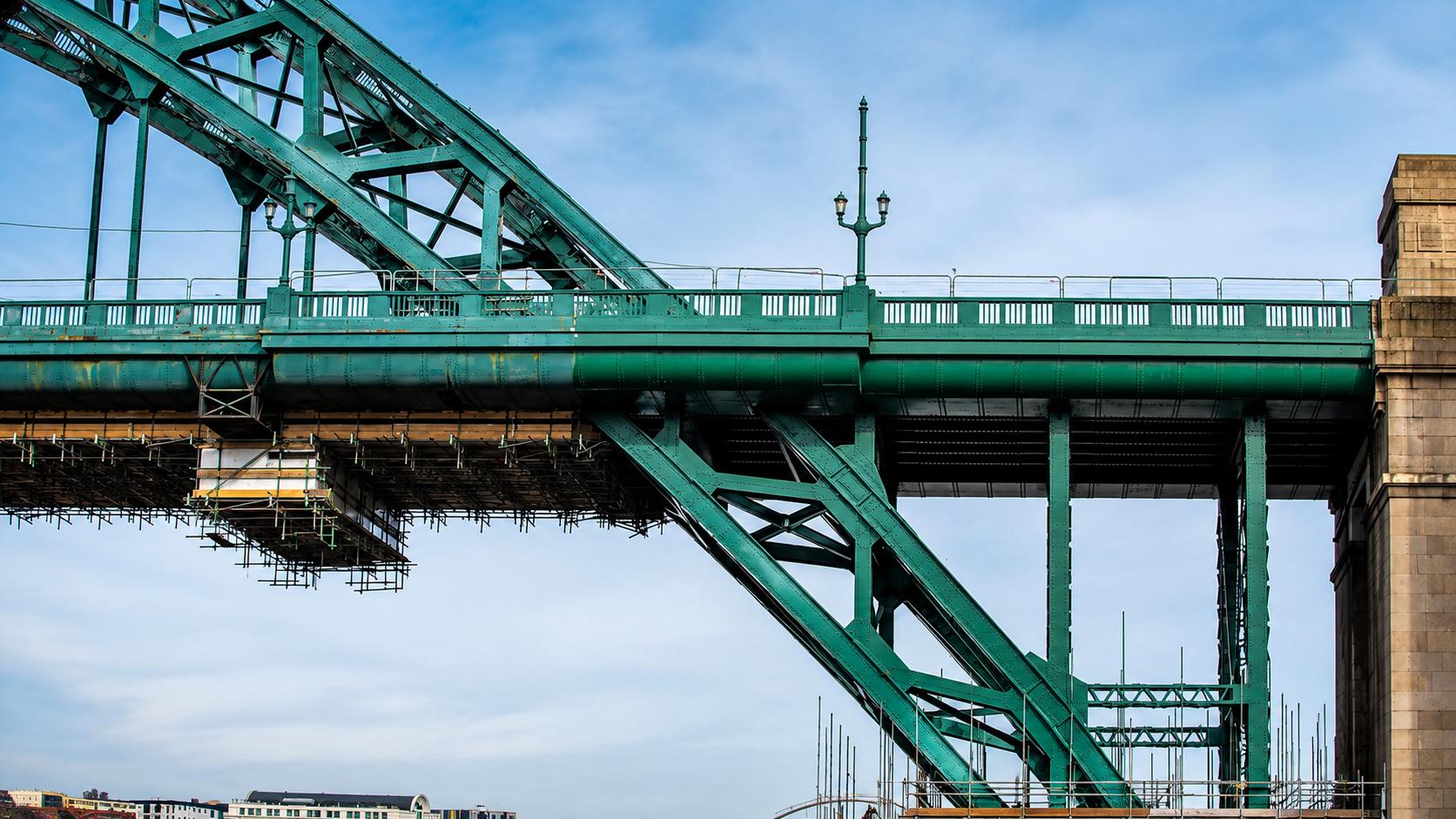
The Tyne Bridge had been crying out for attention for years. The last major restoration was carried out back in 2001, and with the protective paint system designed to last around twenty years, the famous green had faded and rust had taken hold of the Grade II* listed structure.
Decades of minor maintenance could not substitute for the major works the bridge needed, works far beyond the means of ordinary council budgets. By the time the restoration began, the bridge was overdue for the kind of comprehensive overhaul that only comes around once in a generation.
The Funding Battle.
Securing the money was a saga in itself. The full cost of restoring a structure of this scale runs to many tens of millions of pounds, well beyond what councils can find from their own stretched budgets, and the project depended on government funding that was long campaigned for.
The total funding package now stands at close to thirty-nine million pounds, made up of a large government grant, a contribution from Newcastle and Gateshead councils, and a further sum of more than six million pounds confirmed by North East Mayor Kim McGuinness. Securing that final tranche of funding was vital to keeping the project on track.
Four Years of Work.
The main restoration got under way in spring 2024, beginning a four-year programme delivered by Esh Construction on behalf of the two councils. The scale of the task is enormous, involving far more than simply a fresh coat of paint.
Engineers have been grit-blasting away almost a century of old paint back to bare steel, carrying out hundreds of repairs and replacing well over a thousand rivets, before applying a new three-coat paint system in the bridge's distinctive Hollybush Green. As the work has progressed, the number of individual repairs found to be needed has more than doubled, to well over two thousand.
More Than a Repaint.
Beyond the repainting, the bridge is undergoing wide-ranging structural repairs for the first time in more than two decades. The works include fixes to steelwork, concrete and masonry, along with improvements to waterproofing and drainage, addressing the wear of nearly a hundred years.
This is, in effect, a comprehensive overhaul designed to secure the bridge's future for decades to come. Carried out high above the river, often in confined and difficult conditions, it is painstaking and demanding work.
Racing the Centenary.
Looming over the whole project is a deadline that cannot be moved: the bridge's centenary in October 2028. The Tyne Bridge was opened in 1928, and there is a powerful determination to have it restored to its full glory in time for its hundredth birthday celebrations.
Despite the additional repairs uncovered along the way, the project has remained on schedule, with work progressing section by section across the bridge. The race to the centenary has given the restoration both urgency and a sense of occasion.
Benefits for the Region.
The restoration has been designed to deliver benefits to the local area well beyond the bridge itself. A large share of the budget, well over twenty million pounds, has been spent with North East firms, and the project is thought to have created around eighty jobs and delivered hundreds of weeks of apprenticeships.
Thousands of local students and schoolchildren have taken part in educational and careers activities linked to the project, and an auction of original bridge rivets has raised money for local charities. The government has estimated that the restoration will generate around ninety million pounds in economic benefits for the region.
A Symbol of the North East.
For all the engineering and the figures, the restoration matters most because of what the Tyne Bridge means. It is far more than a river crossing: it is the symbol of Tyneside, instantly recognisable, woven into the identity of the region and into countless personal memories, from homecomings to the famous sight of runners pouring across it during the Great North Run.
Restoring it is therefore not just a matter of maintaining infrastructure but of caring for a cherished part of the region's heritage and identity. The pride that people take in the bridge is precisely why getting its restoration right matters so much.
A Bridge to the Future.
The restoration of the Tyne Bridge is a fitting tribute to a structure that has stood at the heart of the region for almost a century, securing its future for generations to come while delivering jobs, skills and investment along the way. As the scaffolding comes down section by section and the fresh green paint is revealed, people across the region are seeing their icon restored before their eyes.
By its hundredth birthday in 2028, the Tyne Bridge should stand renewed, ready for its next century spanning the river that defines the region. For a landmark that means so much to so many, it is a restoration well worth the effort and the wait.
A Working Landmark.
What makes the restoration of the Tyne Bridge particularly demanding is that it is not a museum piece to be quietly worked on out of sight, but a vital, working part of the region's transport network that carries thousands of vehicles and pedestrians across the river every single day. Keeping the bridge open and functioning while carrying out major structural works upon it is a considerable engineering and logistical challenge, requiring the work to be carefully phased section by section so that the crossing can continue to serve the region throughout.
Teams have worked within encapsulated scaffolding high above the river, in confined and often difficult conditions, to clean, repair and repaint the structure without bringing the crossing to a halt. This balancing act, between the need to restore the bridge thoroughly and the need to keep it open and minimise disruption to the people who rely on it, has shaped the way the project has been planned and delivered.
It is a reminder that maintaining the infrastructure on which a region depends is rarely a simple matter, and that major works on a structure as important and as busy as the Tyne Bridge demand both technical skill and careful management. As the project moves from one section of the bridge to the next, from the towers to the arch to the parapets and footways, the careful choreography continues, keeping the famous crossing working even as it is comprehensively renewed.
That the restoration has been carried out with such limited disruption to a structure so central to the region's daily life is itself an achievement, and a measure of the care being taken to look after this most cherished of landmarks.
Share your thoughts.
The Tyne Bridge's near-£39m restoration is on track to be complete in time for its centenary in October 2028.
What does the Tyne Bridge mean to you?
Local News
Restoring an Icon: Inside the Tyne Bridge's Race to Its Centenary
The Tyne Bridge's near-£39m restoration is on track for its 2028 centenary. We look inside the most extensive overhaul of the region's icon in a generation.
Advertisement




Comments (0)
You must be logged in to post comments.
Don't have an account? Register here
No comments yet. Be the first to share your thoughts!