
The UK's terrorism threat level is something many people only hear about when it changes. However, behind every announcement is a sophisticated assessment process involving intelligence agencies, security experts and counter-terrorism specialists working around the clock to keep the public safe.
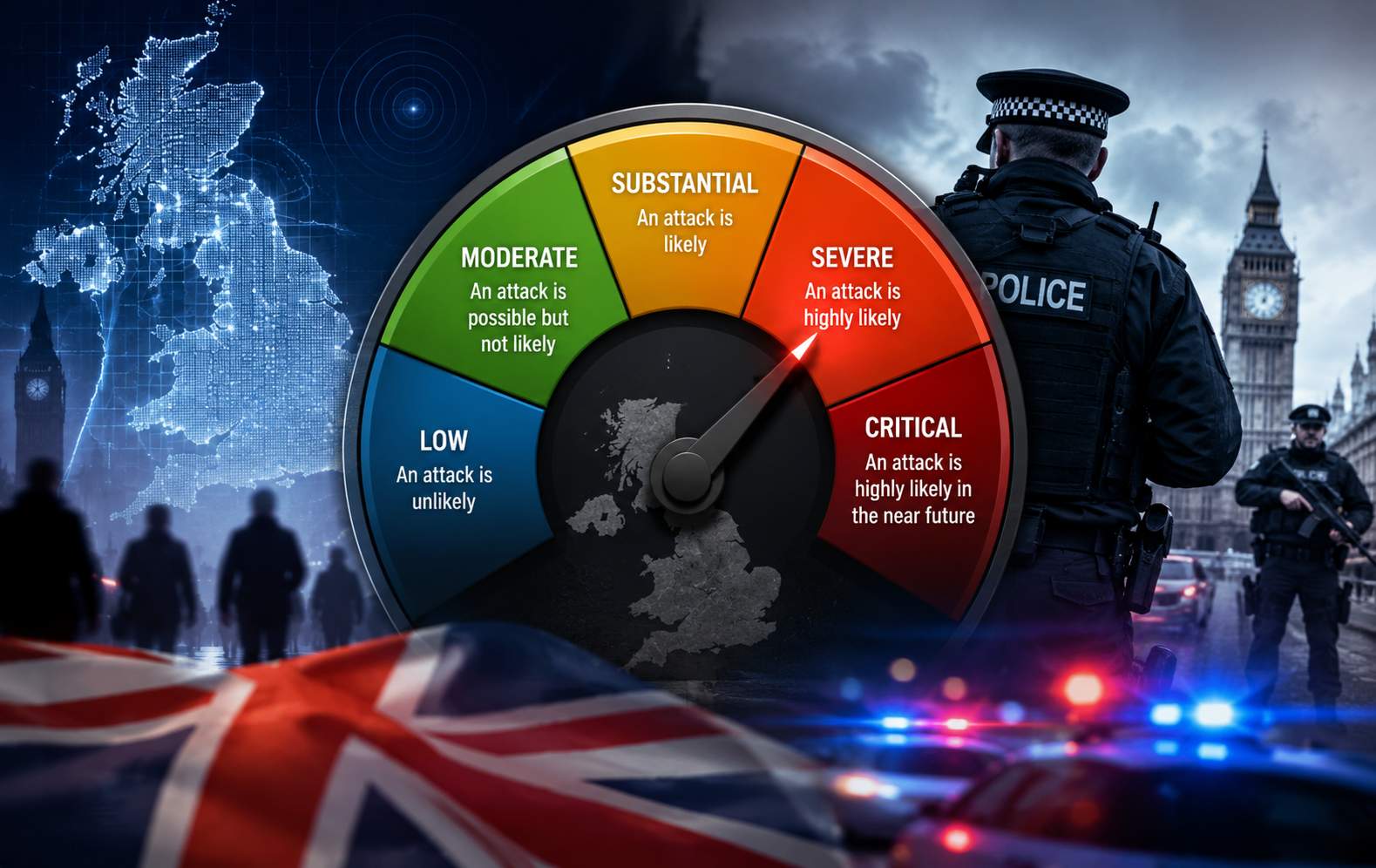
Following recent developments, the UK's national terrorism threat level remains at Severe, meaning a terrorist attack is considered highly likely. While there is no indication of an imminent attack, the assessment reflects intelligence suggesting a heightened risk across the country.
For Newcastle residents, the announcement may raise understandable questions. Does a Severe threat level mean the North East is at greater risk? Will there be more security measures at public events? And what exactly does the government's warning mean for everyday life?
Understanding how the threat level system works can help separate fact from fear while providing important context about the security challenges facing Britain today.
What Is The Current UK Terror Threat Level.
The UK currently operates under a Severe terrorism threat level, the second-highest category on the national threat scale.
The five official threat levels are:
Low - An attack is unlikely.
Moderate - An attack is possible but not likely.
Substantial - An attack is likely.
Severe - An attack is highly likely.
Critical - An attack is highly likely in the near future.
The system is designed to communicate the likelihood of a terrorist attack rather than provide a prediction about when or where one may occur.
A Severe threat level does not mean an attack is expected tomorrow. Instead, it reflects an assessment that terrorist groups or individuals have both the intent and capability to carry out attacks within the UK.
Who Decides The UK's Threat Level.
The UK's terrorism threat levels are determined by the Joint Terrorism Analysis Centre, commonly known as JTAC.
JTAC brings together intelligence and security professionals from MI5, MI6, GCHQ, Counter Terrorism Policing and other government departments. Their role is to assess intelligence from both domestic and international sources before making independent recommendations.
Importantly, threat level decisions are based on intelligence rather than politics. The assessment process is designed to ensure changes are driven by evidence and security considerations rather than public pressure or media coverage.
Threat levels can remain unchanged for months or even years before intelligence suggests a different assessment is necessary.
Why The Threat Level Was Raised.
Recent changes to the UK's threat level followed a series of intelligence assessments and security reviews.
Officials have stressed that increases are rarely linked to a single incident. Instead, they typically reflect a wider picture involving terrorist capability, extremist activity, online radicalisation and international developments.
Security services monitor thousands of individuals and organisations each year. The threat level reflects their collective assessment of current risks rather than a specific warning about a particular location.
For the public, this means remaining informed and aware while understanding that intelligence agencies are continuously working to identify and disrupt threats before attacks occur.
How Serious Is The Current Threat.
Although terrorist attacks remain relatively rare, the threat facing Britain is far from theoretical.
According to Counter Terrorism Policing and MI5, security services have disrupted 43 late-stage terrorist plots since March 2017. These were cases where investigations had progressed to a point where authorities believed intervention was necessary to prevent attacks from taking place.
Meanwhile, recent Home Office data shows hundreds of terrorism-related arrests continue to be made each year across the UK.
The figures highlight a reality often overlooked in public discussions. Many potential attacks never reach the headlines because they are prevented before they can happen.
While the public naturally focuses on successful attacks, much of the counter-terrorism effort takes place behind the scenes.
The Main Terrorism Threats Facing Britain.
Modern terrorism in Britain comes from multiple sources.
According to the government's CONTEST counter-terrorism strategy, Islamist extremism continues to represent the largest single threat category, accounting for the majority of attacks and investigations in recent years.
However, security agencies have repeatedly warned that extreme right-wing terrorism remains a significant concern.
Online radicalisation has also transformed the threat landscape. Social media platforms, encrypted messaging services and extremist content websites have created new opportunities for vulnerable individuals to be exposed to harmful ideologies.
Unlike previous decades, many investigations now involve people who have become radicalised largely through online activity rather than direct contact with organised groups.
Young People Are Increasingly Appearing In Investigations.
One of the most concerning trends identified by security services is the growing number of young people involved in terrorism-related investigations.
Recent threat assessments suggest around 13% of individuals currently being investigated by MI5 for terrorism-related concerns are under the age of 18.
Experts believe social media exposure, online propaganda and digital recruitment tactics have contributed to this shift.
As a result, authorities have increasingly focused on prevention programmes aimed at identifying vulnerable young people before extremist beliefs develop into criminal activity.
The trend has become a major concern for educators, parents and security professionals alike.
How The Terror Threat Level Affects Newcastle And The North East.
While major terrorism incidents often occur in larger cities such as London or Manchester, the UK's terrorism threat level applies equally across the entire country, including Newcastle and the wider North East.
The current Severe threat level means security services, police forces and local authorities remain vigilant regardless of location.
Residents in Newcastle may notice enhanced security measures at major venues, transport hubs and large public gatherings. Locations such as Newcastle Central Station, St James' Park, the Utilita Arena, shopping centres and major city events already operate robust security procedures, but threat level changes can result in additional reviews and precautions.
Counter Terrorism Policing North East works alongside Northumbria Police and national intelligence agencies to identify risks and respond to emerging threats. While there is currently no publicly available information indicating a specific threat to Newcastle, authorities continue to emphasise that terrorism is a national challenge rather than one confined to particular cities.
The official advice for Newcastle residents remains the same as elsewhere in the UK: stay alert, remain aware of your surroundings and report suspicious activity if something does not feel right.
What Happens During A Severe Threat Level.
For most people, daily life remains largely unchanged when the threat level is Severe.
Schools remain open, businesses continue operating and public events generally proceed as planned.
However, behind the scenes, security organisations often increase monitoring activity, intelligence gathering and protective measures.
The public may notice:
More visible police patrols.
Increased security at major venues.
Enhanced screening procedures.
Additional monitoring of crowded locations.
Greater security planning around large events.
These measures are designed to reduce vulnerabilities while reassuring the public that appropriate precautions are in place.
Lessons From Previous UK Terror Attacks.
The UK has experienced several major terrorist incidents over the past two decades, including the 7/7 London bombings, the Manchester Arena attack, Westminster Bridge, London Bridge and Parsons Green.
The Manchester Arena bombing in 2017 remains one of the deadliest attacks in modern British history, killing 22 people and injuring hundreds more.
Investigations following these incidents have helped shape the UK's modern counter-terrorism strategy, leading to improvements in intelligence sharing, venue security and emergency response planning.
Many of the security measures seen at major venues today are a direct result of lessons learned from previous attacks.
Why Public Awareness Remains Important.
Security experts consistently stress that awareness is one of the most effective tools available to the public.
Most successful counter-terrorism operations rely on intelligence gathered from multiple sources, including information provided by ordinary members of the public.
Authorities encourage people to trust their instincts and report suspicious behaviour when appropriate.
This does not mean becoming fearful or suspicious of everyday activities. Instead, it involves maintaining sensible awareness while continuing to live normal lives.
The overwhelming majority of people will never directly encounter terrorism. However, informed communities can play an important role in supporting public safety.
Understanding What The Warning Really Means.
The UK's Severe terrorism threat level is not intended to create panic. It is designed to provide transparency about the current assessment of risk while helping organisations prepare accordingly.
For Newcastle residents, the announcement serves as a reminder that national security challenges affect every part of the country, not just major metropolitan areas.
Although the threat remains serious, the extensive work carried out by intelligence agencies, police forces and security professionals continues to prevent attacks and protect communities across Britain.
The reality behind the headline is that while the risk is considered high, so too is the level of vigilance, preparedness and expertise dedicated to keeping the public safe.
Do you think enough is being done to protect Newcastle and the wider UK from terrorism?
Political News
What Happens When Britain Moves To A Severe Terror Threat Level?
Advertisement





Comments (0)
You must be logged in to post comments.
Don't have an account? Register here
No comments yet. Be the first to share your thoughts!