
For many people, the phrase “dark web” immediately brings to mind images of criminal marketplaces, hackers, secret forums, and anonymous online activity hidden far away from the normal internet most people use every day.
Over the years, films, documentaries, and news reports have helped turn the dark web into something that almost feels mythical. Stories involving illegal drugs, stolen data, cryptocurrency scams, and cybercrime have only added to the mystery surrounding it.
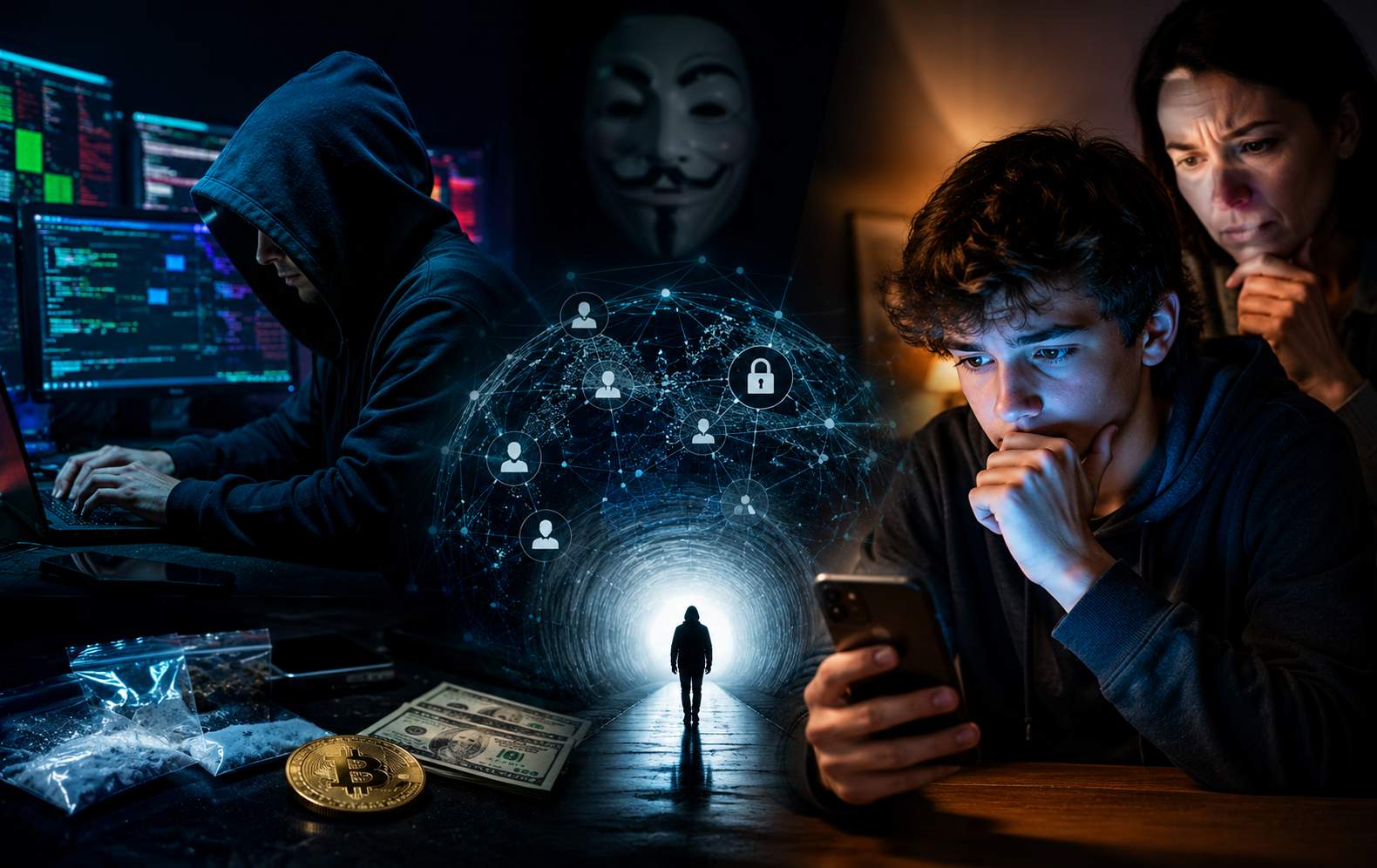
Yet despite the fear and fascination attached to the term, most people still do not fully understand what the dark web actually is, how it works, or why experts are increasingly concerned about young people becoming exposed to it.
As internet access becomes easier than ever and teenagers spend more time online across phones, tablets, gaming platforms, and social media, cybersecurity experts say conversations around the dark web are becoming more important for families and schools alike.
The dark web is not just a distant corner of the internet used by criminals. In many ways, it has become part of a wider online safety discussion involving privacy, cybersecurity, digital responsibility, and parental awareness.
What exactly is the dark web?
To understand the dark web, it helps to first understand how the internet itself is structured.
Most people use what is known as the surface web. This includes websites like Newcastle Daily, that can be found through search engines like Google, Bing, or Yahoo. News sites, social media platforms, shopping websites, and online streaming services all sit within this visible part of the internet.
Beneath that exists the deep web, which refers to online content that is not indexed by search engines. This includes things like private databases, medical records, banking systems, subscription services, and password-protected websites.
The dark web forms a small section of the deep web, but it operates differently because users typically access it through specialised software such as the Tor browser, which is designed to provide anonymity by masking user identities and locations.
That anonymity is one of the biggest reasons the dark web has become associated with criminal activity over the years.
Unlike normal websites ending in .com or .co.uk, dark web websites often use unusual domain endings such as .onion, making them inaccessible through standard browsers.
While there are legitimate uses for anonymous internet access, including protecting journalists, activists, and whistleblowers operating under oppressive governments, the dark web has also become heavily linked to illegal trade and cybercrime.
How Silk Road changed public understanding of the dark web.
No discussion about the dark web can happen without mentioning Silk Road, the infamous online black market that brought the hidden internet into mainstream public attention.
Launched in 2011 by Ross Ulbricht, Silk Road operated as an anonymous online marketplace where users could buy and sell illegal drugs using Bitcoin. The site quickly became known as the “Amazon of drugs” because of its user reviews, product listings, and surprisingly professional appearance.
At its peak, Silk Road handled millions of pounds worth of transactions and attracted users from around the world.
The marketplace became a major symbol of how cryptocurrency and anonymous browsing technology could combine to create a hidden online economy beyond the reach of traditional financial systems and law enforcement.
When the FBI shut Silk Road down in 2013 and arrested Ulbricht, the case generated global headlines and permanently changed public awareness of the dark web.
However, rather than ending dark web marketplaces entirely, the shutdown simply inspired dozens of copycat platforms that attempted to replace it.
Since then, law enforcement agencies around the world have continued targeting illegal dark web marketplaces involving drugs, stolen financial data, weapons, counterfeit documents, and cybercrime services.
Why experts worry about teenagers accessing the dark web.
One of the growing concerns surrounding the dark web is how easily curious teenagers can stumble across information about it online.
Platforms like TikTok, Reddit, YouTube, and Discord regularly feature content discussing hidden websites, hacking culture, and anonymous browsing. While much of this content is harmless curiosity or internet mythology, cybersecurity experts warn that some teenagers may underestimate the risks involved.
Many young people see the dark web as mysterious or rebellious rather than dangerous.
The reality is far more serious.
Experts warn that accessing dark web marketplaces or forums can expose teenagers to scams, disturbing content, cybercriminals, malware, identity theft, and illegal material. Even browsing without proper security knowledge can create significant risks.
Some dark web websites deliberately target inexperienced users through fake downloads, phishing scams, or malicious software designed to steal personal information.
There are also concerns around online grooming and exploitation. Anonymous environments can make it easier for dangerous individuals to target vulnerable users without revealing their real identities.
Cybersecurity researchers have repeatedly warned that curiosity alone can sometimes place young internet users in risky situations they are not prepared to handle.
The role parents play in online safety.
Experts increasingly believe that parental awareness and open communication are among the most effective ways to protect children online.
Many parents grew up before modern internet culture existed and may not fully understand how easily teenagers can access information about hidden online spaces through social media or online communities.
Cyber safety organisations often encourage parents to avoid panic-driven reactions and instead focus on education and conversation.
That means understanding the platforms children use, discussing online risks openly, and helping young people develop critical thinking skills around internet content.
Parental controls and monitoring software can help reduce exposure to harmful material, but experts say technology alone is not enough.
Teenagers are often highly tech-savvy and may still encounter discussions about hacking, anonymous browsing, cryptocurrency, or dark web culture through peers and online platforms.
The most effective approach usually involves creating an environment where children feel comfortable asking questions and discussing what they encounter online without fear of immediate punishment.
Digital literacy is now becoming just as important as traditional safety education.
The dark web is not entirely illegal.
One of the biggest misconceptions surrounding the dark web is that simply accessing it is illegal.
In most countries, including the UK and United States, using tools like the Tor browser itself is legal. Privacy advocates, journalists, researchers, and whistleblowers sometimes rely on anonymous communication tools for legitimate reasons.
The issue arises when anonymity becomes connected to illegal activity.
Law enforcement agencies continue to monitor dark web marketplaces and criminal networks closely, particularly those linked to fraud, ransomware attacks, identity theft, child exploitation, and illegal drug trafficking.
Cybersecurity experts also point out that many myths about the dark web have become exaggerated over time through social media and sensationalised online videos.
Not every hidden website contains criminal activity, and not every dark web user is involved in illegal behaviour.
However, experts still strongly advise caution because anonymity can create environments where harmful activity flourishes more easily.
Cybercrime and the business of stolen data.
Today, much of the dark web economy revolves around cybercrime rather than physical goods.
Stolen passwords, hacked accounts, leaked personal data, financial information, and ransomware tools are frequently traded within hidden online marketplaces.
Cybercriminal groups often use the dark web to sell databases containing email addresses, phone numbers, banking details, and login credentials stolen through phishing scams or hacking attacks.
This has become a major concern for businesses, governments, and ordinary internet users alike.
Data breaches involving major companies regularly result in personal information appearing for sale online within hidden marketplaces.
For everyday users, this highlights the importance of strong passwords, two-factor authentication, and basic cybersecurity awareness.
Many people still underestimate how valuable personal information can be to cybercriminals.
Why digital education matters more than ever.
As internet culture continues evolving, experts say digital education must evolve with it.
Children and teenagers today are growing up in a world where online communities, anonymous communication, cryptocurrency, artificial intelligence, and cyber threats are becoming increasingly normalised parts of digital life.
That means online safety discussions can no longer focus only on social media bullying or screen time.
Modern internet safety also involves understanding privacy, cybersecurity, scams, misinformation, online manipulation, and anonymous online spaces like the dark web.
Schools, parents, and technology companies all play a role in helping younger users navigate those challenges responsibly.
Experts say the goal should not be creating fear around technology itself, but encouraging awareness, responsibility, and informed decision-making online.
The internet remains one of the most powerful educational and communication tools ever created, but like any tool, it carries risks when used without understanding.
The dark web will likely remain part of internet culture.
More than a decade after Silk Road first shocked the world, the dark web continues to exist as one of the internet’s most controversial and misunderstood spaces.
For some, it represents privacy and freedom from surveillance. For others, it remains deeply connected to criminal activity and cyber threats.
What is clear is that awareness around the dark web is no longer limited to cybersecurity experts or law enforcement agencies.
As younger generations spend more time online and digital culture continues evolving rapidly, conversations around internet safety, anonymity, and online responsibility are becoming increasingly important for families everywhere.
The dark web may remain hidden from ordinary search engines, but its influence on discussions around cybersecurity, online safety, and digital culture is now very much out in the open.
Do you think parents and schools are doing enough to educate teenagers about online safety and the risks associated with the dark web? Share your thoughts in the comments below.
Tech News
What Parents Need to Know About the Dark Web and Online Safety
Advertisement





Comments (0)
You must be logged in to post comments.
Don't have an account? Register here
No comments yet. Be the first to share your thoughts!