
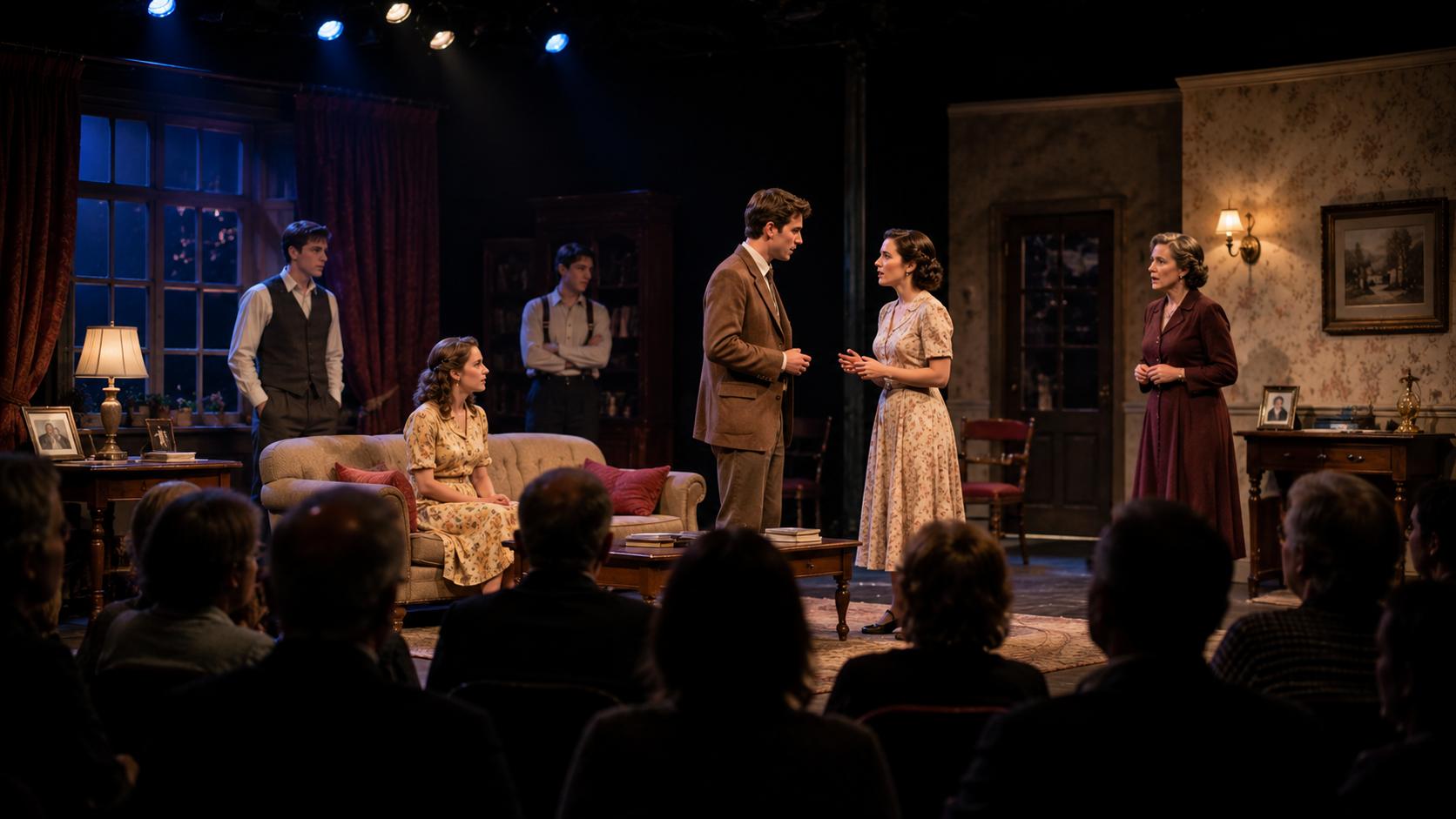
On any given week in Britain, hundreds of full theatrical productions are staged by people who will not be paid a penny for them.
Amateur dramatics is easy to mock, and it has been mocked affectionately for as long as it has existed. It is also one of the largest participatory art forms in the country and one of the most resilient.
Here is how it works and why it endures.
The movement is more than a century old.
Organised amateur theatre in Britain dates to the Victorian period, growing out of church groups, works societies, temperance organisations and literary institutes.
The National Operatic and Dramatic Association, founded in 1899 and universally known as NODA, still supports societies across the country. The Little Theatre Guild represents amateur companies that own or manage their own venues.
That second category is significant. A substantial number of amateur companies run genuine theatres, with all the responsibilities of building maintenance, licensing and box office that implies.
The North East has a strong tradition.
The People's Theatre in Newcastle, founded in the early twentieth century, is among the longest established and best known amateur companies in the country, running its own venue and a full programme.
Beyond it, societies operate across Tyneside, Northumberland and Durham, staging everything from musicals to new writing in venues ranging from proper theatres to village halls.
Mining communities in particular sustained strong dramatic and operatic societies alongside brass bands and choirs, and several of those groups continue today.
Productions are genuine undertakings.
A full amateur production typically involves several months of preparation. Rights must be licensed, which is a real cost, and popular musicals are expensive and sometimes restricted.
Rehearsals run two or three evenings a week plus weekends as performance approaches. Sets are built, costumes made or hired, lighting rigged and sound plotted.
Ticket sales must cover rights, venue hire, materials and publicity, and many societies operate on genuinely tight margins with a bad show capable of causing real financial difficulty.
Most of the work is invisible.
Performers are the visible element, but they are a minority of the people involved.
A production requires a director, musical director where relevant, stage manager, set builders, painters, wardrobe, props, lighting and sound operators, front of house staff and someone to sell the tickets and pay the bills.
Societies consistently report that backstage and technical volunteers are harder to recruit than performers, which is worth knowing for anyone interested in joining but unwilling to be on stage.
Pantomime pays for the year.
For a great many societies, the Christmas pantomime is the financial engine of the entire programme.
It sells to audiences who would not otherwise attend, it involves large casts including children, and it generates the surplus that allows a more ambitious or less commercial production later in the year.
The formula is fixed and heavily traditional, which is precisely why it works. Audiences arrive knowing what to expect and would object if it changed.
The benefits are well documented.
Participation in group arts activity is associated with improved wellbeing, reduced isolation and stronger social networks, and amateur theatre delivers all three unusually effectively.
It is intergenerational in a way few activities are, with cast lists frequently spanning eight to eighty. It builds transferable skills including public speaking, teamwork and project management.
For young people in particular, youth sections of amateur companies have launched a great many professional careers, and they provide access to theatre in areas with no other provision.
Challenges are real.
Recruitment of younger members is a persistent concern for many societies, as is the age profile of committees and technical volunteers.
Venue costs have risen sharply, and some societies have lost access to halls sold or repurposed. Rights costs for popular titles continue to increase.
Post-pandemic recovery was uneven, with some groups rebuilding audiences quickly and others struggling to return at all.
Joining is easier than people assume.
Societies are almost universally welcoming to newcomers, and most operate open auditions advertised locally and online.
No experience is required for backstage roles, and many performers began by helping with something else and being talked into a small part.
Membership fees are typically modest, and NODA and the Little Theatre Guild both maintain directories that make finding a local group straightforward.
The reason it survives is simple.
Professional theatre has contracted in many parts of the country, and touring productions increasingly concentrate on larger venues in bigger cities.
Amateur companies fill the gap, staging work in communities that would otherwise have no live theatre at all, at prices ordinary households can afford.
That combination of social purpose, affordability and sheer enjoyment has kept the movement going for well over a century, and shows little sign of stopping.
Share your thoughts.
Have you ever been in a local production, on stage or behind it?
Entertainment News
Why Amateur Dramatics Still Thrive
Thousands of unpaid performers stage full productions across Britain every week, in a tradition that has outlasted most of the professional theatres around it.
Advertisement

Comments (0)
You must be logged in to post comments.
Don't have an account? Register here
No comments yet. Be the first to share your thoughts!