
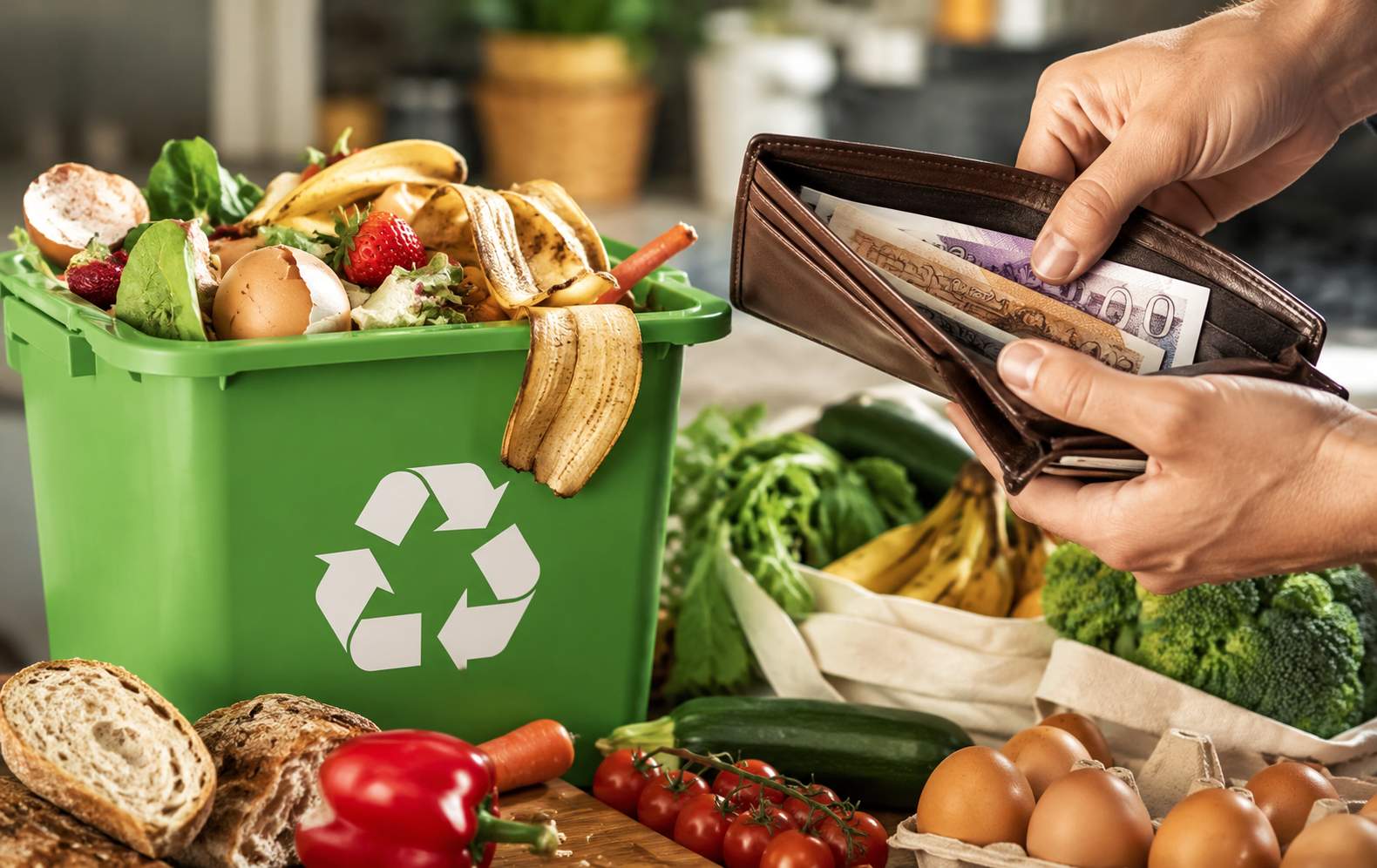
As household budgets remain under pressure, many Newcastle families are looking for practical ways to reduce everyday expenses without sacrificing quality of life. One area that often goes unnoticed is food waste. While it may seem like a minor issue, throwing away unused groceries can quietly drain hundreds of pounds from a household budget every year.
Recent research shows that food waste remains a significant challenge across the UK. WRAP estimates that households are responsible for around 60% of the nation's food waste, with edible food worth billions of pounds being discarded annually. The organisation estimates that wasted food costs UK households around £17 billion every year.
For Newcastle residents, reducing food waste is not only an opportunity to save money but also a chance to support local sustainability efforts and reduce environmental impact.
The Hidden Cost of Food Waste.
Many people do not realise how much money is lost through food waste until they start tracking it. A forgotten bag of salad, leftover meals that never get eaten, or fruit that spoils before use can quickly add up over the course of a year.
According to food waste data, UK households waste millions of tonnes of food annually, with much of it still perfectly edible when discarded. Some estimates suggest the average household could save hundreds of pounds each year simply by reducing avoidable waste.
In Newcastle, food waste remains a notable issue. Local figures suggest around 20% of the contents of an average household wheelie bin consists of food waste, equating to roughly 80 kilograms per household each year.
Start With a Weekly Meal Plan.
One of the simplest and most effective ways to reduce food waste is meal planning.
Before heading to the supermarket, households should take stock of what is already in cupboards, fridges, and freezers. Creating a meal plan for the week helps avoid duplicate purchases and reduces impulse buying.
Planning meals also makes it easier to buy only what is needed. Many households discover they already have ingredients available for several meals before spending money on additional groceries.
Meal planning can be particularly useful for larger families where unused ingredients often accumulate and eventually end up in the bin.
Learn the Difference Between Date Labels.
Confusion over food labels contributes significantly to food waste.
Many consumers throw away perfectly safe food because they misunderstand the difference between "use by" and "best before" dates. A use-by date relates to food safety, while a best-before date refers to quality rather than safety.
Items such as dried pasta, rice, biscuits, and canned goods are often safe to consume after their best-before date if stored correctly. Understanding these labels can help households avoid throwing away food unnecessarily.
Research has found that clearer food labelling could play a major role in reducing food waste, with many shoppers admitting they discard food due to uncertainty over expiry dates.
Make Better Use of the Freezer.
The freezer is one of the most powerful tools for reducing household food waste.
Many foods freeze exceptionally well, including bread, cooked meals, vegetables, meat, and fruit. Freezing leftovers prevents them from spoiling and creates convenient meal options for busy days.
Newcastle households looking to stretch their food budget can benefit from batch cooking. Preparing larger portions and freezing extras often reduces both food waste and energy costs associated with cooking multiple meals throughout the week.
Labelling containers with dates can also help ensure frozen food gets used before it is forgotten.
Store Food Properly.
Incorrect storage is another common reason food goes to waste.
Different foods require different storage conditions. Potatoes and onions should generally be kept in cool, dark locations, while many fruits and vegetables stay fresher for longer in the refrigerator.
Using airtight containers can help extend the shelf life of leftovers and opened products. Meanwhile, keeping older food items at the front of the fridge encourages households to use them first.
Small adjustments to storage habits can add several extra days to the life of fresh produce, helping families get better value from every shopping trip.
Embrace Leftovers Creatively.
Leftovers do not need to be boring.
Roast chicken can become sandwiches, soups, or pasta dishes. Vegetables nearing the end of their life can be added to stir-fries, curries, or homemade soups. Stale bread can be transformed into croutons, breadcrumbs, or bread pudding.
Many households discover that some of their most cost-effective and enjoyable meals come from ingredients that might otherwise have been discarded.
By viewing leftovers as opportunities rather than waste, families can significantly reduce grocery spending throughout the year.
Buy Smarter, Not Bigger.
Special offers can sometimes encourage unnecessary purchases.
Multi-buy promotions may appear to offer savings, but they can lead to higher levels of waste if products are not used before they expire. Households should consider whether they genuinely need additional quantities before taking advantage of deals.
Shopping with a list and sticking to it remains one of the most reliable methods of controlling food spending and preventing waste.
This approach is particularly effective for households trying to balance rising food prices with tighter budgets.
Newcastle's Growing Focus on Food Waste.
Newcastle has already been making progress in tackling food waste through local initiatives.
A food waste collection trial in the city recently surpassed 300 tonnes of collected food waste. The programme generated enough renewable energy to power hundreds of homes, demonstrating how food waste can be transformed into a valuable resource rather than ending up in landfill.
With separate household food waste collections becoming increasingly important across England, local residents have more opportunities than ever to divert waste from general rubbish bins.
Why Reducing Food Waste Benefits Everyone.
Beyond saving money, reducing food waste offers wider benefits for communities and the environment.
Food waste contributes significantly to greenhouse gas emissions, with researchers estimating that wasted food and drink are associated with around 18 million tonnes of carbon dioxide equivalent emissions in the UK.
When households waste less food, fewer resources are required for production, transportation, and disposal. The result is a lower environmental footprint alongside lower grocery bills.
For Newcastle households, small changes in shopping, storage, and meal preparation habits can make a meaningful difference both financially and environmentally.
Simple Changes Can Deliver Big Savings.
Reducing food waste does not require drastic lifestyle changes. Simple steps such as planning meals, understanding food labels, freezing leftovers, and storing food correctly can produce noticeable savings over time.
As living costs continue to challenge many households, taking control of food waste may be one of the easiest ways to keep more money in your pocket while contributing to a more sustainable Newcastle.
Have you found a clever way to reduce food waste and cut your grocery bill in Newcastle?
Food & Drink News
Why Reducing Food Waste Could Be the Easiest Way to Save Money in 2026
Advertisement





Comments (0)
You must be logged in to post comments.
Don't have an account? Register here
No comments yet. Be the first to share your thoughts!