
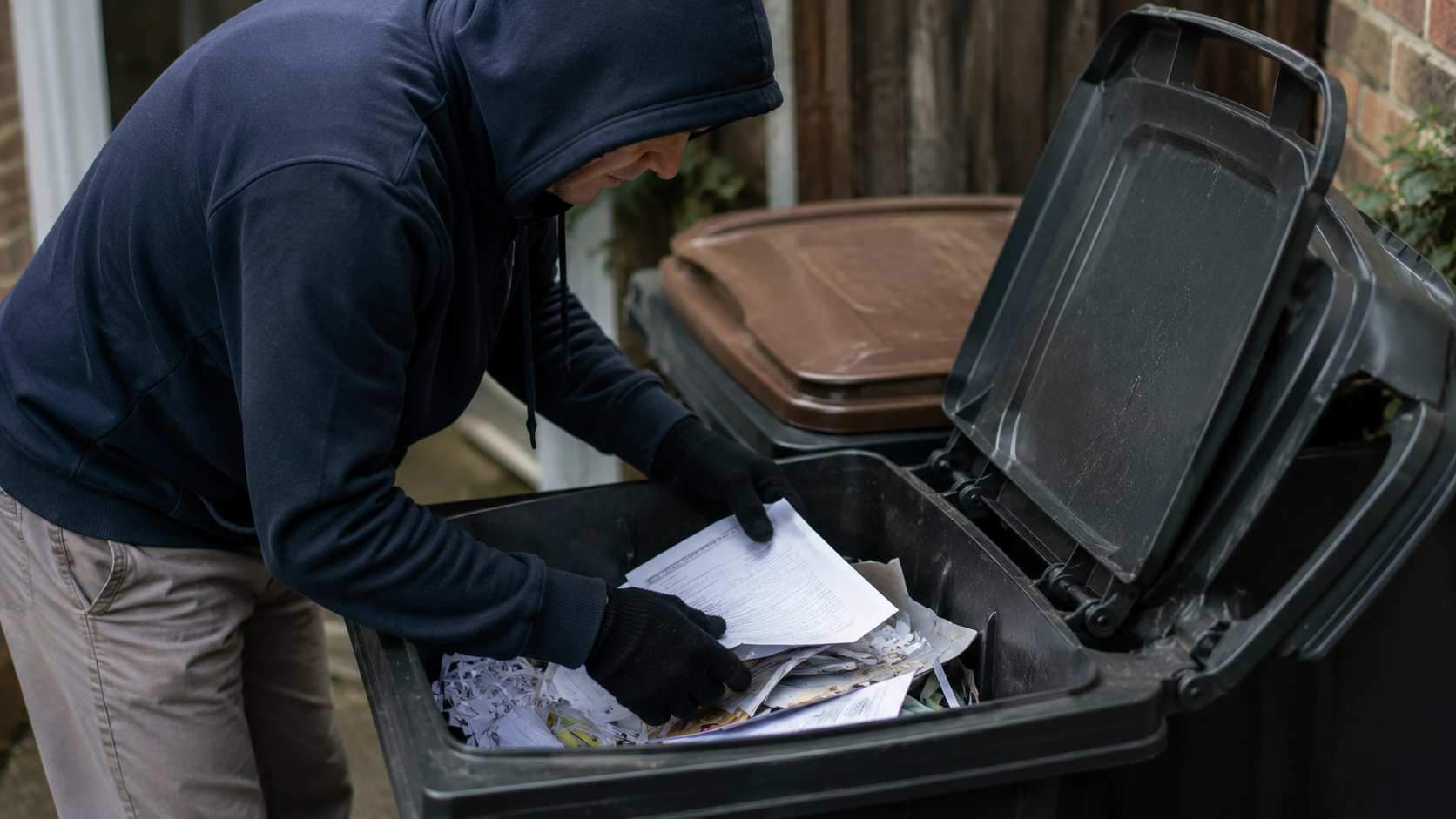
Discarding an old bank statement may feel harmless, but paperwork containing personal information can give criminals exactly what they need. Names, addresses, account details and signatures can all be used to support identity fraud, apply for credit or gain access to existing accounts.
For households across Newcastle, secure document disposal should therefore be treated as part of everyday home security. A locked door protects possessions inside the property, while careful shredding protects the information leaving it.
Why discarded paperwork remains a security risk.
Fraudsters now use sophisticated technology, but searching through poorly secured rubbish requires no technical knowledge. A complete financial profile may be pieced together from several apparently unimportant documents, including delivery labels, council tax bills and expired insurance letters.
The scale of the wider problem is significant. Cifas recorded more than 444,000 cases on the National Fraud Database during 2025, a 6% increase from 2024. More than 242,000 were identity fraud cases, while identity fraud and account takeover together represented 72% of all recorded cases. Cifas members also prevented an estimated £2.4 billion in fraud losses during the year. These are UK-wide figures rather than Newcastle-only statistics, but they demonstrate the value criminals place on personal data. Cifas Fraudscape 2026
Which documents should Newcastle residents destroy?
Paperwork should be securely destroyed when it identifies an individual and provides financial, medical or account information. This includes bank statements, payslips, P60 forms, tax letters, utility bills, council tax correspondence, medical records, insurance papers and pre-approved credit applications.
Prescription labels and parcel labels can also reveal a name and address. Expired payment cards should be cut through the chip, magnetic strip and account number. Documents containing signatures require particular care because they may help a criminal imitate the account holder.
Residents should check whether a record is still needed before destroying it. HMRC says people who submit a Self Assessment return on time should generally retain the relevant records for at least 22 months after the end of the tax year. Self-employed people must normally keep business records for at least five years after the relevant 31 January submission deadline. HMRC guidance for taxpayers HMRC guidance for self-employed people
Choosing a safer shredding method.
A cross-cut or micro-cut shredder is preferable to a strip-cut machine. Instead of producing long, potentially readable ribbons, these models turn documents into much smaller pieces that are harder to reconstruct.
Anyone without a shredder should avoid placing complete documents directly into a household bin or recycling container. A reputable confidential waste company may be worthwhile when clearing a home, dealing with paperwork after a bereavement or disposing of business records. The Information Commissioner's Office recommends making sure a shredding provider is reputable and capable of destroying information securely. ICO secure destruction guidance
Newcastle City Council provides information about household recycling, local recycling points and three household waste and recycling centres at Brunswick, Byker and Walbottle. Residents should check the council's current rules before taking shredded paper or electrical items to a site, as accepted materials and access arrangements can change. Newcastle recycling and waste services
Do not overlook phones, laptops and printers.
Old electronics may contain far more sensitive information than a filing cabinet. Phones, tablets, computers, external drives, printers and routers can store photographs of identity documents, passwords, emails and financial records.
Before selling, recycling or donating a device, users should back up anything important, sign out of accounts, remove SIM and memory cards, and use the manufacturer's erase or factory-reset feature. The National Cyber Security Centre advises using the device's built-in reset option to remove personal data. Older computers or damaged drives may require specialist secure destruction. NCSC device disposal advice
Moving home creates extra exposure.
A house move in Newcastle often produces bags of unwanted paperwork at the same time that post continues arriving at the old address. Residents should redirect their mail, update banks and service providers, and shred documents during the clear-out instead of placing them intact in recycling.
Going paperless can reduce the amount of sensitive material entering the home. However, online statements should be protected with a unique email password and two-step verification. Whether information is stored on paper or digitally, the principle is the same: retain it only while it is needed, keep it secure and destroy it properly.
Share your home security tips.
How do you dispose of confidential documents at home?
Community News
Are Your Recycling Bins Exposing You to Identity Fraud?
Advertisement





Comments (0)
You must be logged in to post comments.
Don't have an account? Register here
No comments yet. Be the first to share your thoughts!