
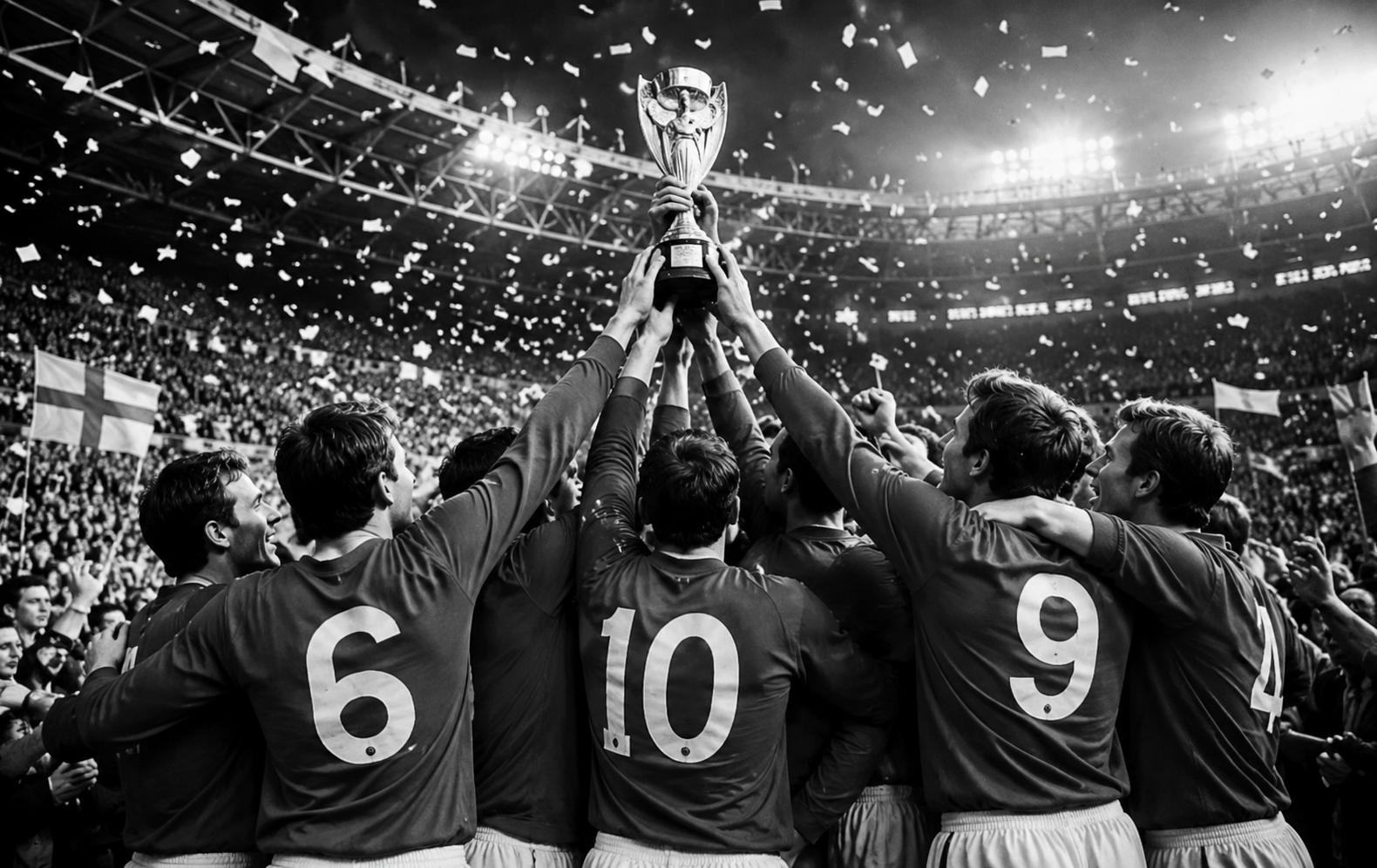
England’s triumph at the 1966 FIFA World Cup remains one of the defining moments in British sporting history. Nearly six decades later, the images of Bobby Moore lifting the Jules Rimet Trophy at Wembley Stadium still resonate with football supporters across the country. It was England’s first and only World Cup success, achieved on home soil and powered by a squad that combined discipline, tactical intelligence and moments of individual brilliance.
While much has been written about the dramatic final against West Germany, the road to glory was built over six challenging matches. Every fixture played a role in shaping England’s historic achievement. For football fans in Newcastle and the North East, the tournament also carries special significance, as the region hosted several memorable World Cup matches and helped create the atmosphere that made England 1966 such a landmark event.
A Nation Ready For Its Biggest Football Moment.
England entered the tournament under manager Alf Ramsey with growing confidence. Ramsey had famously declared that England could win the World Cup, a statement that seemed ambitious at the time. The national team had never reached a World Cup final and faced pressure from footballing giants including Brazil, Italy and West Germany.
The tournament itself featured 16 nations and 32 matches. Across the competition, 89 goals were scored at an average of 2.78 goals per game. England would ultimately finish the tournament unbeaten, winning five matches and drawing one while conceding just three goals.
Match One: England 0-0 Uruguay.
England’s World Cup campaign began on 11 July 1966 against Uruguay at Wembley. Expectations were enormous, but the opening match proved frustrating.
Uruguay defended in numbers and England struggled to break through. Despite controlling large periods of possession, Ramsey’s side could not find the decisive goal. The match ended goalless, leaving some critics questioning whether England had the creativity required to win the tournament.
However, the draw would prove to be the only points England dropped throughout the competition.
Match Two: England 2-0 Mexico.
The second group game brought a much-needed response. Facing Mexico, England produced a more fluent display and secured a comfortable 2-0 victory.
Bobby Charlton opened the scoring with a superb strike that remains one of the standout goals of the tournament. Roger Hunt added a second to seal the win and put England firmly back on course for qualification. Charlton’s influence throughout the competition would be immense, combining technical quality with leadership in midfield.
The victory also marked another clean sheet, highlighting the defensive strength built around Gordon Banks and captain Bobby Moore.
Match Three: England 2-0 France.
England completed the group stage with another 2-0 victory, this time against France. Roger Hunt once again found the net twice, demonstrating the importance of his goalscoring contribution.
The result ensured England finished top of Group One. More importantly, they progressed to the knockout stages without conceding a single goal. In three matches they had scored four times and looked increasingly comfortable within Ramsey’s tactical system.
As confidence grew nationwide, belief started to replace expectation.
Newcastle And The North East Connection.
Although England played all of their matches at Wembley, Newcastle and the wider North East played a valuable role in the success of the tournament.
Nearby Middlesbrough's Ayresome Park and Sunderland's Roker Park hosted several World Cup fixtures. The most famous was North Korea’s shock 1-0 victory over Italy at Ayresome Park, one of the greatest upsets in World Cup history. Thousands of football fans from across the North East embraced the tournament, creating a unique atmosphere that helped showcase England as a football nation.
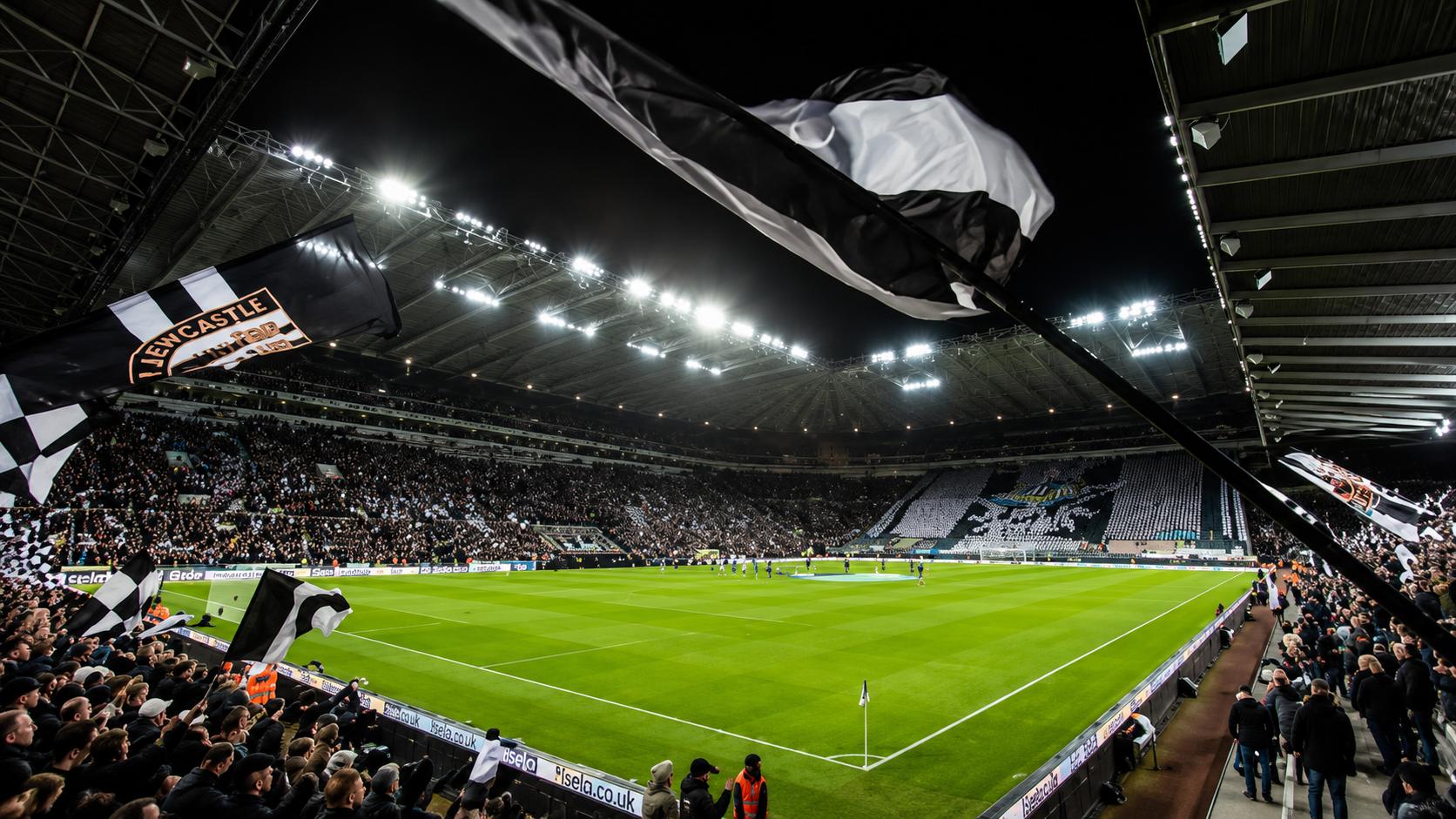
For Newcastle supporters, the World Cup reinforced the region’s reputation as one of the heartlands of English football. St James’ Park may not have been a host venue in 1966, but the passion of North East supporters contributed significantly to the tournament’s success and legacy.
Quarter-Final: England 1-0 Argentina.
The quarter-final against Argentina remains one of the most controversial matches in World Cup history.
Played in a fiercely competitive atmosphere, tensions boiled over when Argentina captain Antonio Rattín was sent off. The decision sparked protests and remains heavily debated decades later. Amid the controversy, Geoff Hurst delivered the decisive moment.
Hurst headed home the only goal of the match, securing a 1-0 victory and sending England into the semi-finals. It was a breakthrough moment for the striker, who had only recently established himself in the starting lineup.
England had now gone four matches without conceding a goal.
Semi-Final: England 2-1 Portugal.
The semi-final against Portugal presented England’s toughest challenge so far. Portugal arrived boasting the tournament’s leading scorer, Eusébio, and had impressed throughout the competition.
In one of the finest performances of his career, Bobby Charlton scored both England goals. His first came after intelligent movement and precise finishing, while his second effectively placed England in control. Portugal responded late through a Eusébio penalty, ending England’s remarkable defensive streak, but Ramsey’s side held firm to secure a 2-1 victory.
For the first time in history, England had reached a World Cup final.
The attendance for the semi-final at Wembley reached 94,493, highlighting the enormous public interest surrounding England’s progress.
The Build-Up To The Final.
As England prepared to face West Germany, anticipation swept across the nation. The final would be played on 30 July 1966 at Wembley Stadium in front of nearly 97,000 spectators. Millions more watched on television, with the match later becoming one of the most viewed events in British broadcasting history.
England entered the match unbeaten and carrying the hopes of an entire country. West Germany, meanwhile, had scored 15 goals in their previous five matches and represented a formidable challenge.
Final: England 4-2 West Germany After Extra Time.
The 1966 World Cup final remains one of football’s most iconic matches.
West Germany struck first through Helmut Haller after 12 minutes. England responded quickly when Geoff Hurst powered home a header from a Bobby Moore free kick to level the score. The game remained finely balanced until Martin Peters put England ahead in the 78th minute.
With victory seemingly within reach, Wolfgang Weber scored a dramatic equaliser in the closing moments to make it 2-2 and force extra time.
Then came the moment that would become part of football folklore.
In the 101st minute, Hurst fired a shot against the underside of the crossbar. The ball bounced down near the goal line before being awarded as a goal. Debate over whether the ball fully crossed the line continues to this day, making it one of the most discussed incidents in World Cup history.
As West Germany pushed forward in search of another equaliser, Hurst completed his hat-trick in the final seconds. BBC commentator Kenneth Wolstenholme delivered the immortal words that have echoed through English football history ever since.
England had won 4-2 after extra time. Geoff Hurst became the first player ever to score a hat-trick in a World Cup final, a record that stood alone for more than five decades.
The official attendance was 96,924 spectators.
The Numbers Behind England’s Triumph.
Several statistics underline just how impressive England’s World Cup campaign was.
England finished with a record of five wins and one draw from six matches. They scored 11 goals and conceded only three throughout the tournament.
Remarkably, England kept clean sheets in their first four matches and did not concede until the semi-final against Portugal.
Geoff Hurst scored three goals in the final and four during the tournament overall, while Bobby Charlton’s goals and leadership were equally crucial. Gordon Banks, Bobby Moore, Jack Charlton and Nobby Stiles formed the backbone of a defensive unit that frustrated every opponent they faced.
At the time, England’s tally of only three goals conceded was a record low for a World Cup-winning team.
Why The 1966 Victory Still Matters Today.
England’s World Cup success remains unique in the nation’s football history. Every subsequent generation has measured itself against the achievements of Ramsey’s squad.
For supporters in Newcastle, London, Manchester, Liverpool and every football community across the country, 1966 represents more than a trophy. It symbolises a moment when the nation united behind a team that delivered under immense pressure.
The North East’s contribution through its host venues, passionate supporters and football culture ensured that the tournament belonged to the whole country, not just Wembley. That connection remains part of the enduring story of England’s greatest sporting summer.
A Legacy That Continues To Inspire.
Nearly 60 years later, England’s 1966 World Cup journey still captures the imagination. From a cautious opening draw against Uruguay to Geoff Hurst’s unforgettable hat-trick in the final, every match added a chapter to a story that remains unmatched in English football.
The road to glory was not built on luck alone. It was forged through tactical discipline, defensive excellence, leadership and belief. That combination transformed a talented group of players into world champions and secured their place in football immortality.
What is your favourite moment from England’s 1966 World Cup triumph, and where does it rank among football’s greatest achievements?
Sports News
England 1966: The Incredible Journey to World Cup Glory
Advertisement




Comments (0)
You must be logged in to post comments.
Don't have an account? Register here
No comments yet. Be the first to share your thoughts!