
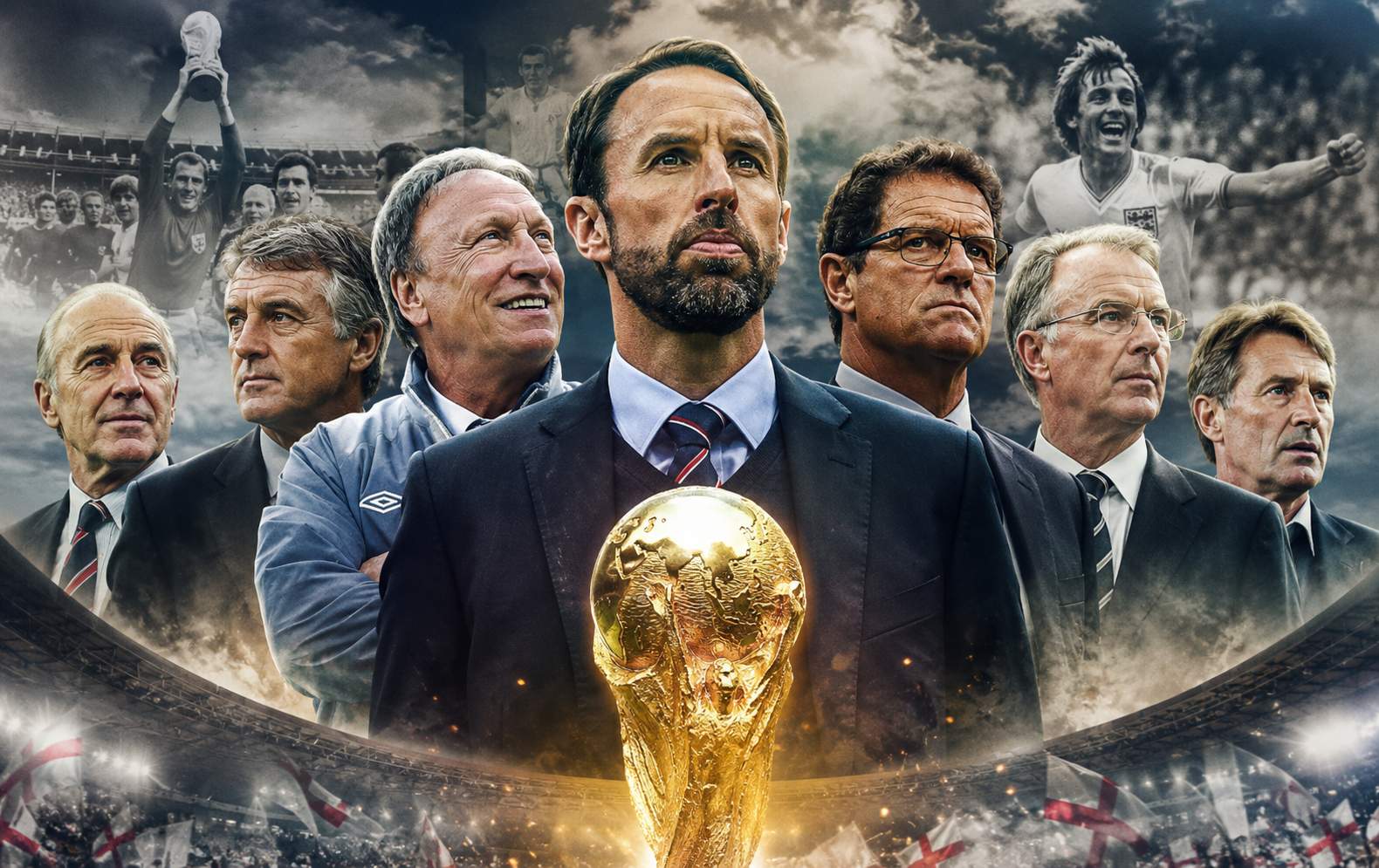
England’s World Cup story is one of triumph, heartbreak, tactical innovation and enduring ambition. Since making their tournament debut in 1950, the Three Lions have experienced the highest highs and some painful lows. While legendary players often dominate the headlines, the managers who guided England through football’s biggest tournament have played an equally important role in shaping the nation’s football identity.
From Sir Alf Ramsey’s iconic triumph in 1966 to Gareth Southgate’s revival of national belief, England’s World Cup history can be traced through the leadership styles, decisions and personalities of the men standing on the touchline.
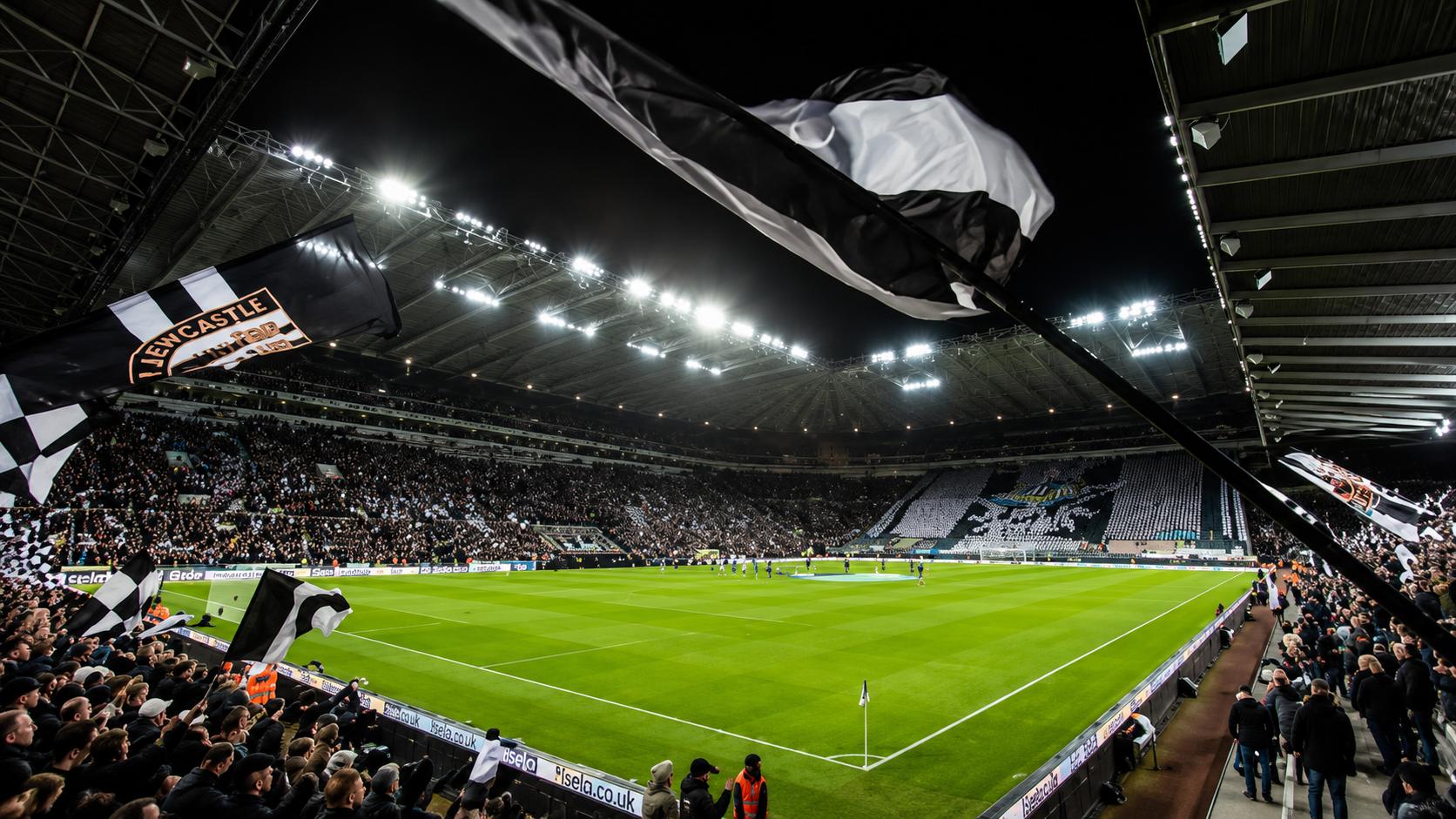
Interestingly, Newcastle United has its own place within this story. Few figures connect England’s World Cup legacy and Newcastle’s football heritage more strongly than Sir Bobby Robson, while the city has also produced players and footballing influences that helped define England’s international journey.
Sir Walter Winterbottom Laid The Foundations.
England entered the World Cup for the first time in 1950 under Sir Walter Winterbottom, the country’s first official national team manager. Although modern fans often overlook his achievements, Winterbottom effectively built the framework for England’s international football programme.
Managing England from 1946 until 1962, he oversaw four World Cup campaigns. His teams reached the quarter-finals in 1954 and 1962, establishing England as a respected international force despite failing to challenge seriously for the trophy.
Winterbottom worked during a period when managers had less control than modern coaches. Team selection often involved significant influence from Football Association committees. Despite those limitations, he introduced greater professionalism and tactical structure that would benefit future generations.
His contribution may not be measured in trophies, but England’s later success would likely have been impossible without the foundations he built.
Sir Alf Ramsey Created England’s Greatest Sporting Moment.
No discussion about England World Cup managers can begin anywhere other than with Sir Alf Ramsey.
Appointed in 1963, Ramsey confidently predicted England would win the World Cup before the tournament even began. At the time, many considered the statement ambitious, if not reckless. Three years later, he delivered on that promise.
England’s victory at the 1966 World Cup remains the nation’s only triumph in the competition. Ramsey’s tactical innovation was crucial. His famous "Wingless Wonders" system moved away from traditional wide play and focused on intelligent midfield control.
England defeated West Germany 4-2 after extra time in the final at Wembley, creating one of the most celebrated moments in British sporting history. Ramsey remains the only England manager to win the World Cup.
His influence extended beyond silverware. Ramsey demonstrated that England could compete tactically with the world’s best teams rather than relying solely on physicality and determination.
More than half a century later, every England manager is still judged against the standard he set.
The Difficult Years That Followed.
Success proved difficult to sustain after 1966.
Ramsey guided England to the quarter-finals in Mexico 1970 before a famous defeat to West Germany. England then failed to qualify for the 1974 World Cup, bringing an end to his tenure.
The following decades saw a succession of managers struggle to recreate the magic of 1966. Don Revie, Ron Greenwood and others found qualification increasingly challenging as international football became more competitive.
Yet even during these difficult periods, England continued to produce talented players and remained capable of competing with elite nations.
What the team lacked was a manager capable of inspiring a deep tournament run.
Sir Bobby Robson Became A National Treasure.
When discussing Newcastle United and England, one name stands above all others.
Sir Bobby Robson is remembered as one of English football’s most respected figures. Born in County Durham and later becoming a beloved Newcastle United manager, Robson also delivered England’s best World Cup performance since 1966.
Leading England between 1982 and 1990, Robson guided the national team to quarter-finals in 1986 and an unforgettable semi-final appearance in Italia 90.
The 1990 World Cup remains one of England’s most cherished tournaments. Featuring stars such as Gary Lineker, Paul Gascoigne and Peter Shilton, England reached the last four before suffering a heartbreaking penalty shootout defeat to West Germany.
The images of Gascoigne’s tears and England’s agonising exit remain etched into football history.
Robson’s management style combined tactical intelligence with exceptional man-management. Players frequently praised his ability to create unity within squads.
His later achievements with Newcastle United further strengthened his legacy. Between 1999 and 2004, he transformed Newcastle into Champions League contenders and restored pride to St James’ Park.
For many supporters in the North East, Robson remains the ultimate connection between Newcastle and England’s World Cup journey.
Glenn Hoddle And Sven-Goran Eriksson Modernised England.
The late 1990s and early 2000s brought significant changes to English football.
Glenn Hoddle introduced modern tactical concepts and helped England qualify for the 1998 World Cup, where they exited in the Round of 16 after a penalty shootout against Argentina.
His successor, Sven-Goran Eriksson, became England’s first foreign manager. Under Eriksson, England reached three consecutive major tournament quarter-finals, including the 2002 and 2006 World Cups.
Although his "Golden Generation" featuring David Beckham, Steven Gerrard, Frank Lampard and Wayne Rooney never fulfilled its potential, Eriksson maintained consistent competitiveness.
His tenure also reflected the growing globalisation of football, with England embracing international coaching influences for the first time.
Fabio Capello And Roy Hodgson Faced Modern Challenges.
Expectations were enormous when Fabio Capello took charge in 2008.
The Italian arrived with an impressive club management record, having won league titles across Europe. Yet international football proved a different challenge.
England’s 2010 World Cup campaign ended with a heavy defeat against Germany in the Round of 16. The tournament is remembered largely for Frank Lampard’s disallowed goal, one of football’s most controversial moments before goal-line technology became standard.
Roy Hodgson succeeded Capello and led England into the 2014 World Cup. The campaign became one of the most disappointing in modern history as England failed to progress beyond the group stage, collecting only one point.
These struggles highlighted how difficult international management had become in an era where elite national teams possessed increasingly sophisticated tactical systems.
Gareth Southgate Restored National Belief.
Few England managers have transformed public perception as dramatically as Gareth Southgate.
Taking over in 2016, Southgate inherited a team damaged by years of tournament disappointment. Instead of focusing solely on tactics, he prioritised culture, unity and mental resilience.
The results were remarkable.
England reached the semi-finals of the 2018 World Cup, their best performance since Robson’s team in 1990. Four years later, they reached the quarter-finals in Qatar while producing some of the tournament’s most entertaining football.
Southgate’s overall tournament record is among the strongest in England history. During his tenure, England reached a World Cup semi-final, a World Cup quarter-final and two European Championship finals.
Statistics underline the scale of his achievement. England won nine knockout matches in major tournaments under Southgate. Before his appointment, England had won only six knockout ties across decades following the 1966 World Cup victory.
His leadership also helped reconnect supporters with the national team, creating a positive atmosphere rarely seen during previous eras.
England’s World Cup Record By The Numbers.
England’s World Cup history contains some fascinating statistics that help place these managers into context.
England have participated in 16 World Cup finals tournaments and won the competition once, in 1966. They have played 74 World Cup matches, recording 32 victories, 22 draws and 20 defeats.
The nation has reached three World Cup semi-finals in total, occurring in 1966, 1990 and 2018.
England’s biggest World Cup victory came in 2018 when Southgate’s side defeated Panama 6-1 in Russia.
The 2022 World Cup attracted an estimated global audience of around five billion viewers across the tournament, underlining the enormous pressure placed upon England managers whenever the competition arrives.
Every manager who steps into the role understands they are carrying the weight of decades of expectation.
Why Newcastle’s Connection Still Matters.
Newcastle’s place in England’s World Cup story extends beyond Sir Bobby Robson.
The city has consistently contributed players, supporters and football culture to the national team. St James’ Park has hosted memorable England internationals, while the North East remains one of the country’s most passionate football regions.
However, Robson remains the defining link.
His achievements with England and Newcastle represent a rare combination of national and local success. Few managers have commanded such universal respect across club and international football.
As England continue their pursuit of a second World Cup title, Robson’s influence remains visible in how modern managers approach leadership, communication and squad unity.
The Search For England’s Next World Cup Triumph Continues.
England’s World Cup history has been shaped by managers willing to challenge convention, embrace pressure and inspire players on football’s grandest stage.
From Winterbottom’s foundations and Ramsey’s immortality to Robson’s inspiration and Southgate’s revival, each manager has added a chapter to the national story.
The ultimate goal remains unchanged. England continue searching for a second World Cup trophy and the manager who can finally follow in Alf Ramsey’s footsteps.
Until that moment arrives, the achievements of these influential figures will continue to define how England’s footballing history is remembered.
Can any future England manager surpass Alf Ramsey, Sir Bobby Robson or Gareth Southgate?
Sports News
The Managers Who Built England’s World Cup Legacy Across Generations
Advertisement




Comments (0)
You must be logged in to post comments.
Don't have an account? Register here
No comments yet. Be the first to share your thoughts!