
Football, rugby and cricket may dominate conversations across Newcastle and much of the UK, but around the world there are sports so unusual that many people assume they are internet jokes.
Yet these competitions are very real, attract professional athletes, large audiences and, in some cases, millions of pounds in sponsorship and prize money.
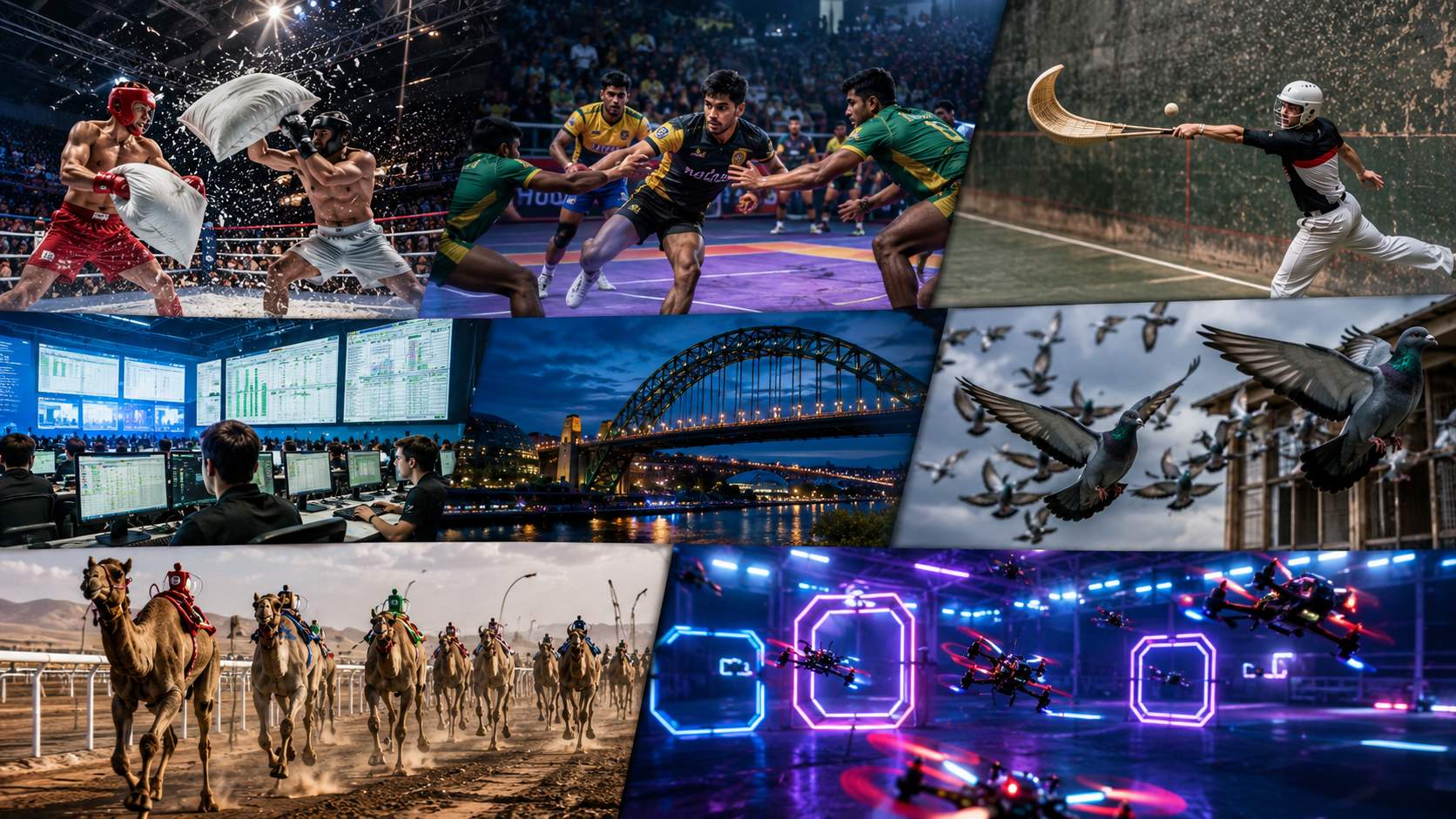
From competitors battling each other with pillows to spreadsheet experts fighting for world titles, these are some of the strangest sports on the planet that are surprisingly legitimate.
Why unusual sports are becoming more popular.
The rise of social media and streaming platforms has transformed niche sports.
Events that might once have attracted only a local audience can now reach millions of viewers worldwide. Fans searching for something different from traditional football and rugby are increasingly discovering unusual competitions that combine entertainment with genuine athletic or technical skill.
For sports fans in Newcastle, where Newcastle United remains the city's sporting heartbeat, these alternative events offer a fascinating glimpse into how broad the definition of sport has become in the digital age.
Professional pillow fighting is now a real combat sport.
Most people associate pillow fights with childhood sleepovers, but professional pillow fighting has become a genuine competitive sport.
The Pillow Fight Championship, founded in 2021, stages organised matches between trained athletes using specially designed combat pillows. Competitors score points through speed, accuracy and successful strikes, while avoiding incoming attacks.
The sport has grown rapidly in recent years. Its first professional pay-per-view event took place in 2022 and featured former MMA fighters and boxers competing for championship titles and cash prizes.
What sounds like a joke quickly becomes surprisingly intense once competitors enter the ring.
Pro Kabaddi attracts huge audiences.
Outside South Asia, many people have never heard of kabaddi.
The sport involves two teams attempting to tag opponents and return safely to their own side while holding their breath and continuously chanting the word "kabaddi". It combines elements of wrestling, rugby and tag into one highly physical contest.
What surprises many people is the scale of its popularity.
The Pro Kabaddi League has become one of the most watched sports competitions in India, second only to cricket in terms of television audiences according to industry reports.
If Newcastle sports fans think St James' Park creates a loud atmosphere, some Pro Kabaddi arenas can rival major football venues for intensity and crowd engagement.
Jai alai is one of the fastest sports ever created.
Imagine hurling a hard ball at speeds exceeding 180 miles per hour while attempting to catch it in a curved basket attached to your arm.
That is jai alai.
Originating in the Basque region of Spain, jai alai involves players launching a ball against a wall using a wicker basket known as a cesta. The ball can travel at speeds of more than 300 kilometres per hour, earning the sport a reputation as one of the fastest games ever played.
The speed involved means exceptional reflexes are required, and injuries have occurred throughout the sport's history due to the velocity of the ball.
For many first-time viewers, it looks more like something from a science-fiction film than a traditional sporting contest.
Competitive Excel has become an esport.
Perhaps the most surprising entry on this list is competitive Microsoft Excel.
What began as an office productivity tool has evolved into a serious competitive discipline where participants solve increasingly complex spreadsheet challenges under intense time pressure.
The Microsoft Excel World Championship attracts contestants from around the globe, with competitors demonstrating remarkable problem-solving abilities, data analysis skills and spreadsheet expertise.
The events are broadcast online and have generated significant interest among business professionals, students and data analysts.
While it may lack the physicality of football or rugby, watching elite Excel competitors work through advanced formulas at incredible speed is far more entertaining than most people expect.
For Newcastle's growing technology and business sectors, competitive Excel highlights how modern sport is evolving beyond traditional physical activities.
Pigeon racing remains a major global sport.
Many people are surprised to learn that pigeon racing is still thriving.
The sport involves specially bred racing pigeons being released hundreds of miles from home before competing to return to their lofts as quickly as possible.
Success depends on breeding, training, weather conditions and the pigeons' natural navigation abilities.
The sport remains particularly popular in parts of the UK, Belgium and China. In recent years, elite racing pigeons have sold for hundreds of thousands of pounds, with some birds achieving celebrity status among enthusiasts.
Historically, pigeon racing has maintained strong roots across northern England, including communities throughout the North East.
While younger audiences may be unfamiliar with the sport, it continues to attract dedicated competitors and substantial investment.
Camel racing combines tradition with technology.
Camel racing has been part of Middle Eastern culture for centuries.
Traditionally involving young riders, the sport has undergone major changes and now frequently uses robotic jockeys controlled remotely by trainers.
These lightweight robotic systems have transformed the sport while improving safety standards.
Major camel racing festivals attract thousands of spectators across countries including the United Arab Emirates, Saudi Arabia and Qatar.
Some races offer significant prize funds, making camel racing a serious professional pursuit rather than simply a cultural tradition.
The combination of ancient heritage and modern technology makes it one of the most unique sporting spectacles in the world.
Drone racing is motorsport for the digital generation.
Drone racing may represent the future of spectator sport.
Pilots wear first-person-view headsets that allow them to see exactly what their racing drone sees while navigating complex courses at high speeds.
Events often feature illuminated tracks, obstacles and split-second decision making.
Top racing drones can exceed speeds of 100 miles per hour, creating a viewing experience that feels closer to a video game than traditional motorsport.
As Newcastle continues to develop its technology and innovation sectors, drone racing is attracting growing interest among younger audiences fascinated by engineering, gaming and aviation.
The sport's blend of technology and competition has helped it establish a dedicated international following.
The definition of sport is changing.
One lesson emerges from all of these unusual competitions.
The definition of sport has expanded dramatically.
Whether it involves spreadsheets, pigeons, drones or pillows, today's sporting landscape reflects changing interests, new technologies and the power of global audiences.
While Newcastle United may remain the city's undisputed sporting giant, there is something fascinating about discovering competitions that sound completely fictional but are attracting real athletes, real fans and real money.
The next time someone mentions professional pillow fighting or competitive Excel, do not assume they are joking. There is a good chance they are talking about a legitimate sporting competition with thousands, and sometimes millions, of followers around the world.
Let us know your thoughts.
Which of these unusual sports surprised you the most, and would you actually watch any of them?
Sports News
The Most Unusual Sports You've Never Heard Of (Maybe)
Advertisement





Comments (0)
You must be logged in to post comments.
Don't have an account? Register here
No comments yet. Be the first to share your thoughts!