
For decades, gas boilers have been the dominant way of heating homes across Britain. However, a growing push from the UK government is encouraging households to consider an alternative technology that many experts believe will play a major role in the country's energy future. That technology is the heat pump.
From Newcastle to London, heat pumps are becoming a regular feature in discussions about energy bills, carbon emissions and the UK's journey towards net zero. But what exactly is a heat pump, and why are ministers investing millions of pounds to encourage their adoption?
What Is A Heat Pump?.
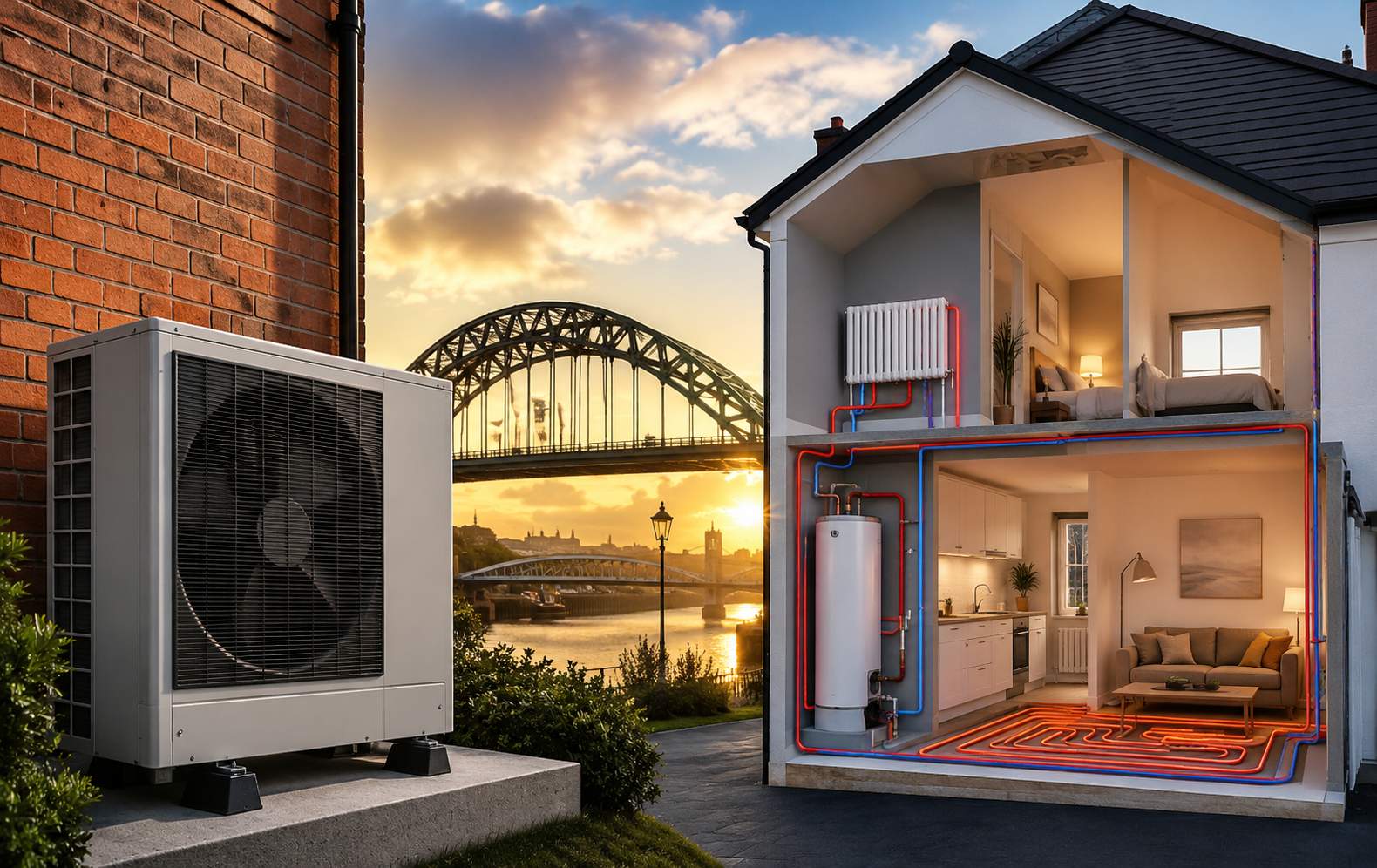
A heat pump is a heating system that extracts warmth from the air, ground or water outside a property and transfers it indoors. Unlike a traditional gas boiler, which generates heat by burning fuel, a heat pump moves existing heat from one place to another.
The most common type installed in UK homes is the air source heat pump. Even when outdoor temperatures feel cold, there is still heat energy present in the air. A heat pump captures that energy, compresses it and uses it to heat radiators, underfloor heating systems and hot water supplies.
Because heat pumps transfer heat rather than create it through combustion, they can be significantly more energy efficient than conventional heating systems. This efficiency is one of the main reasons governments across Europe are promoting the technology.
Why The UK Government Wants More Heat Pumps Installed.
Heating buildings accounts for a significant share of the UK's carbon emissions. The government has committed to achieving net zero emissions by 2050, and reducing reliance on gas boilers is considered essential to meeting that target.
To encourage homeowners to switch, the government introduced the Boiler Upgrade Scheme, which offers grants of up to £7,500 towards the cost of installing eligible heat pumps in England and Wales. The scheme was specifically designed to make low carbon heating more affordable and accelerate adoption across the country.
The government's long-term ambition is to reach 600,000 heat pump installations annually by 2028. While progress is being made, the UK still has a considerable distance to travel before reaching that figure.
The Numbers Behind The Heat Pump Push.
Recent figures show growing interest in heat pumps, although uptake remains below government ambitions.
According to government and industry data, nearly 80,000 heat pumps have been supported through the Boiler Upgrade Scheme since its launch in 2022. Around 98 per cent of those installations have been air source heat pumps.
Applications have also accelerated following planning reforms that made installations easier. Research published in 2025 found that Boiler Upgrade Scheme applications increased by 54 per cent during the first half of the year compared with the same period in 2024.
However, challenges remain. Reports suggest that fewer than 100,000 heat pumps were installed across the UK during 2024, while around 1.5 million gas boilers were fitted over the same period. That means gas boiler installations still outnumber heat pumps by approximately 15 to one.
What Does This Mean For Newcastle?.
Newcastle and the wider North East are expected to play an important role in Britain's transition to cleaner heating.
Many homes across Newcastle were built during periods when gas central heating became the standard. As older boilers reach the end of their lifespan, homeowners face decisions about whether to replace them with another gas system or move towards lower carbon alternatives.
The region could also benefit from the jobs created by the transition. Government plans include expanding the workforce needed to install heat pumps, insulation and other energy efficiency measures. Industry estimates suggest thousands of additional skilled workers will be required in the coming years as demand grows.
For a city with strong engineering roots and a growing green technology sector, the expansion of heat pump installations could create new employment opportunities while helping local households reduce their carbon footprint.
Are Heat Pumps Worth It For Homeowners?.
The answer depends on several factors, including the property's insulation levels, existing heating system and budget.
Heat pumps generally cost more to install than traditional boilers, which remains one of the biggest barriers to adoption. Although grants can significantly reduce upfront costs, many homeowners still face additional expenses.
On the positive side, heat pumps can provide lower carbon heating, reduced reliance on fossil fuels and potentially lower energy costs when paired with a well-insulated home and suitable electricity tariff. Many systems are also designed to last around 20 years, making them a long-term investment.
As technology improves and installation numbers increase, industry experts expect costs to become more competitive over time.
Why Heat Pumps Are Likely To Stay In The Spotlight.
Despite ongoing debates around cost and practicality, there is little sign that the government's support for heat pumps will diminish anytime soon. Billions of pounds are being committed to home energy upgrades, training programmes and financial incentives aimed at making low carbon heating more accessible.
For homeowners in Newcastle and across the UK, heat pumps are no longer a niche technology. They are becoming a central part of the country's energy strategy and could soon be as familiar as the gas boiler they are designed to replace.
As Britain works towards its climate goals, the conversation around heat pumps is likely to become even more prominent, making them a technology that homeowners cannot afford to ignore.
Would you consider replacing your gas boiler with a heat pump in the future?
Political News
Heat Pumps Explained: What Newcastle Homeowners Need To Know
Advertisement





Comments (0)
You must be logged in to post comments.
Don't have an account? Register here
No comments yet. Be the first to share your thoughts!