
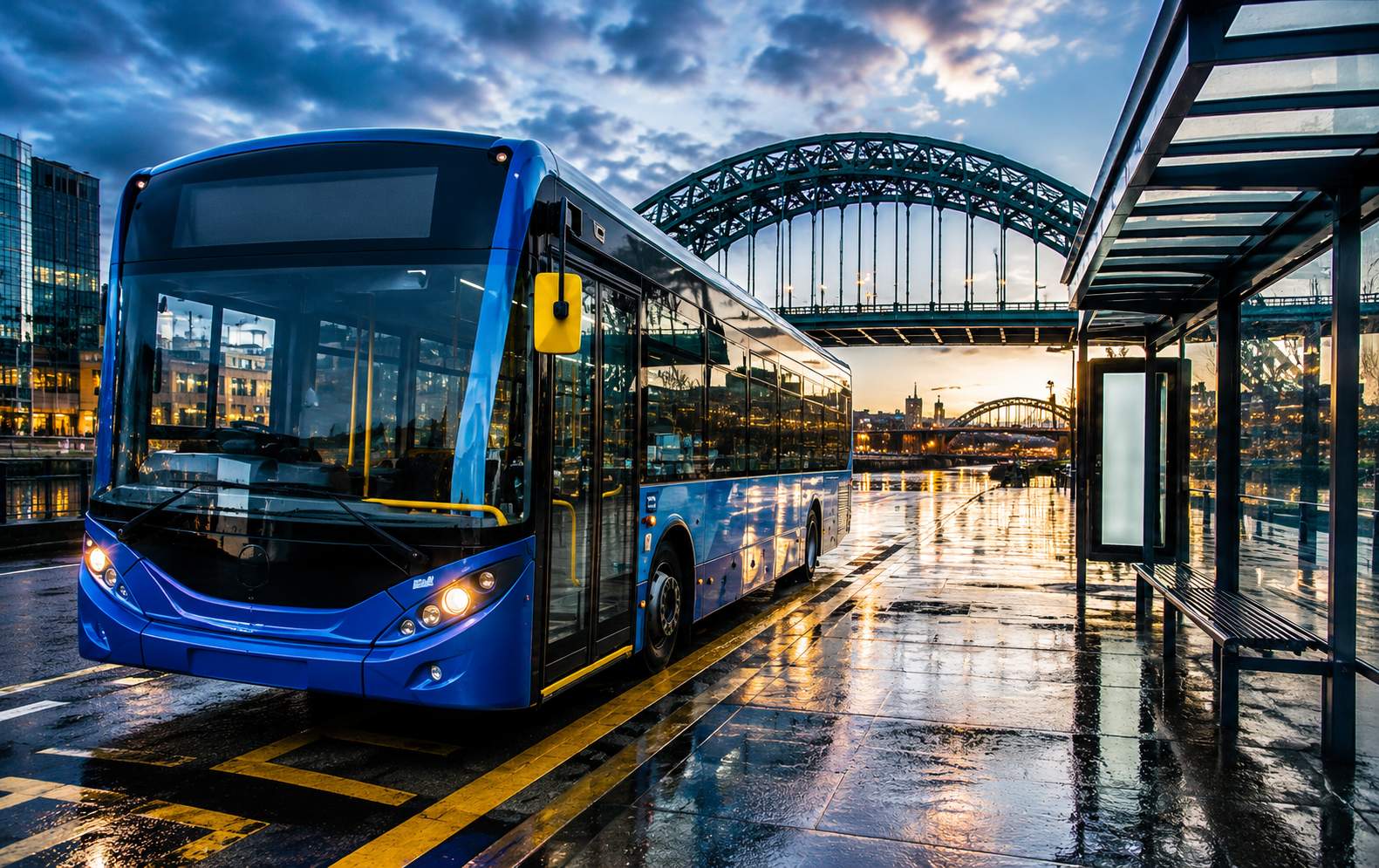
Residents across Newcastle and the wider North East could face higher bus fares in the future after Mayor Kim McGuinness warned that maintaining the region's popular £2.50 fare cap may become impossible without continued financial backing from central government.
The warning comes as uncertainty grows over the future of the Government's national bus fare support scheme, which currently helps keep travel costs lower for millions of passengers across England. While ministers have committed to maintaining the national £3 fare cap until March 2027, there is no guarantee that support will continue beyond that date.
Kim McGuinness, who oversees a £4.2 billion budget as Mayor of the North East, says the region's locally funded fare reductions are already placing significant pressure on public finances and that long-term certainty is needed to avoid fare increases for passengers.
Affordable Travel Remains A Key Priority.
The North East has become one of the most affordable regions in England for public transport thanks to the Mayor's Fares initiative. Under the scheme, adult passengers can travel across Northumberland, Tyne and Wear, and County Durham for a maximum single fare of £2.50, while young people under the age of 21 benefit from a £1 fare cap.
The programme has been welcomed by commuters, students, workers, and families throughout Newcastle and the wider region, particularly during a period when many households continue to face pressure from rising living costs.
Alongside discounted bus fares, the initiative also includes a £7.50 Day Rover ticket, allowing passengers unlimited travel across multiple services, while Metro fares have also been frozen at equivalent levels until April 2027.
For many residents, these measures have helped make public transport a more affordable alternative to driving, reducing travel costs and improving access to employment, education, and leisure opportunities.
Concerns Over Future Funding.
However, behind the scenes, concerns are growing over how long the discounted fares can realistically be maintained.
A report due to be considered by the North East Mayoral Combined Authority highlights that continuing the current £2.50 fare cap without ongoing Government assistance would be increasingly difficult. The report describes the situation as potentially "untenable" if national support is withdrawn.
The challenge stems from the fact that the Government's current £3 bus fare cap is subsidised through payments made directly to bus operators. This funding helps offset the difference between ticket prices and operating costs.
If that national subsidy ends, the North East authority would face the prospect of covering a much larger funding gap itself if it wanted to maintain the existing £2.50 cap. Rising fuel prices, increasing operating costs, and inflationary pressures are all expected to add further strain on transport budgets over the coming years.
Officials estimate that the Mayor's Fares package will cost around £32 million during the 2026-27 financial year alone.
Kim McGuinness Calls For Long-Term Commitment.
Speaking about the future of the scheme, Kim McGuinness has urged ministers to provide clarity and commit to extending national fare support beyond March 2027.
She argues that affordable transport remains essential for communities across Newcastle, Sunderland, Gateshead, Durham, North Tyneside, South Tyneside, and Northumberland.
According to the mayor, maintaining lower travel costs helps support local economies, enables people to access jobs and services more easily, and reduces financial pressure on households already dealing with higher bills.
McGuinness said that fare increases would place an unnecessary burden on residents at a time when many people are still struggling with the cost of living.
The mayor has made it clear that preserving affordable transport remains one of her priorities and says she will continue lobbying Government ministers to secure long-term funding arrangements.
Impact On Newcastle Commuters.
Any future increase in bus fares would likely be felt most sharply by regular commuters who rely on public transport every day.
Newcastle remains one of the North East's largest employment centres, attracting thousands of workers and students from surrounding towns and communities. Affordable transport links play a critical role in supporting economic activity across the city and ensuring residents can access opportunities without facing excessive travel costs.
Businesses also benefit from reliable and affordable public transport networks, particularly in sectors such as retail, hospitality, healthcare, and education where many employees depend on buses and Metro services to get to work.
Transport experts have repeatedly highlighted the connection between affordable public transport and economic growth, particularly in urban areas such as Newcastle where congestion and parking costs continue to present challenges.
Growing Demand For Better Public Transport.
The debate over bus fares comes at a time when demand for improved public transport remains high across the North East.
Local leaders have increasingly focused on encouraging greater use of buses, trains, and Metro services as part of wider efforts to reduce congestion and support environmental goals.
Lower fares have been viewed as an important tool in attracting passengers back to public transport following years of declining usage in some areas.
Supporters of the fare cap argue that maintaining affordable ticket prices can help boost passenger numbers, improve connectivity between communities, and support wider regeneration efforts across the region.
The success of the Mayor's Fares initiative has been cited by many transport campaigners as evidence that affordable pricing can encourage more people to choose public transport over private vehicles.
Government Yet To Make Final Decision.
While concerns remain about the future of the scheme, the Department for Transport has indicated that discussions are ongoing regarding fare support beyond 2027.
A spokesperson for the department said the Government is continuing to invest heavily in public transport across the North East, including more than £100 million in funding aimed at improving local bus services, expanding routes, and helping operators keep fares affordable.
The spokesperson added that the current £3 national fare cap remains in place until March 2027 and that ministers are actively considering future options once the existing programme comes to an end.
For now, passengers across Newcastle and the wider North East can continue benefiting from the £2.50 fare cap. However, with long-term funding decisions still to be made, uncertainty remains over whether those savings will continue beyond next year.
As discussions continue between local leaders and Government ministers, the future affordability of public transport across the region could become one of the most important transport issues facing Newcastle and the North East in the months ahead.
Do you think Newcastle and the North East should continue receiving support to keep bus fares low?
Political News
Kim McGuinness Issues Fresh Warning Over Future of Cheap Bus Travel
Advertisement


Comments (0)
You must be logged in to post comments.
Don't have an account? Register here
No comments yet. Be the first to share your thoughts!