
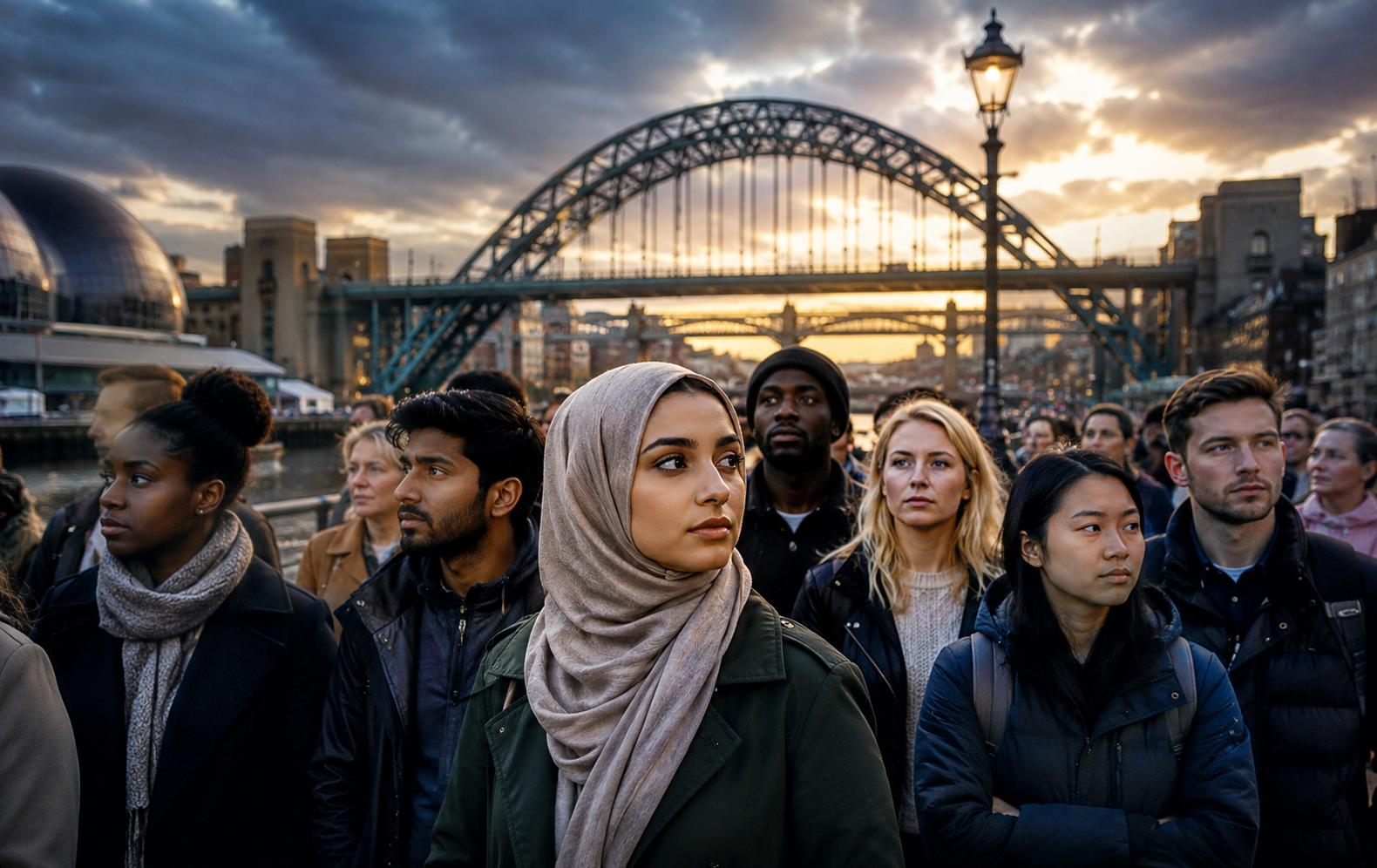
Immigration policy debates are becoming increasingly visible across Newcastle as residents, businesses and local leaders respond to changing national policies and growing public concern over housing, jobs and public services. From the city centre to surrounding neighbourhoods, conversations about migration are shaping political discussions and community relationships in ways that feel more personal than ever before.
Newcastle has long been recognised as a diverse and welcoming city. Over the years, migrants and international students have helped support local businesses, universities, healthcare services and cultural life. Yet recent debates surrounding UK immigration rules have created divisions in some areas, particularly as economic pressures continue to affect working families.
For many people living in Newcastle, immigration is no longer viewed as a distant Westminster issue. It is now tied directly to everyday concerns such as rent prices, school capacity, NHS waiting times and employment opportunities.
Rising Political Tensions Across Newcastle.
Political discussions around immigration have intensified in Newcastle following several national policy announcements focused on reducing net migration into the UK. Local campaign groups, councillors and residents have all become more vocal about the issue.
Some Newcastle residents argue tighter immigration controls are necessary to ease pressure on housing and public services. Others believe migrants are unfairly blamed for problems caused by wider economic challenges and years of underinvestment.
In areas where affordable housing is already limited, frustration has grown among some residents who feel local authorities are struggling to meet demand. Community meetings in parts of Newcastle have increasingly featured debates over resource allocation and local planning decisions linked to population growth.
At the same time, charities and migrant support organisations warn that heated rhetoric risks damaging social cohesion. Several groups across Newcastle have launched initiatives aimed at encouraging dialogue between long-term residents and newer arrivals in the city.
Businesses Say Immigration Supports The Local Economy.
Many business owners in Newcastle continue to stress the economic importance of migration, particularly in industries facing labour shortages. Hospitality, healthcare, construction and social care employers have repeatedly highlighted recruitment difficulties in recent years.
Restaurant owners and hotel managers across Newcastle say overseas workers remain essential to keeping businesses operating smoothly. Some employers claim stricter immigration policies have made hiring significantly harder, especially for lower-paid but critical roles.
Universities in Newcastle also play a major role in the local economy through international student recruitment. Thousands of overseas students contribute to housing markets, retail spending and city centre businesses each year.
Economic analysts suggest migration has helped Newcastle maintain workforce stability in several sectors where local recruitment alone cannot meet demand. However, critics argue that businesses have become too reliant on overseas labour instead of investing in local training and higher wages.
This divide reflects a wider national debate that is now clearly visible within communities across Newcastle.
Housing Pressures Continue To Fuel Debate.
Housing remains one of the most sensitive issues connected to immigration discussions in Newcastle. Rising rents and limited social housing availability have increased frustration among many residents already struggling with the cost of living.
Some local campaigners believe population growth linked to migration has added pressure to Newcastle's housing market. They point to increased demand for rental properties, particularly in student-heavy areas and parts of the city with affordable accommodation.
Others reject the idea that migrants are primarily responsible for housing shortages. Housing charities and economists argue that years of insufficient homebuilding and rising property investment are far more significant factors.
In neighbourhoods where housing demand has surged, tensions occasionally emerge between residents concerned about overcrowding and landlords seeking higher profits through shared accommodation.
Despite differing opinions, housing has become central to how many Newcastle residents view immigration policy and its local impact.
Schools And Healthcare Services Under Pressure.
Concerns about pressure on schools and healthcare services have also become part of Newcastle's immigration debate. Parents in some communities report difficulties securing school places, while NHS waiting lists remain a major issue across the region.
Healthcare leaders in Newcastle have acknowledged growing demand on services but often emphasise that migrant workers themselves are a vital part of the NHS workforce. Many doctors, nurses and care staff working in Newcastle hospitals originally moved to the UK from overseas.
School leaders meanwhile say diversity has brought cultural benefits to classrooms, although language support and additional resources are sometimes needed in areas experiencing rapid population changes.
For many residents, the challenge is balancing support for multicultural communities with concerns about overstretched public services. That balancing act has become increasingly difficult during a period of economic uncertainty and political division.
Community Groups Push For Dialogue.
While political arguments continue, several community organisations in Newcastle are working to reduce tensions and encourage understanding between different groups.
Local charities have organised cultural events, public discussions and support programmes designed to help residents connect beyond political headlines. Faith leaders and volunteers across Newcastle say face-to-face interaction often reduces misconceptions surrounding migration.
Some residents who initially expressed concerns about immigration have later become involved in community projects supporting refugees and migrant families. Others remain deeply sceptical and believe policymakers are ignoring legitimate public worries.
What is clear is that immigration policy debates are no longer confined to national politics. They are now influencing conversations inside schools, workplaces, local councils and neighbourhoods throughout Newcastle.
A Debate That Will Continue To Shape Newcastle.
Immigration will likely remain one of the defining political and social issues affecting Newcastle in the years ahead. As the UK government continues reviewing migration policies, local communities will continue feeling the direct effects of those decisions.
For some residents, migration represents economic opportunity, cultural diversity and workforce support. For others, it raises concerns about housing, infrastructure and the future identity of local communities.
The challenge for Newcastle may ultimately be finding ways to address public concerns without allowing division and mistrust to define the city’s future.
What do you think about the immigration debate in Newcastle and its impact on local communities? Share your views in the comments and join the conversation shaping the future of the city.
Have immigration policies affected your area, local services or workplace in Newcastle? Let us know your experience and help others understand the real impact across the region.
Political News
How Immigration Policy Debates Are Affecting Communities in Newcastle
Advertisement


Comments (0)
You must be logged in to post comments.
Don't have an account? Register here
No comments yet. Be the first to share your thoughts!