
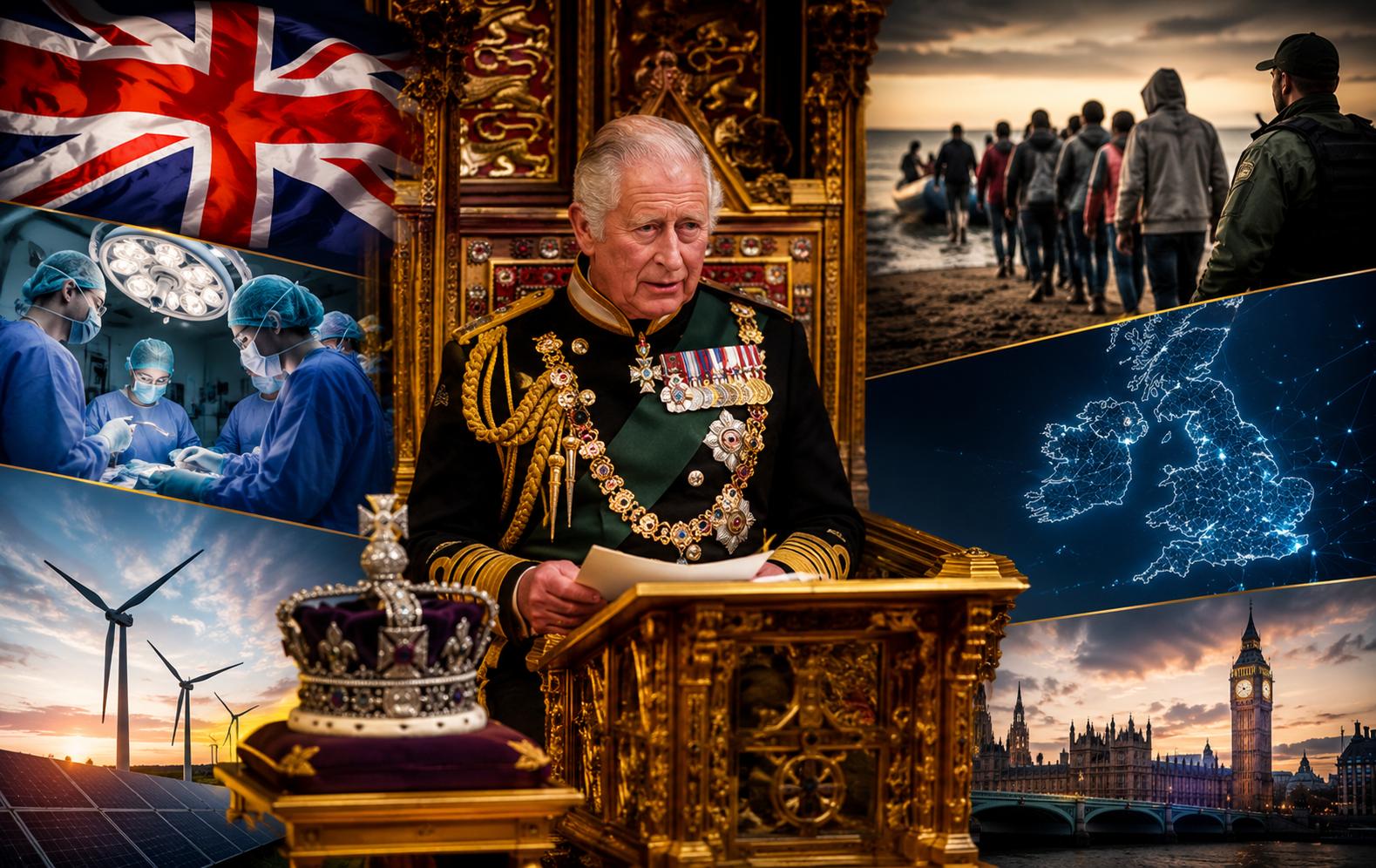
The King’s Speech later today is expected to unveil one of the most ambitious legislative programmes in recent years, with more than 35 bills and draft bills set to be outlined as the government attempts to reshape Britain’s economy, public services and national security.
The speech, which marks the second State Opening of Parliament under the current government, is expected to focus heavily on strengthening the NHS, reforming immigration laws, boosting energy security and delivering economic growth.
Prime Minister Keir Starmer is expected to use the parliamentary session to push forward what ministers describe as a long-term plan to build a “stronger and fairer Britain” following years of economic instability, rising living costs and pressure on public services.
Government insiders say the legislation will attempt to tackle some of the biggest issues facing households across the UK while also improving Britain’s resilience against growing international uncertainty.
Keir Starmer Expected To Focus On Cost Of Living And Public Services.
Ahead of the King’s Speech, the Prime Minister said the public expects the government to focus on delivering practical improvements that affect people’s daily lives.
Reducing the cost of living, cutting NHS waiting lists and strengthening national security are all expected to feature prominently within the government’s agenda for the year ahead.
Starmer has repeatedly argued Britain is facing a defining moment and has said the government must now move away from political instability and focus on long-term reform.
Ministers are expected to present the upcoming legislative package as a major break from previous years of economic turbulence and public dissatisfaction with key services.
The government’s first parliamentary session introduced major legislation including reforms covering employment rights, renters’ protections, planning laws and the creation of Great British Energy.
Today’s King’s Speech is expected to build on those measures with a second wave of reforms aimed at accelerating economic recovery and improving public confidence.
Economic Growth And Energy Security Expected To Dominate Agenda.
Economic resilience is likely to form one of the central themes of the King’s Speech.
Government figures believe ongoing global instability, including conflicts in Ukraine and the Middle East, continues to place pressure on energy prices, supply chains and household finances.
Ministers are expected to announce new legislation aimed at encouraging business investment, modernising regulation and strengthening Britain’s long-term economic security.
One of the most closely watched proposals is expected to be the Energy Independence Bill.
The legislation is anticipated to give ministers additional powers to accelerate renewable energy projects, expand electricity grid infrastructure and reduce reliance on imported fossil fuels.
Government sources say the proposals are intended to help Britain move towards cleaner and more affordable energy while protecting households from future global energy shocks.
The government is also expected to outline measures designed to improve trade and investment ties with the European Union, with ministers arguing this could create new opportunities for businesses and young people while helping ease cost-of-living pressures.
Immigration And Border Control Laws Expected.
Immigration reform is also expected to play a major role in today’s King’s Speech.
The government is preparing legislation aimed at restoring what it describes as “order and control” to the immigration system while rebuilding public trust in border enforcement.
Although full details remain limited ahead of the speech, ministers are expected to announce tougher immigration measures alongside reforms intended to streamline the system.
The government has repeatedly stated it wants to balance stronger border controls with fair treatment for those entering the UK legally.
National security legislation is also anticipated as ministers respond to growing concerns over cyber threats, hostile foreign activity and online extremism.
Proposals are expected to include updated powers allowing authorities to better tackle state threats, disrupt extremist content online and strengthen Britain’s digital defences.
British Steel Measures Could Be Included.
Another major area expected to feature in the King’s Speech is the future of Britain’s steel industry.
Following concerns over the long-term viability of domestic steel production, the government is expected to outline legislation that would give ministers the power to intervene more directly if needed.
This could potentially include options to nationalise British Steel in order to protect jobs and maintain the UK’s steelmaking capacity.
Government officials argue domestic steel production remains strategically important for Britain’s economy, manufacturing sector and national security.
The proposals are likely to attract significant attention from trade unions and industry leaders who have repeatedly warned about the risks of losing large-scale steelmaking in the UK.
NHS And Education Reforms Expected To Continue.
Healthcare reform is also expected to feature heavily within today’s legislative programme.
The government is preparing new NHS legislation aimed at reducing bureaucracy, improving patient care and supporting earlier medical intervention.
Ministers have repeatedly pledged to tackle hospital waiting lists and improve access to healthcare services following years of pressure on the NHS.
Education reforms are also anticipated, particularly around support for children with special educational needs.
The government says many parents currently face unnecessary barriers when trying to access support for their children and ministers are expected to propose measures aimed at improving access to inclusive education.
Housing And Cost Of Living Measures Anticipated.
Housing reform is another key area expected to be addressed during the King’s Speech.
The government is preparing legislation aimed at ending parts of the traditional leasehold system, which critics have long described as outdated and unfair.
Ministers say the changes would give homeowners greater rights and more control over their properties.
Additional measures linked to social housing protection and support for domestic abuse survivors are also expected to be included.
Alongside the legislation, the government is continuing broader cost-of-living measures including free breakfast clubs, childcare support, rail fare freezes and bus fare caps.
Investment into youth employment and skills programmes is also expected to continue as ministers attempt to boost long-term economic participation.
Attention Turns To Parliament And Delivery.
While today’s King’s Speech is expected to outline a major legislative programme, political analysts say delivering meaningful change will be the government’s biggest challenge.
Supporters believe the plans could help modernise public services and strengthen the economy, while critics have questioned whether such a large reform package can realistically be implemented quickly.
The coming months are now expected to bring intense parliamentary debate as MPs examine the details behind each proposal.
For many voters, however, the focus will remain on whether the promised reforms can deliver visible improvements to everyday life across Britain.
What do you think should be the government’s top priority in today’s King’s Speech - NHS reform, immigration, energy bills or the economy? Share your views in the comments below.
Political News
King’s Speech Expected To Set Out Sweeping Reforms Across Britain.
Advertisement



Comments (0)
You must be logged in to post comments.
Don't have an account? Register here
No comments yet. Be the first to share your thoughts!