
North-East England is a region filled with stories hidden in plain sight. From road signs to railway stations, the names of towns and villages carry centuries of history, conflict, migration and local identity. Many people pass through places like Durham, Sunderland or Middlesbrough without ever considering how those names came to exist. Yet behind every town name is a clue to the region’s past.
Across County Durham, Tyne and Wear, Northumberland and Teesside, place names reveal traces of Viking settlers, Roman occupation, Anglo-Saxon kingdoms and Norman influence. Some names are surprisingly literal, while others remain wrapped in folklore and debate. Together, they offer a fascinating map of the North-East’s heritage.
Newcastle and the fortress that changed everything.
Newcastle upon Tyne is one of the most recognisable city names in Britain, and its origins are relatively straightforward. The “new castle” referred to a Norman fortress built in 1080 by Robert Curthose, the eldest son of William the Conqueror. The castle was constructed on the site of an older Roman settlement called Pons Aelius, which once guarded a crossing point on Hadrian’s Wall.
The name quickly distinguished the growing settlement from older nearby communities. Over time, Newcastle became a major trading port and industrial centre, but the castle itself remained central to the city’s identity. Even today, the Castle Keep stands in the city centre as a reminder of the name’s medieval beginnings.
The addition of “upon Tyne” helped separate it from other Newcastles across England and highlighted the importance of the River Tyne to the city’s economy and growth.
Durham’s mysterious and debated origins.
Durham’s name has long fascinated historians because it combines influences from different languages and cultures. Most experts believe it comes from the Old English word “dun”, meaning hill, combined with the Norse word “holme”, meaning island.
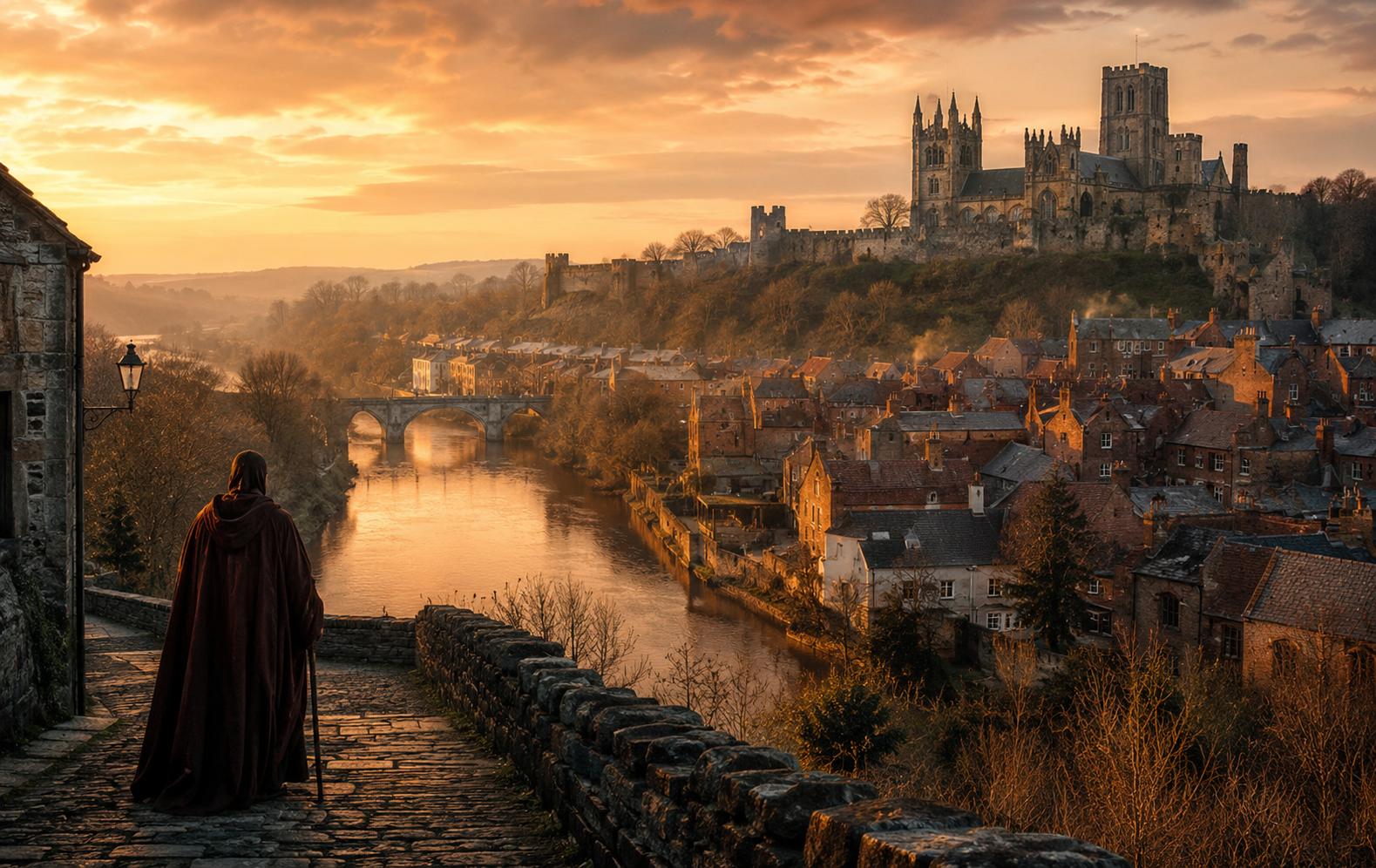
This makes sense geographically because Durham Cathedral and Castle sit dramatically on a raised peninsula surrounded by the River Wear. The city effectively appears perched on a hill island.
Local legend also plays a part in Durham’s naming story. According to medieval tradition, monks carrying the body of Saint Cuthbert were guided to the site by a divine sign involving a dun-coloured cow. The tale became deeply linked with Durham’s religious history and helped shape the city’s identity for generations.
Whether rooted in language, geography or legend, Durham’s name reflects the mixture of cultures that shaped the North-East after the Viking period.
Sunderland and the “separated land”.
Sunderland’s name dates back well over a thousand years and comes from the Old English term “Sundered Land”. Historians believe the area was granted to the monks of Monkwearmouth in the 7th century as land separated from the rest of the surrounding territory.
The settlement grew around the River Wear and eventually developed into one of Britain’s most important shipbuilding centres. While modern Sunderland is known for football, industry and seafront attractions, its name still points back to its early religious roots.
Many North-East residents are surprised to learn how directly place names can describe ancient land ownership and political divisions. In Sunderland’s case, the name itself is effectively a historical record.
Middlesbrough and a town built from almost nothing.
Unlike many older settlements in the North-East, Middlesbrough is relatively modern. Before the 19th century, it was little more than a small farming community. The name “Middlesbrough” is believed to mean “middle fortified place” or “middle settlement”.
The “borough” part comes from the Old English “burh”, often used to describe fortified towns or settlements. The “middle” element may refer to its position between other established communities in the Tees Valley.
Middlesbrough’s real transformation came during the Industrial Revolution when ironstone discoveries and railway expansion turned it into one of the fastest-growing towns in Europe. Despite its industrial rise happening much later than nearby settlements, the town retained its older name, preserving a link to its earlier rural past.
Gateshead and the road through the valley.
Just across the River Tyne from Newcastle lies Gateshead, another place name with Anglo-Saxon roots. Historians generally agree the name comes from “goat’s head” or “goat’s path”, likely referring to a route used by herders moving animals through the area.
Another interpretation links the name to a valley passage or hill route leading towards the river crossing. Either way, the name reflects how important geography was when settlements were first identified and recorded.
Before bridges connected Newcastle and Gateshead, movement across the Tyne relied heavily on ferries and ancient pathways. Names often emerged from practical descriptions that local people used every day.
Northumberland’s Viking and Anglo-Saxon influences.
The wider county of Northumberland contains some of the clearest examples of Viking and Anglo-Saxon naming traditions anywhere in England. Place names ending in “-by” often point to Viking settlements, while endings such as “-ham”, “-ton” and “-worth” usually come from Old English.
Towns like Ashington, Bedlington and Cramlington all carry traces of Anglo-Saxon settlement patterns. Meanwhile, villages with Norse influences reflect the arrival of Scandinavian settlers during the Viking Age.
Bamburgh is another standout example. The famous coastal village was once known as Bebbanburh, meaning Bebba’s fortress, named after an Anglo-Saxon queen. Over centuries, pronunciation changed naturally until it became the Bamburgh known today.
These evolving names reveal how spoken language changes gradually across generations, often simplifying complex words into more familiar forms.
Hartlepool and the stag by the water.
Hartlepool’s unusual name has inspired debate for centuries. One popular explanation is that it comes from the Old English words “heort”, meaning stag, and “pool”, referring to a body of water.
The town’s coastal position made it an important fishing and trading settlement long before the medieval period. The stag became closely associated with the area and still appears in local symbolism today.
Like many North-East towns, Hartlepool’s identity became strongly tied to maritime trade and industry, but its name preserved a connection to the natural landscape that existed before large-scale urban development.
Why so many North-East towns share similar endings.
People travelling across the North-East often notice repeated endings in town names. This is no coincidence. Common endings usually point to specific historical influences.
“-ton” typically meant farmstead or settlement in Old English.
“-ham” referred to a homestead or village.
“-chester” often indicated a Roman camp or fortification.
“-by” usually signalled Viking settlement.
“-worth” referred to enclosed land or farms.
Understanding these patterns helps explain how deeply the region’s history remains embedded in everyday language. Place names effectively act as living archaeological evidence, preserving details from centuries ago that might otherwise have been forgotten.
The stories hidden in everyday maps.
Many North-East residents grow up hearing town names without ever questioning where they came from. Yet every signpost tells part of a much larger story about invasion, settlement, religion, farming, trade and industry.
Historians continue researching local place names because even small details can reveal how communities developed over time. In some cases, spelling changes recorded in medieval documents help experts trace population movements and cultural shifts across entire regions.
What makes North-East England especially fascinating is the overlap of influences. Roman soldiers, Anglo-Saxon settlers, Viking raiders and Norman rulers all left their mark on the landscape. Their languages blended together over centuries, shaping the names still used today.
The result is a region where history survives not only in castles and cathedrals, but also in the words people speak every single day.
The next time you travel through the North-East, take a closer look at the signs along the road. You may be passing through a Viking settlement, a Roman frontier town or a medieval farming village without even realising it.
What town name in the North-East has always puzzled you most, and have you heard any local legends behind it?
Newcastle History
How North-East Towns Got Their Names Through History and Legend
Advertisement

Comments (0)
You must be logged in to post comments.
Don't have an account? Register here
No comments yet. Be the first to share your thoughts!