
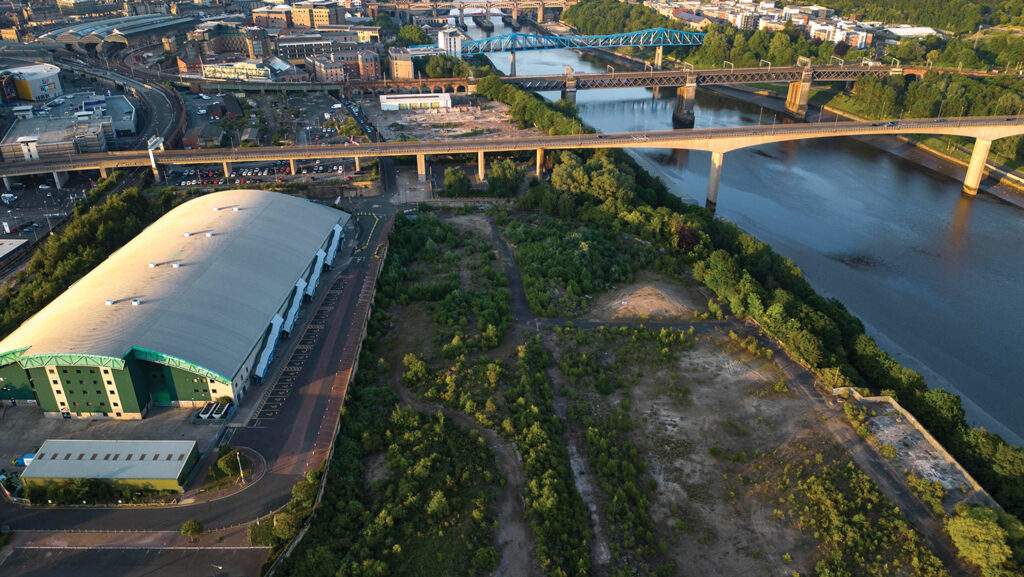
Plans for a major housing development at the Newcastle City Heliport site have suffered another setback after a planning inspector dismissed an appeal against Newcastle City Council's decision to refuse permission.
The proposed £87 million scheme would have delivered up to 356 apartments on land west of the Utilita Arena, a location that developers argued could help meet growing housing demand close to Newcastle city centre. However, after months of scrutiny and a public inquiry, the appeal has now been rejected, leaving the future of the site uncertain.
The decision marks the latest chapter in a long-running planning dispute that has sparked debate over how Newcastle should balance the need for new homes with wider regeneration ambitions across the city.
Inspector Backs Newcastle Council Concerns.
Planning inspector John Dowsett concluded that the disadvantages of the proposed development outweighed its benefits, siding with Newcastle City Council on several key issues.
Among the main concerns were poor accessibility for pedestrians and cyclists, the impact on the surrounding landscape, potential noise problems from nearby infrastructure, and uncertainty around drainage arrangements.
The inspector highlighted that access routes beneath railway bridges in the area could create an unwelcoming environment for future residents. He also agreed with council concerns that parts of the development would be affected by noise from a nearby gas pumping station, potentially impacting more than 100 apartments.
In his ruling, Mr Dowsett stated that the scheme would not provide the standard of living conditions expected for future occupants and would have a lasting effect on the character of the area.
Why The Heliport Site Matters To Newcastle.
The heliport site forms part of the wider Forth Yards area, one of Newcastle's most significant regeneration opportunities.
City leaders have long viewed Forth Yards as a crucial piece of Newcastle's future growth strategy. The wider masterplan aims to create around 2,500 new homes alongside employment opportunities, improved public spaces and enhanced transport connections.
The neighbouring Quayside West regeneration project has already secured more than £120 million in government support. That investment is intended to transform former industrial land into a thriving residential and commercial district over the coming years.
Council leaders argued that allowing a standalone housing scheme on the heliport site could undermine the coordinated approach needed to successfully deliver the wider regeneration vision.
Newcastle's Growing Housing Challenge.
The decision comes at a time when housing remains a major issue across Newcastle and the wider North East.
According to the Office for National Statistics, Newcastle's population has continued to grow over the past decade, increasing demand for both affordable and private housing. Meanwhile, government housing targets continue to place pressure on local authorities to identify suitable sites for development.
Recent Ministry of Housing data shows that England requires hundreds of thousands of new homes each year to keep pace with demand, with brownfield land redevelopment often promoted as a key solution. Developers behind the heliport proposal argued that the project would help address these challenges while bringing investment to an underused site.
Supporters also pointed to the potential economic benefits, including construction jobs and new spending within the local economy.
Developers Defend The Project.
MB European Limited, which owns the heliport site, expressed disappointment with the outcome and confirmed it is reviewing the inspector's decision before deciding its next steps.
The company maintained that the location remains suitable for residential development and argued that its proximity to Newcastle Central Station and the city centre makes it a sustainable place for higher-density housing.
Developers also suggested that insufficient weight had been given to the benefits of cleaning up a brownfield site and delivering new homes in an urban area where demand remains strong.
While no immediate plans have been announced, the company indicated that residential development remains central to the site's long-term future.
What Happens Next For Forth Yards.
With the appeal now dismissed, attention is likely to shift back to Newcastle City Council's broader plans for Forth Yards and Quayside West.
Council representatives welcomed the decision, arguing that a strategic approach is essential if Newcastle is to create a successful new neighbourhood capable of supporting thousands of residents.
The authority says future development must include the necessary infrastructure, transport links and public amenities needed to support long-term growth.
Although the current proposal has been rejected, the heliport site remains allocated for housing, meaning revised plans could eventually return in a different form.
For now, one of Newcastle's most debated development projects remains grounded as city leaders continue shaping the next phase of regeneration west of the city centre.
Share your thoughts on the future of Newcastle.
What do you think Newcastle needs most - more city centre housing or a slower, masterplanned approach to regeneration?
Local News
Huge Newcastle Development Rejected Once More
Advertisement





Comments (0)
You must be logged in to post comments.
Don't have an account? Register here
No comments yet. Be the first to share your thoughts!