
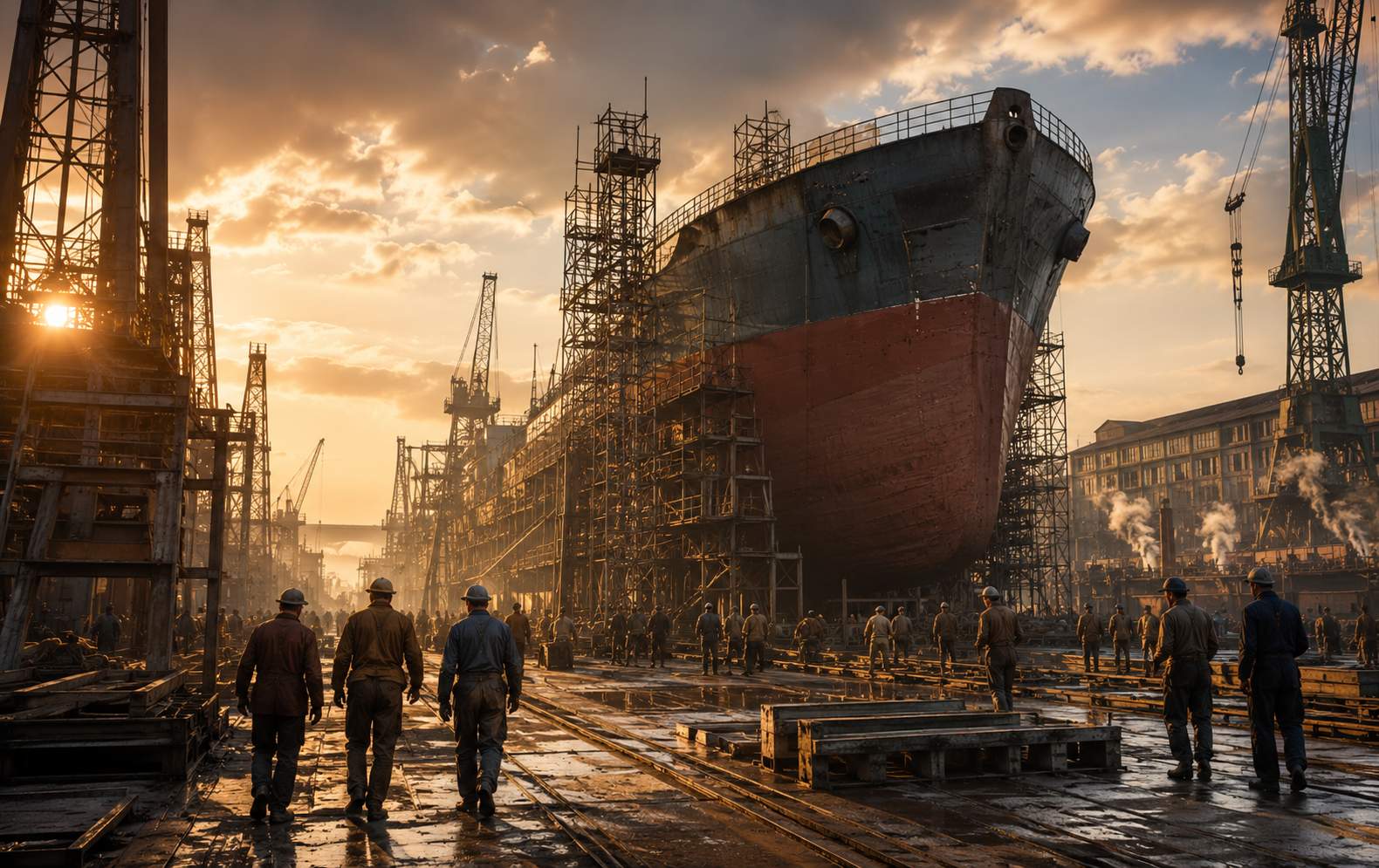
For more than a century, the sound of shipbuilding echoed across the River Tyne. The clanging of steel, the glow of welding torches and the movement of thousands of skilled workers helped transform Newcastle into one of the world's most important shipbuilding centres. The industry not only shaped the city's economy but also influenced its identity, creating generations of families whose livelihoods depended on the success of local shipyards.
Today, much of that industrial landscape has disappeared. Yet the story of Newcastle shipbuilding remains one of the most fascinating chapters in British industrial history. It is a story of innovation, global influence, economic prosperity and eventual decline.
How Newcastle Became a Shipbuilding Powerhouse.
Shipbuilding on the River Tyne can be traced back centuries, but the industry experienced extraordinary growth during the Industrial Revolution. Newcastle's location provided several advantages. The city sat close to vast coal reserves, ironworks and engineering firms, creating the perfect environment for large-scale industrial production.
Demand for ships increased rapidly during the nineteenth century as Britain's global trade network expanded. Newcastle shipyards responded by producing increasingly advanced vessels capable of carrying goods across the world. By the late Victorian era, Tyneside had become synonymous with engineering excellence and maritime innovation.
The region's shipbuilders earned a reputation for quality and reliability. Shipyards along the Tyne produced everything from merchant vessels and passenger liners to naval warships. This growth transformed Newcastle from a regional trading centre into an internationally recognised industrial city.
The Golden Age of Shipbuilding.
The early twentieth century marked the height of Newcastle's shipbuilding success. Historical records show that at the start of the century, almost half of the world's ships were being built across the North East's major rivers, including the Tyne. Entire communities relied upon shipbuilding and marine engineering for employment and economic stability.
One company became particularly famous during this period. Swan Hunter, based in Wallsend, emerged as one of the most influential shipbuilders in the world. Following a major merger in 1903, the company expanded rapidly and became the largest shipbuilder globally. Over its lifetime, Swan Hunter constructed approximately 1,600 ships, including some of the most significant vessels of the twentieth century.
Perhaps its most famous achievement was the construction of RMS Mauretania. Launched in 1907, the vessel became one of the most celebrated ocean liners ever built and held the Blue Riband for the fastest Atlantic crossing for more than two decades.
Employment numbers reflected the industry's importance. By 1913, Armstrong Whitworth's operations on Tyneside employed more than 20,000 workers. During the First World War, that figure increased dramatically to nearly 60,000 employees as demand for military production surged.
Life Along the River Tyne.
The shipyards shaped everyday life across Newcastle and surrounding communities. Entire neighbourhoods developed around industrial employment. Fathers, sons and sometimes multiple generations of the same family worked within the same yards.
Shipbuilding demanded a wide range of skills. Welders, platers, riveters, engineers, draughtsmen and labourers all played vital roles in constructing increasingly complex vessels. Apprenticeships were highly respected and often provided secure employment for life.
The industry also supported countless secondary businesses. Suppliers, engineering firms, transport companies and local retailers benefited from the spending power generated by thousands of shipyard workers. Newcastle's prosperity became closely linked to the health of the maritime sector.
The Beginning of Decline.
Despite decades of success, challenges began emerging after the Second World War. International competition intensified as countries such as Japan and South Korea invested heavily in modern shipbuilding facilities.
Many British shipyards struggled to compete with newer overseas operations that could build vessels more efficiently and at lower cost. Global economic changes also reduced demand for some traditional shipbuilding sectors.
By the 1970s and 1980s, Newcastle's shipyards faced mounting pressure. Government intervention attempted to protect jobs through nationalisation and restructuring programmes, but these measures could not fully reverse wider market trends.
Communities that had depended on shipbuilding for generations suddenly faced uncertainty. Employment opportunities shrank as yards merged, downsized or closed altogether.
The Swan Hunter Struggle.
No story better illustrates the industry's decline than Swan Hunter itself.
Once recognised as one of the world's leading shipbuilders, the company faced increasing financial difficulties throughout the late twentieth century. While the yard continued producing important vessels, including naval ships and large commercial projects, maintaining competitiveness became increasingly difficult.
During the early 1990s, receivers were called in after significant contract losses, placing thousands of jobs at risk. Reports at the time suggested that around 7,000 jobs were threatened across the wider business and supply chain network.
The company experienced several attempts at revival. However, rising costs and project difficulties continued to undermine its position. The final blow came during the construction of Royal Fleet Auxiliary landing ships in the 2000s. Budget overruns and delivery problems resulted in contracts being transferred elsewhere. Eventually, shipbuilding operations ceased entirely in 2006.
The closure marked the symbolic end of large-scale shipbuilding on the River Tyne.
What Remains Today.
Although the shipyards themselves have largely disappeared, their legacy remains visible throughout Newcastle. Historic buildings, museums, archives and former industrial sites continue to tell the story of the workers and businesses that helped shape the region.
The River Tyne has undergone significant regeneration, with many former industrial areas transformed into commercial, residential and cultural spaces. While these developments have brought new opportunities, they also serve as reminders of a very different era.
Interest in preserving shipbuilding heritage remains strong. Universities, museums and local history organisations continue documenting personal memories, photographs and records from the industry's peak years. Former workers and their families play a crucial role in ensuring these stories are not forgotten.
Why Newcastle's Shipbuilding Legacy Still Matters.
The rise and decline of shipbuilding in Newcastle represents more than an industrial success story. It reflects the resilience, innovation and determination of the communities that built their lives around the River Tyne.
At its peak, Newcastle helped build vessels that travelled every ocean on earth. The city's engineers and shipbuilders contributed to global trade, naval power and technological progress. Even though the industry has faded, its influence remains deeply embedded within Newcastle's identity.
Understanding that history helps explain how the city evolved into what it is today. It also offers valuable lessons about industrial change, economic adaptation and the importance of preserving local heritage for future generations.
What are your memories of Newcastle's shipbuilding industry or the River Tyne's industrial past?
Newcastle History
Newcastle Shipyards Once Built Half the World's Ships - What Happened?
Advertisement



Comments (0)
You must be logged in to post comments.
Don't have an account? Register here
No comments yet. Be the first to share your thoughts!