
Almost a month after a shipping collision at the Port of Tyne sent plastic pellets into the River Tyne, nurdles are still being found on beaches around Newcastle and across the wider North East coastline.
The continuing presence of the tiny pellets has left an uncomfortable question hanging over the clean-up operation: why are they still there?
The original incident happened at around 1pm on Sunday, July 19, when the Wind Orca collided with the berthed container ship BG Orange at the Port of Tyne. A gantry crane was badly damaged and containers carrying small plastic pellets were affected, allowing nurdles to enter the river.
Since then, councils, specialist contractors, environmental organisations and an extraordinary number of local volunteers have been trying to recover them. But the scale and nature of the pollution means this is far removed from an ordinary beach litter operation.
How many nurdles entered the Tyne?
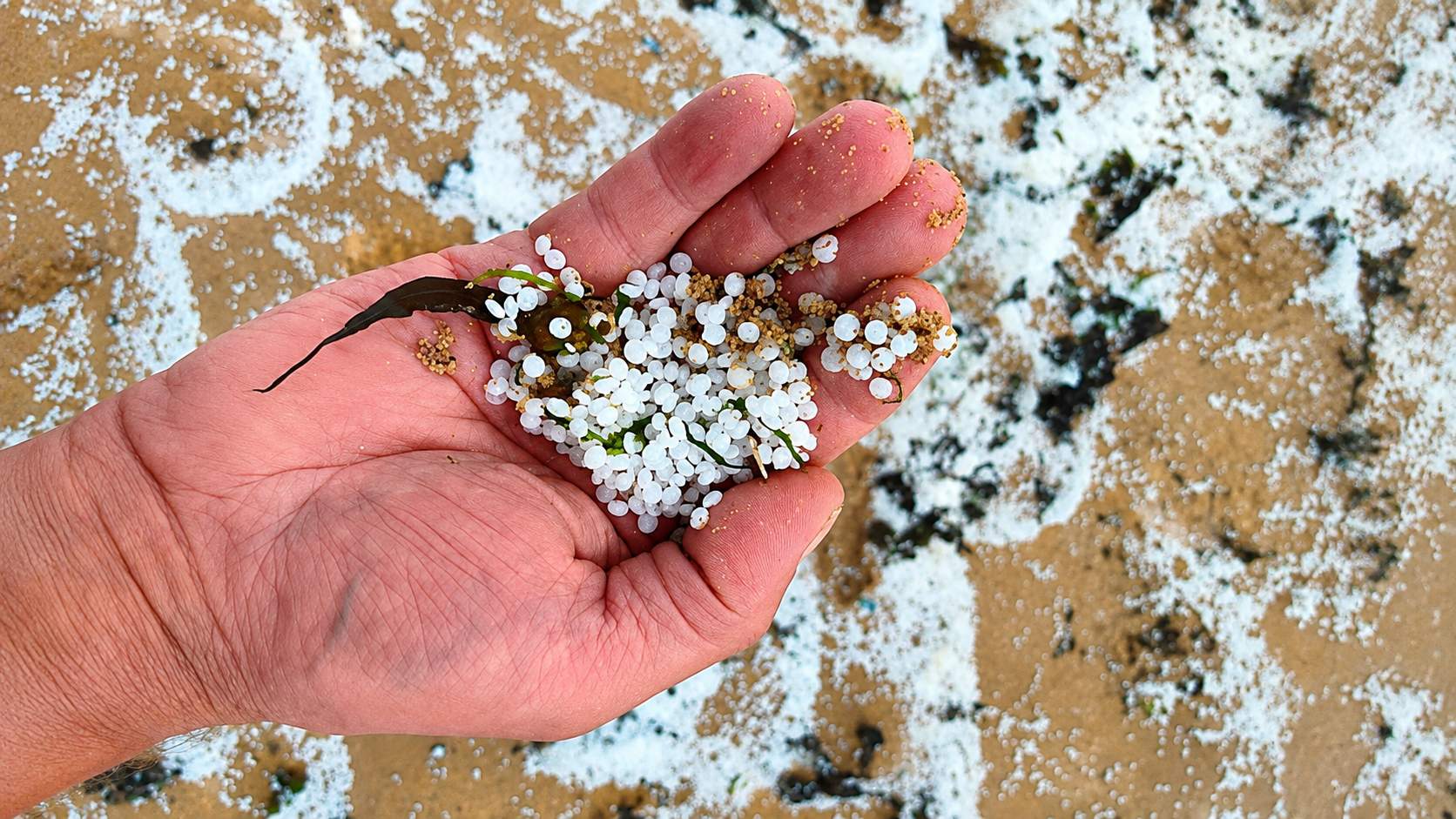
Nurdles are generally only around 1mm to 5mm across. They are the raw plastic material melted down to manufacture everything from bottles and food packaging to household products.
Environmental campaign group The Great Nurdle Hunt estimates that a single shipping container can hold approximately 25 tonnes, or around one billion individual pellets. Reports following the Port of Tyne incident indicate that one container of pellets was damaged.
That figure helps explain the challenge facing Newcastle and neighbouring coastal communities. Even recovering hundreds of thousands of pellets would represent only a fraction of a potential billion-pellet spill.
Once released into the Tyne, the lightweight pieces can be transported by tides, waves and currents. Pellets have subsequently been reported well beyond the immediate vicinity of the port, including sections of the Northumberland and Sunderland coast.
Why haven't Newcastle's nurdles been cleaned up yet?
Unlike an oil slick or a large piece of wreckage, nurdles cannot simply be lifted from the water in one operation.
Some become buried beneath sand. Others become trapped among seaweed and debris, while more can remain floating offshore before being deposited by another tide. Walking over contaminated sand can actually push pellets deeper into the beach, which is one reason councils have issued detailed instructions to volunteers.
North Tyneside Council says beaches are assessed each morning to identify where the highest concentrations have accumulated. Specialist contractor Briggs Marine has also been brought into the response, with teams separating pellets from sand before returning the cleaned sand to the beach.
That painstaking process helps explain why visible pollution can remain despite repeated clean-ups.
It also means a beach that appears considerably cleaner one afternoon could contain another concentration of nurdles following the next high tide.
Could the response have been faster?
The persistence of the pellets inevitably raises questions about how quickly environmental emergencies are tackled.
Following the 2019 MSC Zoe container disaster in the North Sea, specialist salvage and beach-cleaning companies were appointed and MSC publicly committed to funding the clean-up and continuing searches for lost containers.
After another shipping collision in the North Sea in March 2025 resulted in nurdles entering the water, a recovery operation was underway as pellets began reaching the Norfolk coastline.
The circumstances of each maritime incident are different, however, and direct comparisons need caution.
At the Port of Tyne, officials were dealing simultaneously with damaged vessels, a collapsed gantry crane and an unsafe quayside. The Port said the area initially remained unsafe while specialists assessed and secured the crane and ship.
Floating booms were subsequently positioned around the BG Orange and boats were deployed to recover pellets from the river.
The question for Newcastle and the wider North East is therefore not simply whether anybody responded. They clearly did. It is whether enough resources could have been deployed early enough to prevent more pellets escaping into the coastal environment.
Why are nurdles an environmental concern?
Officials have repeatedly said the public health risk from the pellets is considered very low and that the nurdles themselves are not toxic.
That should not be confused with saying they are environmentally harmless.
Animals can mistake small pieces of plastic for food, creating a potential ingestion hazard. North Tyneside Council has specifically warned that nurdles can pose a risk to wildlife and other animals if swallowed.
Because conventional plastic does not simply disappear in the natural environment, pellets left behind can also become part of the longer-term marine plastic problem.
This is why removing them quickly matters. Every pellet collected from a North Tyneside beach is one less piece of plastic available to be swallowed, buried, carried elsewhere or broken into increasingly difficult-to-recover fragments.
Volunteers are tackling a huge task.
Perhaps the most striking part of the North East nurdle story has been the public response.
Thousands of people have reportedly joined efforts to tackle the pollution. By early August, volunteer groups had recorded around 3,000 hours of work and recovered approximately 285kg of nurdles.
Those figures demonstrate both the strength of the community response and the extraordinary scale of the challenge. If approximately 25 tonnes escaped, 285kg would represent just over 1 per cent of that mass, although official recovery by councils, contractors and other organisations would be additional to the volunteer total.
Residents should also resist simply scooping up pellets without following safety advice.
North Tyneside Council recommends wearing gloves, using suitable footwear and avoiding eating, drinking or smoking while collecting nurdles. People should stay clear of machinery and contractor work areas, and large concentrations should be reported rather than tackled independently.
Pets should be kept on leads because of the ingestion risk, while volunteers are advised to clean footwear and equipment before leaving to prevent pellets being carried elsewhere.
Newcastle's coastline could feel the effects for some time.
Although Newcastle city centre is inland, this is very much a Newcastle environmental story.
The pollution originated from an accident on the River Tyne and has affected the coastline immediately downstream from the city, including communities and beaches used by people throughout Newcastle, North Tyneside, South Tyneside and the wider region.
The River Tyne is one of Newcastle's defining natural and economic assets. What enters it can ultimately become a coastal problem many miles away.
That makes the continuing appearance of nurdles more than an unsightly inconvenience. It raises wider questions about responsibility, prevention, emergency preparedness and how ports and shipping operators manage large quantities of raw plastic.
The clean-up is continuing, and significant work is clearly being carried out. Yet as long as new pellets continue appearing with the tides, residents are entitled to ask how long recovery will take, what proportion of the spill can realistically be removed and what lessons will be learned.
Nearly a month after the collision, Newcastle and the North East are discovering one of the most troubling characteristics of plastic pollution: spilling it can take seconds, while getting it back can take considerably longer.
Share your thoughts.
Who should be responsible for clearing nurdles from our local beaches?
Local News
Billions of Nurdles: Why Are They Still on Our Beaches?
Advertisement




Comments (0)
You must be logged in to post comments.
Don't have an account? Register here
No comments yet. Be the first to share your thoughts!