
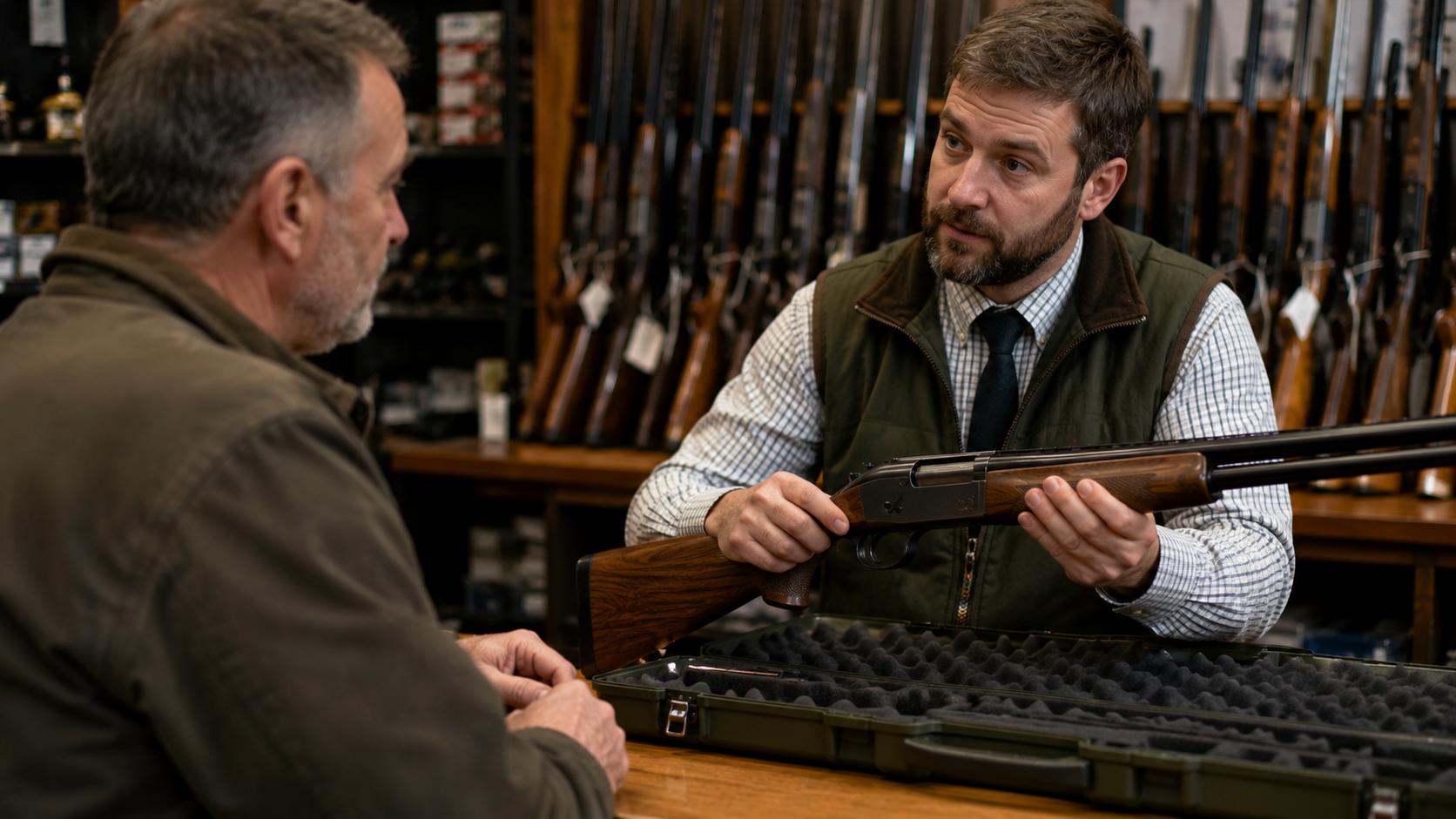
Britain has some of the tightest firearms controls anywhere in the world, and yet there are thousands of legally held firearms and shotguns across Northumbria at any given time. They belong to farmers controlling pests, gamekeepers, target shooters at clubs, deer stalkers and collectors, and the system that allows this to happen is one of the more rigorous licensing regimes in British public administration.
It is also a system that comes under intense scrutiny whenever it fails, because the consequences of a wrongly granted certificate are catastrophic and highly visible. Several inquests and inquiries have driven substantial tightening of the process in recent years.
Two certificates, two different tests.
Legally held guns fall broadly into two categories, each with its own certificate.
A shotgun certificate covers shotguns meeting a specific legal definition. The applicant does not have to demonstrate a good reason for wanting one in the same way as for other firearms, but the chief officer of police must refuse the certificate if satisfied that the applicant does not have a good reason to possess a shotgun, or cannot be permitted one without danger to public safety or the peace.
A firearm certificate covers rifles and other firearms and applies a stricter test. The applicant must demonstrate a good reason for possessing each specific firearm, and that reason must be tied to a lawful use such as membership of an approved target shooting club, permission to shoot over particular land, or professional pest control. Certificates specify the calibre and the permitted uses, and ammunition quantities are controlled.
Handguns of most types have been prohibited since the late 1990s and are not available under either route. Prohibited weapons require authority from the Secretary of State and are outside the ordinary licensing system entirely.
The application is intrusive by design.
Applicants provide references from people who have known them for a defined period and who must answer questions about the applicant's character, judgement and home circumstances.
Medical involvement is now a mandatory part of the process. The applicant's GP is contacted, and information is provided about relevant medical history including mental health, depression, substance misuse and certain neurological conditions. A marker is placed on the patient record so that the police can be informed if a relevant condition develops later. This was one of the most significant reforms of recent years and followed cases in which warning signs existed in medical records that the licensing process never saw.
A firearms enquiry officer visits the applicant's home. The visit covers security arrangements, but it is also an assessment of the household, of who else lives there and of whether there is anything in the domestic circumstances that gives cause for concern. Domestic abuse history is treated as a serious consideration, and evidence of coercive or controlling behaviour can defeat an application even without a conviction.
Security is specified, not left to judgement.
Firearms must be stored so as to prevent access by unauthorised persons, and in practice this means a certified cabinet bolted to the structure of the building, with ammunition stored separately. The standards for cabinets and their fixing are set out in published guidance, and the enquiry officer inspects the arrangements before a certificate is granted.
Certificate holders must notify the police of changes of address, of transfers or sales of firearms, and of thefts or losses. Failure to comply with conditions is an offence and can lead to revocation.
Certificates run for five years and must be renewed, with the whole assessment repeated.
Revocation can happen at any time.
A certificate is not a property right. The chief officer of police can revoke it at any point if satisfied that the holder can no longer be permitted to possess firearms without danger to public safety or the peace, or is of intemperate habits or unsound mind.
Triggers for review include arrest, conviction, reports of domestic incidents, deterioration in mental health, alcohol or drug misuse, and information from family members, neighbours or medical professionals. Firearms are typically seized immediately pending a decision.
There is a right of appeal to the Crown Court against refusal or revocation, and appeals do sometimes succeed, but the burden falls on the applicant to satisfy the court that they should hold a certificate.
Reporting a concern is straightforward and important.
Anyone who has concerns about a certificate holder can contact the police, including anonymously. Concerns about mental health, threats, domestic abuse, alcohol misuse or careless storage are all legitimate reasons to make contact, and the police would considerably rather receive a report that turns out to be unfounded than not receive one that was.
Family members are in the best position to notice deterioration, and are often the most reluctant to report because of the consequences for the person involved. Every serious review of firearms licensing failures has identified the same pattern.
The unlicensed picture is a different problem.
It is worth being clear that licensed firearms account for a small fraction of gun crime. The weapons used in serious criminal offences are overwhelmingly illegally held, including converted blank firers, reactivated antiques and weapons smuggled into the country.
Licensing controls the lawful sector, and does so tightly. Tackling the illegal sector is a matter of border enforcement, organised crime investigation and intelligence, and the two problems require entirely different responses.
Share your thoughts.
Do you think Britain's firearms licensing system strikes the right balance, or should it be tighter still?
Crime News
Firearms Licensing in Northumbria: Who Can Legally Own a Gun
Advertisement



Comments (0)
You must be logged in to post comments.
Don't have an account? Register here
No comments yet. Be the first to share your thoughts!