
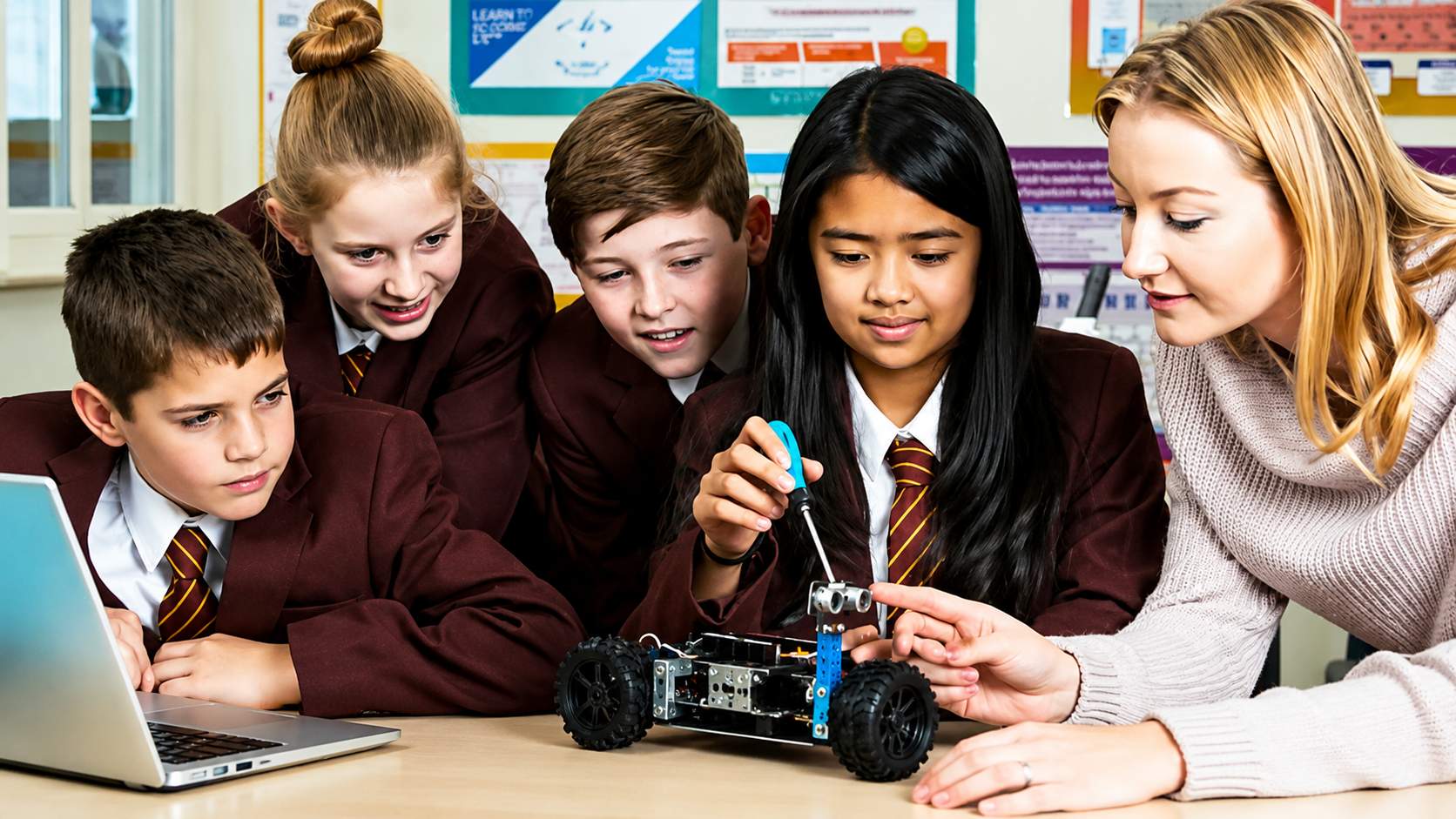
Walk into many classrooms across Newcastle today and you'll find pupils speaking dozens of languages, celebrating cultures from around the world and learning alongside classmates whose families have roots across every continent. What was once seen as occasional multicultural events has evolved into something much more meaningful, with many schools embedding diversity into everyday education.
From celebrating Diwali and Eid to recognising Black History Month, Lunar New Year and Refugee Week, schools across Newcastle are increasingly reflecting the communities they serve. Teachers say these celebrations help children understand different cultures while building confidence, respect and stronger friendships.
As Newcastle continues to grow as one of the North East's most diverse cities, schools are playing a central role in helping young people prepare for life in an increasingly connected world.
Newcastle's Classrooms Reflect A Changing City.
Recent Census figures show Newcastle has become significantly more diverse over the past decade. In 2021, around 11.3 percent of residents identified as Asian, Asian British or Asian Welsh, while 3.3 percent identified as Black, Black British, Caribbean or African. The city's Muslim population also increased from 6.3 percent in 2011 to 9 percent in 2021.
That diversity is even more noticeable among younger residents.
Newcastle City Council's 0 to 19 Needs Assessment highlights that children are more ethnically diverse than the city's overall population. Around 28.5 percent of residents aged 0 to 19 come from ethnic minority backgrounds, compared with approximately 20 percent across the wider population.
The report also reveals there were approximately 42,000 pupils attending Newcastle schools during the 2022 School Census, representing 79 different ethnicities. White British pupils made up around 58.8 percent of the school population, while significant communities included Black African, Pakistani, Bangladeshi, Indian and many other backgrounds.
Celebrating Cultures Throughout The School Year.
Many Newcastle schools now incorporate cultural celebrations into their annual calendars rather than treating them as standalone events.
Children often learn about festivals including Eid al-Fitr, Christmas, Hanukkah, Vaisakhi, Diwali and Lunar New Year through classroom activities, assemblies, music, food tasting sessions and creative workshops.
Parents and community volunteers are frequently invited into schools to share traditions, clothing, stories and experiences from different cultures, helping pupils gain first-hand understanding beyond textbooks.
Teachers say these opportunities encourage curiosity while reducing stereotypes and helping children appreciate the similarities shared by families from different backgrounds.
Languages Open New Opportunities.
Language is another important part of Newcastle's diverse school communities.
Many pupils speak more than one language at home, with Arabic, Bengali, Urdu, Polish, Somali and Mandarin among the languages commonly represented across local schools.
Rather than viewing multilingualism as a challenge, schools increasingly recognise it as an asset. Bilingual pupils often support classmates, while schools celebrate home languages through reading activities, displays and cultural events.
Research consistently shows that multilingual environments can strengthen communication skills and cultural awareness, helping children develop confidence both inside and outside the classroom.
Learning Beyond The Classroom.
Cultural diversity is not limited to assemblies or themed weeks.
Many schools work closely with local charities, faith organisations, museums and community groups to give pupils opportunities to experience different cultures through educational visits, workshops and collaborative projects.
Schools across Newcastle regularly participate in anti-bullying initiatives, inclusion campaigns and activities that encourage pupils to celebrate differences while promoting kindness and respect.
These experiences help children understand that diversity is part of everyday life across the city rather than something only discussed during special events.
Newcastle By The Numbers.
Several statistics help explain why diversity has become an important focus for local education.
42,000 pupils attended Newcastle schools during the 2022 School Census.
79 different ethnicities were represented across Newcastle's schools.
47,038 pupils attended Newcastle schools in January 2024, including independent schools, reflecting continued growth.
28.5 percent of Newcastle's 0 to 19 population comes from ethnic minority backgrounds.
9 percent of Newcastle residents identified as Muslim in the 2021 Census, highlighting the city's changing religious landscape.
Preparing Young People For The Future.
Employers increasingly value communication, cultural understanding and the ability to work with people from different backgrounds.
By learning alongside classmates from many cultures, Newcastle pupils develop skills that extend well beyond academic achievement. Respect, empathy, teamwork and curiosity are qualities many schools actively encourage through inclusive teaching and community partnerships.
For families moving to the North East from elsewhere in the UK or overseas, Newcastle's schools are often seen as welcoming environments where children can maintain their own cultural identities while becoming part of the wider community.
As Newcastle continues to attract international students, skilled workers and growing families, its classrooms are likely to become even more diverse over the coming years.
Education leaders say embracing those differences benefits every child, helping create schools where everyone feels valued, respected and able to succeed regardless of their background.
Share your experiences.
How has your child's local school celebrated cultural diversity?
Local News
How Cultural Diversity Is Transforming Local Schools In Newcastle
Advertisement



Comments (0)
You must be logged in to post comments.
Don't have an account? Register here
No comments yet. Be the first to share your thoughts!